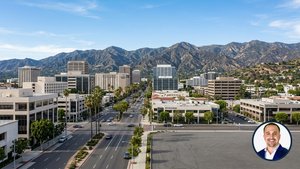




Best Time to Sell a House in the Inland Empire 2026: Month-by-Month Market Analysis
Timing your Inland Empire home sale can mean the difference of $20,000-$40,000 in proceeds. Here is the data-driven month-by-month guide to when IE buyers are most active and sellers command the highest prices.
What This Guide Covers
The Inland Empire has distinct seasonal patterns in its real estate market, driven by tax refund season, school calendars, the summer heat factor (IE summers are genuinely hot), and the preferences of the large first-time buyer population that dominates the IE market. Here is the honest month-by-month guide to when your IE home will sell fastest and for the most money.
I have been selling homes in Riverside and San Bernardino counties for 13 years, and the seasonal patterns I see on the ground match the data consistently. The difference between listing in early March versus listing in December is real and measurable. On a $600,000 Inland Empire home, timing your sale to hit the spring peak rather than the winter trough can mean $30,000-$50,000 more in proceeds, sometimes more in a competitive submarket. That said, life does not always let you choose your listing date, and I will also explain how to maximize your outcome in any season.
IE Seasonal Real Estate Patterns: The Data
| Season | Activity Level | Price Premium | Avg Days on Market |
|---|---|---|---|
| Spring (Mar-Jun) | Highest | +8-12% vs winter | 14-21 days |
| Summer (Jul-Sep) | High-Moderate | +5-8% vs winter | 18-28 days |
| Fall (Oct-Nov) | Moderate | +3-5% vs winter | 22-32 days |
| Winter (Dec-Feb) | Lowest | Baseline | 30-45 days |
These patterns hold across most IE submarkets, though there are nuances by city and price point that I will address below. High-demand IE cities like Rancho Cucamonga and Corona show more compressed DOM (days on market) year-round because buyer demand is structurally strong. More affordable IE cities like San Bernardino city and Moreno Valley show wider seasonal swings because the buyer pool is more sensitive to economic conditions and seasonal financial cycles like tax refund season.
Spring (March-June): The Peak IE Selling Season
March through June is the Inland Empire's strongest selling season by every metric: most buyers actively searching, highest list-to-sale price ratios, most multiple-offer situations, and shortest days on market. Understanding why spring dominates in the IE specifically helps you position your listing to capture the full benefit of the seasonal wave.
Why Spring Is So Strong in the IE
The IE spring market is powered by three overlapping forces. First, tax refund season (February through April) provides down payment funds for the large first-time buyer segment that drives IE demand. The IE has one of the highest concentrations of first-time buyers of any California market, because its relative affordability compared to coastal cities attracts buyers making their first purchase. These buyers often need to accumulate their down payment before they can act, and tax refunds are a primary mechanism for building that cash cushion. A household receiving a $4,000-$8,000 federal and state refund in March can add that directly to their FHA or conventional down payment.
Second, school calendars create urgency for family buyers who want to be settled before the fall school year. A buyer who wants their kids enrolled in a specific Riverside Unified or Temecula Valley Unified school for September needs to close escrow by July at the latest, which means starting their home search no later than April or May. This creates predictable demand concentration in the March-June window.
Third, the IE weather in spring is genuinely beautiful. March through May temperatures of 72-88 degrees make showing homes a pleasure. Buyers are motivated to get out and see properties, landscaping looks its best, and the IE's scenic backdrop (mountains visible from most neighborhoods) is at its most appealing before summer haze sets in.
How to Maximize a Spring IE Listing
To fully capture the spring premium, your listing needs to be live on the MLS by the first week of March. This means your pre-listing preparation work (cleaning, paint, photography, staging) must be completed in February. Properties listed in the final week of February or first week of March consistently outperform properties listed in April that miss the peak buyer surge. By mid-May, many spring buyers have already found homes or signed contracts, and the remaining buyer pool is smaller even though there are still weeks technically left in "spring."
In multiple-offer situations, which are common in IE spring for well-priced properties, presentation quality matters enormously. Professional photography, 3D virtual tours, and clean curb appeal generate the initial interest surge that drives competitive offers. I have seen well-prepared IE spring listings receive 8-12 offers in the first weekend. A comparable home with poor photos in the same week might receive 2-3 offers at best. The spring premium is captured by prepared sellers, not just anyone who lists in March.
Summer (July-September): Hot Market, Hot Weather
IE summer is complicated by the weather factor in ways that other California markets do not experience as acutely. The region sees sustained 100-110 degree days in July and August. Showing traffic drops noticeably during extreme heat waves because buyers are less willing to drive around looking at houses when the temperature is 108 degrees. Air-conditioned open houses still draw visitors, but spontaneous drive-by-and-call showings decrease in the peak heat months.
Summer pricing is typically 3-6% below spring peak for equivalent homes, and days on market extend to 18-28 days on average versus 14-21 in spring. This is not a disaster for sellers — it is simply a softer market. Military buyers transferring to March Air Reserve Base or other Inland Empire installations bring predictable summer demand that partially offsets the school-calendar-driven buyer pullback. Military families frequently must complete their PCS (permanent change of station) moves on summer timelines regardless of market conditions or heat, creating a buyer segment that is active throughout July and August.
Positioning a Summer IE Listing
For summer listings, emphasize heat-management features prominently in your marketing. A home with a pool is significantly more appealing in summer than in any other season. Homes with large shade trees, covered patios, and high-efficiency air conditioning that keeps the home cool in extreme heat should feature those elements in listing photos and descriptions. Summer buyers are acutely aware of utility costs and comfort in IE heat, and a home with a 5-ton AC system and good insulation stands out compared to a comparable home that gets hot inside during afternoon showings.
Fall (October-November): The Underrated Second Window
October and November are underrated by many IE sellers who either caught the spring wave or missed it and are waiting for next year. Fall provides a genuine second selling window that has several structural advantages over spring that are worth understanding.
First, inventory drops significantly. Many spring and summer sellers who did not sell have taken their homes off market by October, either because they gave up or because they are waiting for spring. This means fall buyers are competing for fewer available homes, which supports pricing even as total buyer activity is lower. The supply-demand dynamics in fall can be favorable for well-priced, well-maintained listings even if the absolute number of buyers is smaller.
Second, IE fall weather is genuinely pleasant. October and November temperatures of 70-82 degrees are perfect for home showing. The oppressive summer heat is gone, making it physically comfortable to tour homes. Buyers who held off during summer heat are often re-entering the market in October with renewed motivation.
Third, year-end motivated buyers create a focused demand pocket. Corporate relocation buyers, buyers who have been in lease situations expiring at year-end, and buyers who need to close before December 31 for tax reasons (mortgage interest deduction, property tax deduction) are all active in October and November with genuine urgency. These buyers make decisions faster and negotiate less aggressively because they have fixed deadlines.
Winter (December-February): Slowest but Strategically Navigable
December is the slowest month in the IE real estate market by transaction volume, days on market, and list-to-sale price ratio. Holiday travel, family obligations, and year-end financial uncertainty all suppress buyer activity. The pool of active buyers in December is small and consists primarily of highly motivated buyers who have specific reasons to be looking during the holidays.
The strategic reality of a December listing is that you will likely need to price aggressively to generate offers from this reduced buyer pool. Homes that sit through December without offers often require price reductions in January, which creates a negative market perception that is hard to reverse. If you have the option to delay a December listing to January 15 or February 1, that delay almost always produces better outcomes.
January and February, however, are different from December. Tax refund season begins arriving in February, and early spring buyers who are motivated to act before the competition intensifies are actively searching. A well-priced, well-presented January or February listing often encounters less competing inventory than a March listing while still attracting serious early-season buyers. The January-February window is underutilized by sellers who assume winter is uniformly slow.
The Day-of-Week Factor
Within any season, the day-of-week a listing goes live also matters. IE homes that go live on Wednesday or Thursday generate the most first-weekend showing traffic because buyers have time to schedule showings before the weekend. Homes that go live on Sunday or Monday miss the peak scheduling window for that first weekend. In spring, a Wednesday go-live can generate 15-20 showing requests in 48 hours. A Sunday go-live for the same home might generate 8-12 in the same period. The cumulative effect on offer generation is real.
How Price Point Affects IE Seasonal Timing
The seasonal timing premium is not uniform across all IE price points. Understanding how your home's price tier interacts with the seasonal calendar helps you set realistic expectations and make smarter decisions.
Entry-Level IE Homes ($350,000-$500,000)
Entry-level IE homes are the most seasonal of any price tier because their buyer pool is overwhelmingly first-time buyers whose purchasing timelines are closely linked to tax refund season and school calendars. For homes in this range in cities like San Bernardino, Perris, Moreno Valley, and Hemet, the spring window (March-May) is dramatically stronger than any other season. Winter listings at entry-level prices in the IE often sit unsold for 45-60 days because the buyer pool is waiting for their tax refunds and their lease expirations to align. Getting your entry-level IE listing live by March 1 can be the difference between 2 offers and 12 offers.
Mid-Range IE Homes ($500,000-$750,000)
Mid-range IE homes have a more balanced buyer pool that includes move-up buyers, second-time buyers, and some investors, in addition to first-time buyers. The spring seasonal premium still applies but is slightly less pronounced because this buyer segment is less dependent on tax refund timing. Days on market in fall and summer are more similar to spring for this price tier than they are for entry-level homes. Rancho Cucamonga, Corona, Eastvale, and parts of Riverside and Ontario fall into this tier for most of the current market.
Upper-Range IE Homes ($750,000-$1.2M+)
Upper-range IE homes see the least seasonal variation in buyer activity. Buyers in this range tend to be move-up buyers, executives, or coastal transplants who are buying on life circumstances rather than seasonal financial cycles. A well-priced home in Temecula wine country, Coto de Caza adjacent communities, or North Rancho Cucamonga can sell in any month because the buyer pool has fewer seasonal constraints. The spring premium still exists but may be 3-5% rather than 8-12%. These sellers have somewhat more flexibility on listing timing without sacrificing a large proceeds premium.
IE Seller Timing Strategy for 2026
With the seasonal framework in mind, here is how I advise IE sellers to think about timing in 2026 specifically.
The ideal window is March 1-15 for a spring listing. If you can have your home ready by February 28, you capture the earliest spring buyers before competition ramps up. Preparation should start no later than January 15 to allow 6 weeks for pre-listing work.
If you cannot make the March window, October 1-20 is the next best target. This captures fall buyers while inventory is still seasonal-low. After October 20, Thanksgiving approaches and buyer attention begins shifting to holiday planning.
If December is your only option, price at or slightly below the most recent comparable sales to generate offers from the limited buyer pool. Do not hold out for a spring price in a December market. The carrying costs of holding through winter to spring often exceed the price premium you would gain.
2026 IE market conditions favor sellers broadly due to persistently low inventory relative to demand. The structural undersupply of housing in Riverside and San Bernardino counties is not a seasonal phenomenon — it is a multi-year condition that provides a floor under IE prices year-round. Even in December, IE sellers in well-located cities are dealing with a market that has fewer available homes than buyers want. This underlying condition reduces the seasonal risk for sellers who have no choice about their listing date.
Questions? Let's Talk Inland Empire Real Estate.
Call or text (951) 482-7918 for a free consultation with Justin Borges, DRE #01940318.
Frequently Asked Questions
Related Guides
Ready to Make Your Move?
Call or text (951) 482-7918 for a free strategy session. 13+ years, $200M+ in California real estate.