INHERITED PROPERTY · LOS ANGELES
Can I Sell My Inherited LA House From Out of State?
By Justin Borges · CA DRE #01940318 · Updated September 4, 2026
The short answer: You may be able to sell an inherited Los Angeles house for cash while living out of state. First confirm legal sale authority, arrange lawful local access, and obtain title/escrow approval of the signing and funding process. Cash can remove a buyer's mortgage requirement; it does not remove estate, title or document requirements.
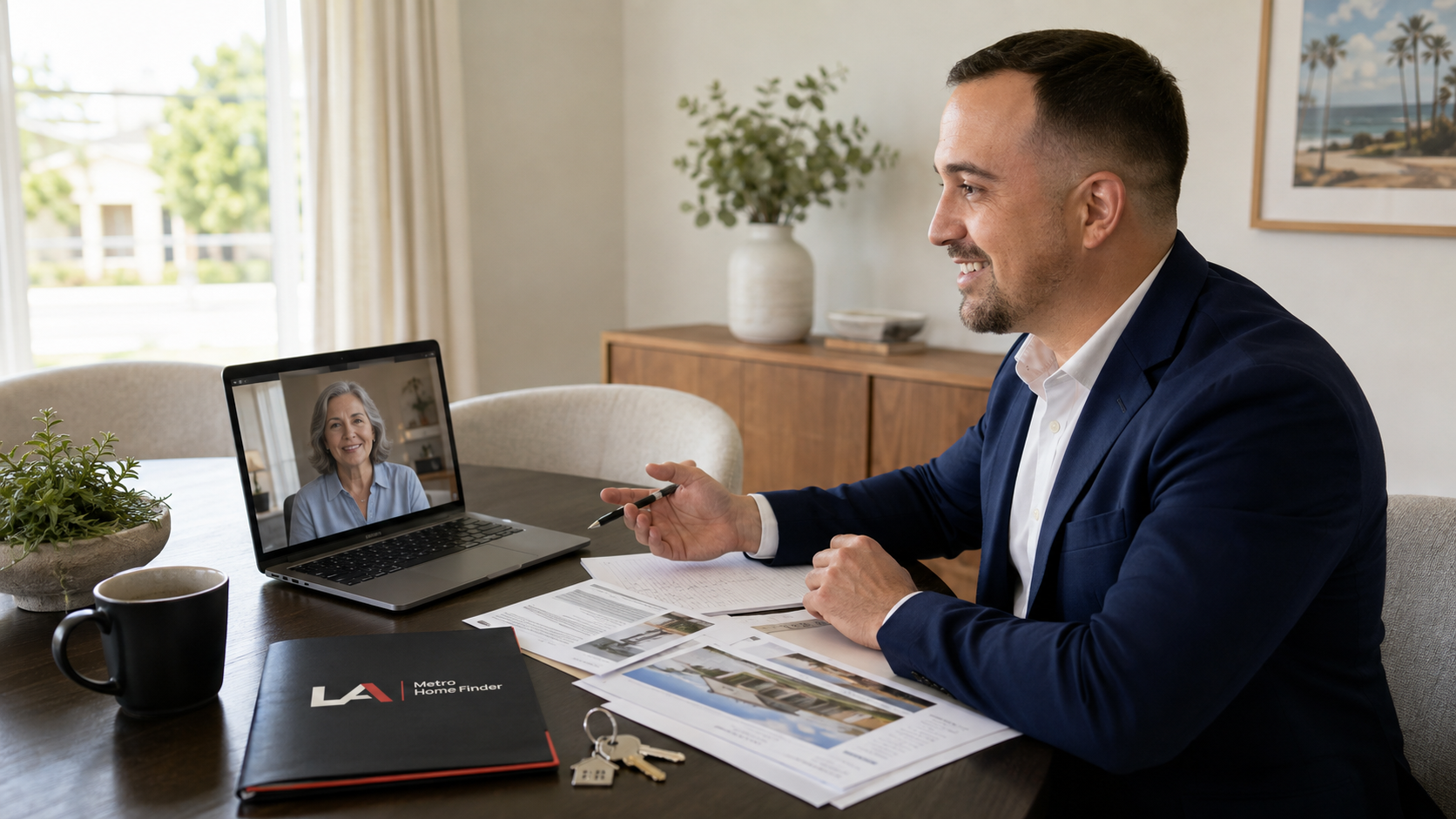
The hard part of a remote inheritance sale is often not the distance itself. It is knowing who can approve the sale, who can enter the house, where the closing documents must go and how to verify the money. A buyer who promises to handle everything should still explain those details in writing.
Start with the city, occupancy and your general sale question. Do not text death certificates, court papers, identification or account information.
Text (213) 262-5092 about a remote saleHow do I manage a Los Angeles house from another state?
Create a local operating plan before scheduling buyer visits. Identify an authorized point of contact, who holds keys, who can approve spending and where current photos and vendor updates will be kept. A family member may be willing to help but should not be expected to make decisions beyond the role the authorized seller gives them.
Request a dated condition walkthrough, with permission, that distinguishes observations from conclusions. A video may show a ceiling stain; it does not establish whether a roof is sound or what a repair will cost. Obtain suitable professional inspections or estimates when needed. Avoid promising a buyer that the home has no problems merely because you have not visited recently.
Plan separately for personal belongings. Ask the appropriate decision-maker which items must be retained, documented or removed and who may authorize disposal. A cash offer that allows contents to remain can reduce work, but the agreement should identify what stays. Do not assume a buyer's cleanout promise resolves family ownership disputes or the handling of sensitive records.
If the dwelling is tenant occupied, Civil Code section 1954 governs permitted entry purposes and related notice and timing requirements, with exceptions. Having a key is not unrestricted permission to enter, and selling does not erase the occupant's rights (California Legislature, reviewed September 4, 2026). Get advice on the actual occupancy situation before a keyholder schedules showings or inspections.
For a Los Angeles property, confirm whether city rules, county rules or another municipality's requirements apply instead of treating an LA mailing address as a legal conclusion. Ask the insurer about the actual occupancy and who should receive notices. Coordinate utilities and maintenance through the authorized party, with a written record of the scope and cost.
When selecting local help, the guide to choosing an agent for an out-of-state Los Angeles owner offers a separate hiring perspective. Here, the useful deliverable is a repeatable update: current condition, authorized work, upcoming access and the decision that needs your attention.
Ask for a local coordination plan tied to the property's occupancy and your authorized role.
Talk through local access and updatesDoes a cash buyer make a remote inherited sale easier?
Cash may reduce dependence on a buyer's mortgage approval. It may also fit a home whose authorized seller does not want to coordinate extensive preparation. But cash is a funding description, not proof of a dependable buyer, an unconditional contract or a particular closing timeline. The actual agreement determines what the buyer can investigate and request.
Before comparing prices, ask who the buyer is, whose funds support the proposal, whether assignment is permitted and which conditions remain. Have your agent and advisers review the agreement and supporting information. A proof-of-funds document should be evaluated for the actual purchasing party and proposal rather than accepted because the document looks impressive.
| Remote-sale issue | Possible cash benefit | Still confirm in writing |
|---|---|---|
| Property preparation | Buyer may accept the present condition or agreed contents. | Inspection rights, exclusions, cleanup and any later price-change requests. |
| Financing | No buyer mortgage may be needed. | Purchasing entity, available funds, deposit and remaining conditions. |
| Estate documents | Buyer may be willing to accommodate the authorized process. | Actual authority, title requirements, required notices and court approval. |
| Travel | Visits may be handled through authorized local coordination. | Accepted signing, identification, original documents and lawful access. |
Compare the specific proposal with a realistic market sale you could execute remotely. The inherited-house cash-offer decision guide covers that broader economic choice. Distance alone is not evidence that you should accept a lower price, and a higher headline offer can lose value if its conditions are difficult to satisfy.
If a buyer changes terms or cannot perform, the cash-buyer closing-failure guide helps frame the questions for your advisers. Do not assume a signed cash agreement guarantees funds on the promised date. Ask what remains unresolved and what the agreement says about those circumstances.
Use property-specific pricing as a reference before deciding what convenience is worth.
Start with a home-value estimateCan I sign the sale documents without returning to LA?
Ask title and escrow to approve the signing plan before you accept a schedule that depends on it. Identify where each signer will physically be, what identification is available and which documents require notarization, originals or a particular format. A signed offer and a recordable deed can have different requirements.
California Secretary of State notary guidance currently says physical personal appearance remains required before a California notary. Signing a document electronically is not the same thing as completing a notarization over video (California Secretary of State, reviewed September 4, 2026). Do not treat a platform advertisement as confirmation that your deed can be completed that way.
Civil Code section 1189(b) addresses recognition of an acknowledgment made outside California when it complies with the law of that place. That rule does not establish that every online session, form or document package will be accepted for your sale (California Legislature, reviewed September 4, 2026). Have the actual title/escrow parties confirm the proposed method and recordability.
A possible plan may involve an approved notary near the signer and delivery of original documents. Another file may permit a different arrangement. Ask the provider to specify the method rather than choosing it yourself. Confirm appointment availability, the return address, delivery tracking and how corrections would be handled if a page or acknowledgment is rejected.
Build the closing schedule around confirmed requirements, not a generic courier promise. Holidays, time zones, signer availability and document corrections can matter. Tell escrow promptly if your travel plans change or your identification name differs from the document name. Do not alter the signing instructions or have a relative sign for you without appropriate authority and approval.
Remote coordination also needs one authoritative document version. Keep a clear record of which agreement or closing package is current and who issued it. A family email forwarding an older draft is not a replacement for the instructions from the verified transaction team. Request clarification before signing a page you do not understand.
Build the real estate timeline around the signing process title and escrow actually accept.
Discuss a workable closing scheduleHow can I verify escrow and avoid remote-sale fraud?
California DRE's escrow and closing guidance describes several oversight structures: DFPI-licensed independent escrow, title-company escrow regulated through the Department of Insurance, and qualifying broker escrow. Determine the provider's actual role and applicable regulator rather than assuming every legitimate escrow company has the same license type (California DRE, reviewed September 4, 2026).
Obtain contact information independently and establish a known callback number at the start. Ask how the provider verifies identity and any change to disbursement instructions. A cash buyer's preferred company still deserves verification. Do not send account details to an unfamiliar address simply because it appears in an otherwise familiar email thread.
CFPB's closing-scam guidance warns about impersonated messages and false wiring instructions. It recommends trusted contact information and independent confirmation, rather than relying on a number supplied in the suspicious message (CFPB, reviewed September 4, 2026). Apply the same callback discipline to a requested change in where your seller proceeds will go.
Treat urgency as a reason to verify, not a reason to skip verification. If instructions change, pause and use the established channel to confirm them. Keep sensitive documents out of general text threads. If money appears misdirected, contact the financial institution immediately and report the incident through the appropriate authorities, including IC3 as described by CFPB.
An organized sale team can reduce confusion, but no checklist guarantees immunity from fraud. Know who owns each approval and keep evidence of confirmed instructions. Ask escrow to explain its process for confirming final disbursement without exposing full account information in routine updates.
Discuss the sale workflow without sending private identity or banking records over text.
Ask about coordinating the transactionWhat happens to the money after the house sells?
Separate three figures: the purchase price, the estimated closing net and the amount ultimately available for distribution. The estimate may include payoff amounts, agreed costs and other transaction items, but it is not a legal allocation of inheritance shares or a final tax calculation. An estate or trust may have obligations beyond this sale.
California FTB explains real-estate withholding as a prepayment of income tax, not the final tax itself. An out-of-state address does not automatically establish an exemption. Ask escrow and a qualified tax adviser to evaluate the seller, transaction and applicable Form 593 requirements before you rely on a proceeds estimate (Franchise Tax Board, reviewed September 4, 2026).
FTB's estate and trust guidance also identifies withholding questions involving distributions to nonresident beneficiaries. Selling the house and distributing an estate's funds are separate events that can raise different questions (Franchise Tax Board, reviewed September 4, 2026). Have the qualified advisers address the actual structure instead of using a generic online tax percentage.
Ask for an updated closing statement when terms change, and confirm who may approve disbursement. Keep the closing records for the estate administration and tax work. Do not instruct escrow to divide funds based solely on an informal family conversation or assume that a buyer can determine the correct beneficiary allocation.
Request a property-specific sale comparison that keeps closing estimates separate from legal and tax advice.
Request an inherited-home sale reviewWhat should be ready before I agree to a closing date?
Use a short readiness list rather than a promise that everything can be done remotely. The authorized seller should know which items are complete, which remain conditional and who is responsible for the next action. This helps a buyer understand the actual process without giving away control of it.
- Authority: Counsel has identified the permitted seller, required documents and remaining notice or approval questions.
- Property: Local access, occupancy, belongings and authorized work have a documented plan.
- Offer: The purchasing party, funds, conditions, costs and possession terms have been evaluated.
- Signing: Title/escrow has accepted the specific method for every required signer and document.
- Proceeds: The team has a verified disbursement process and appropriate legal and tax input.
If one item is unresolved, identify its owner and next step before promising a date. That is different from assuming the sale cannot happen. A remote seller can make informed decisions when updates distinguish completed work from expectations. The goal is a documented, workable transaction, not merely fewer trips to Los Angeles.
For a broader overview of moving a sale forward, see selling a Los Angeles house on a shorter timeline. The remote-heir version adds authority, document acceptance and local coordination to the same practical question: what can this property and this transaction actually support?
Frequently asked questions
Can I sell an inherited Los Angeles house without flying back?
It may be possible when the legally authorized seller, local property team and title/escrow provider have an accepted remote process. Confirm signing, identification, originals, access and recording requirements before relying on a no-travel plan. Cash funding alone does not resolve those requirements.
Can a cash buyer skip probate because I live out of state?
No. The buyer's payment method does not supply missing sale authority. Your California estate attorney should confirm who may sell, the scope of any court-granted authority and required notices or approval. An offer can be evaluated without treating it as permission to complete the sale.
Do Letters automatically let an executor sell the house?
Do not assume that. California distinguishes full and limited independent administration authority, and real-property sales under limited authority require court supervision. Counsel must review the actual appointment and applicable requirements before you commit to a sale.
Can I sign every closing document over a video call?
Do not promise that. Electronic signatures and notarization are different, and California's current notary guidance still requires physical personal appearance before a California notary. Have title and escrow approve the specific signing method, jurisdiction, document format and originals before scheduling.
Can I use my deceased parent's power of attorney?
Do not rely on an ordinary power of attorney as continuing authority after the principal's death. California law generally terminates that authority at death, subject to statutory exceptions and protections. Ask estate counsel which current authority and documents apply to the sale.
Can a relative give the buyer unrestricted access?
Possessing a key does not establish unrestricted legal access. Have the authorized seller arrange documented access and protect belongings. If the dwelling is tenant occupied, California entry rules and any other applicable protections must be addressed before inspections or showings.
Will living outside California eliminate sale withholding?
No automatic exemption follows from your out-of-state address. California real-estate withholding is a prepayment of income tax, not the final tax calculation. Ask escrow and a qualified tax adviser to evaluate the actual seller, transaction and applicable forms or exemptions.
You do not have to choose a buyer before understanding the process. Start with the property and your general situation; keep case-specific legal and tax decisions with your advisers.
Call (213) 262-5092 about next steps
About Justin Borges
Licensed since October 2013, Justin Borges helps Los Angeles sellers organize property pricing, offer comparisons and local sale coordination. For out-of-state heirs, his real estate role is to make those tasks clear while estate authority, accepted closing documents and tax questions stay with the appropriate professionals. CA DRE #01940318. Read his LA Metro Home Finder author profile.
General real estate education, not legal, tax or financial advice. No review of your estate, trust, court file or title documents is represented. Confirm case-specific requirements with a California estate attorney, the actual title/escrow provider and a qualified tax adviser. Sources reviewed September 4, 2026.