




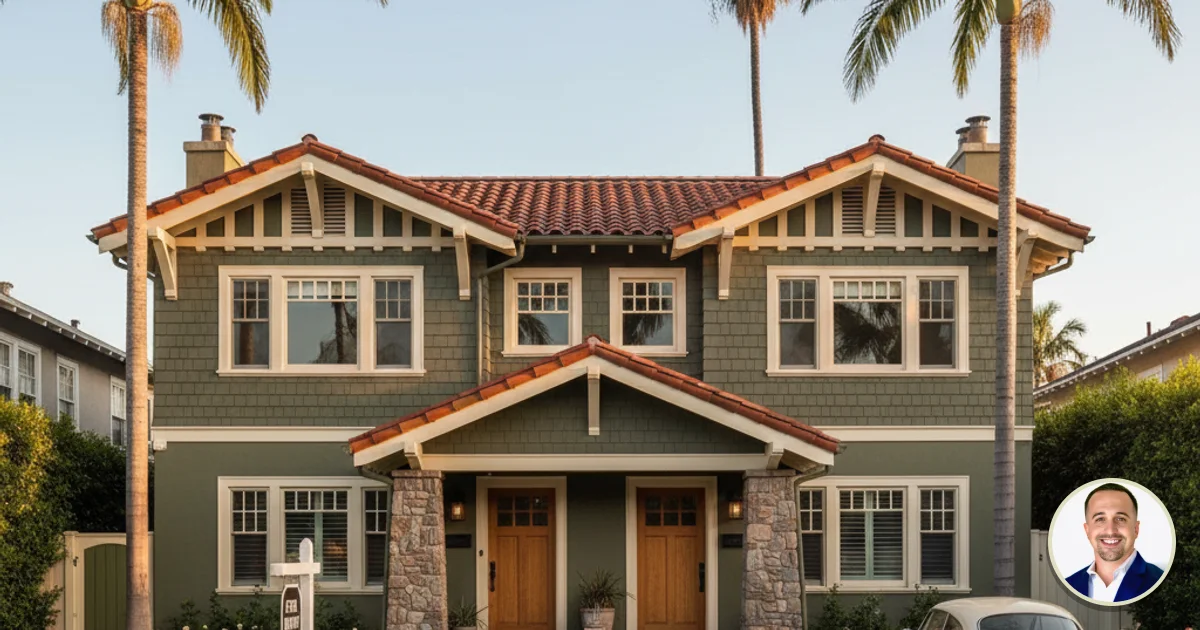
Multifamily Buying Guide | Los Angeles
What to Look for in a Multifamily Realtor in Los Angeles
Buying a 2-4 unit or apartment building in LA requires a different skill set than buying a single-family home. Here is exactly what that skill set looks like.
Published June 13, 2026 | 10-min read | LA Metro territory
Browse LA Multifamily Listings
650K
RSO-covered units in City of LA
LAHD, 2026
5.1%
LA metro multifamily avg cap rate, Q1 2026
Matthews Real Estate Investment Services
2.4M
CA rental units covered by AB 1482
CA HCD / state law, 2025
Aug 2024
Written buyer-broker agreement required before tours
NAR Settlement, Aug 17, 2024
A strong multifamily realtor in Los Angeles knows how to read a rent roll, identify which units are covered by the RSO versus AB 1482, calculate a cap rate under current rent restrictions, flag soft-story and PACE lien risks, and structure a 1031 exchange. These are skills that generalist residential agents typically do not bring to the table.
In This Guide
Property Condition Red Flags: Soft Story, PACE Liens, and More
LA Multifamily Submarkets: What an Agent Should Know by Area
What a Strong Buyer-Agent Relationship Looks Like Post-Offer
Why Multifamily Requires a Different Specialist
A 2-4 unit property in Los Angeles is technically a residential transaction under CA DRE licensing rules. That means any salesperson licensed by the California Department of Real Estate can represent you. The issue is not licensure; it is experience and working knowledge of a distinct regulatory environment.
Single-family buyers evaluate school ratings, renovation costs, and neighborhood trajectory. Multifamily buyers evaluate income. Every number in the purchase price depends on the rent roll, the regulatory cap on future rent increases, the current occupancy, and the condition of a building that often predates modern code. An agent who has never modeled a cap rate or reviewed an RSO registration record will not catch the problems that make an otherwise attractive LA fourplex a financial trap.
There is also a 1-to-4 unit versus 5-plus unit divide that shapes financing. Up to four units qualifies for residential financing through Fannie Mae and Freddie Mac. Five units and above is commercial. The agent who represents you on a triplex is advising on a deal financed at residential rates with commercial-grade operational complexity. That combination demands someone who straddles both worlds fluently.
Explore LA multifamily properties currently available in LA County
Browse Multifamily Listings in LA County
Rent Control Expertise: RSO, AB 1482, and the LA Matrix
Los Angeles operates a bifurcated rent control system that most residential agents never fully learn. The City of LA's Rent Stabilization Ordinance (RSO) governs buildings constructed on or before October 1, 1978. AB 1482 (the state Tenant Protection Act of 2019) covers most multifamily buildings built before January 1, 2005 that are not already subject to a stricter local ordinance. Properties in unincorporated LA County fall under a third layer: the County's Rent Stabilization and Tenant Protections Ordinance (RSTPO), which, unlike the City RSO, covers post-1978 buildings too (LAHD, 2026; CA HCD, 2025).
The practical consequence for a buyer is significant. If you purchase a four-unit building in Silver Lake where three of the four units are RSO-covered, the rent increase allowable on those units is 3.0% through June 30, 2026, and then 90% of CPI (floor 1%, ceiling 4%) starting July 1, 2026 (LAHD, City of LA Ordinance, 2026). Under AB 1482, the LA-Long Beach-Anaheim area cap is 8.7% effective August 1, 2026 (CA HCD / BLS CPI calculation, 2026). A buyer's agent who cannot model current-versus-market rent projections under these caps is unable to give you an accurate picture of what the property's income looks like in two to five years.
Regulatory Layer
Applies To
2025-2026 Rent Cap
Just-Cause Eviction
LA City RSO
Pre-Oct 1978 rental units, City of LA
3.0% (July 2025 - June 2026); then 1%-4% CPI-based starting July 2026
Yes (LAMC 151.09)
AB 1482 (State)
Multifamily 15+ yrs old, not covered by stricter local ordinance
8.7% (LA metro, Aug 2026)
Yes (for covered units)
LA County RSTPO
Unincorporated LA County rentals, including post-1978
3.0% (July 2025 - June 2026)
Yes
Exempt (Owner-Occ Duplex)
Owner-occupied 2-unit, owner lives in one unit
No cap
No (AB 1482 exempt)
Exempt (Post-2005 Built)
Buildings constructed after Jan 1, 2005 (not in RSO city)
No state cap; 15-year rolling window
No (AB 1482 exempt)
Owner-Occupied Duplex Opportunity:
If you intend to live in one unit of a duplex, the AB 1482 owner-occupancy exemption applies; the other unit is free from the statewide rent cap. This is one of the most underutilized entry points in LA multifamily. Your agent should know this exemption cold and be able to identify properties where it applies before you make an offer.
An agent who understands this matrix can tell you, before you spend time on a property, whether it has upside through vacancy resets (a unit becoming vacant lets you set market rent), whether all four units are RSO-locked at below-market rents, or whether the building is a newer construction that escapes rent control entirely. That is not marginal information; it is core to the purchase price you should pay.
Rent Roll and Estoppel Due Diligence
The rent roll is the seller's summary of what each tenant pays, when their lease expires, and what deposit was collected. It is a starting document, not a verified fact. A buyer's agent who treats the rent roll as authoritative is setting you up for a costly surprise after close. The agent's job is to verify the rent roll against actual leases, confirm that the deposit amounts match, and identify any side agreements (verbal or written) that could create tenant rights not visible in the official record.
On larger transactions, estoppel certificates formalize this process. An estoppel is a document signed by each tenant confirming the rent, lease terms, deposit, and any concessions still in effect. The tenant's signature limits their ability to later claim different terms existed. For 2-4 unit residential purchases, estoppels are less routine than in commercial deals, but on any building where tenants have been in place for years, requesting them is worthwhile. A multifamily-experienced agent knows when to push for estoppels and how to frame the request without derailing a cooperative seller relationship (Fannie Mae Multifamily Guide; Mazirow Commercial, 2024).
Rent Roll vs. Estoppel Certificate:
The rent roll reflects what the seller believes to be true. The estoppel certificate reflects what the tenant legally affirms. Both can reveal different numbers. A gap between the two is a negotiation point and sometimes a deal-stopper. Ask your agent whether they have reviewed both on every multifamily transaction they have closed.
What a Thorough Rent Roll Review Covers
📋
Current vs. Market Rent
How far below market are the occupied units? Under RSO, you cannot reset rents unless a unit vacates. Your agent should calculate both the current NOI and the stabilized NOI at market.
🗓
Lease Expiration Dates
Month-to-month tenants in RSO-covered units have strong protections. Long-term leases with below-market rents may constrain cash flow for years. Timing matters for your exit strategy.
🔒
Security Deposit Compliance
AB 12 (effective April 1, 2024) caps new residential deposits at one month's rent. Existing deposits above that cap must be returned over time. Verify every deposit amount against current law.
📝
Side Agreements and Concessions
Reduced rent in exchange for maintenance help, verbal permission to sublet, or a written addendum not in the official lease file; these bind you as the new owner. Your agent should ask sellers to disclose all such arrangements in writing.
FREE Weekly Workshop: First-Time Buyer Blueprint
Learn how to buy a home in LA, including 2-4 unit opportunities, loan programs, and the offer process. Live every week, totally free.
Cap Rate Analysis as a Buyer-Side Service
Cap rate is the ratio of a property's net operating income to its current market value. It is the primary valuation metric in multifamily investing, and it is meaningless without accurate income and expense data; which is exactly what a rent roll review and regulatory analysis provide. The LA metro multifamily market averaged a 5.1% cap rate in Q1 2026, with significant variance by submarket (Matthews Real Estate Investment Services, Q1 2026).
A buyer's agent who understands cap rate analysis will build the numbers from the ground up: gross rental income at current rents, vacancy load (typically 5-8% in LA), operating expenses (property management, insurance, maintenance, property taxes after purchase), and the resulting NOI. They will then compare the implied cap rate at your offer price to what comparable properties have sold for in the same submarket. If the seller is pricing the property on a 4.0% cap rate but comparable sales in that neighborhood suggest buyers are getting 5.5%, that is a starting negotiation point, not an excuse to overpay.
LA Multifamily Cap Rate Ranges by Submarket (2026)
South LA / Inglewood (RSO + opportunity upside)
5.5% - 7.0% range (Source: CoStar / CRMLS multifamily reports, 2026)
San Fernando Valley (established multifamily corridors)
4.8% - 6.0% range
Northeast LA / NELA (duplex/fourplex dense)
3.5% - 5.0% range; RSO coverage on most older stock
Westside / Santa Monica (premium)
3.0% - 4.2% range; highest per-unit prices
Cap rate analysis also connects directly to rent control. In an RSO-covered building, future rent increases are capped at 1-4% annually (LAHD, effective July 1, 2026). A building with three of four units at 55% of market rent has a dramatically different five-year income trajectory than one where all units are at or near market. Your agent should be able to model both scenarios and show you what the cap rate looks like under realistic assumptions, not the optimistic projections a listing agent may present.
For deeper context on cap rate calculation methodology and LA neighborhood-by-neighborhood data, the guide at How to Calculate Cap Rate for Los Angeles Rental Property walks through a worked example using real neighborhood comps.
See what LA multifamily properties are available right now
Property Condition Red Flags: Soft Story, PACE Liens, and More
LA's building stock is old, and older multifamily properties carry risks that generalist residential agents routinely overlook. A multifamily-experienced agent should know the physical flags to raise during inspection and due diligence.
Soft-Story Retrofit Compliance
Los Angeles requires soft-story wood-frame buildings (pre-1980 construction with open ground-floor parking or commercial space) to complete seismic retrofits. The City of LA's retrofit program had a compliance deadline that expired December 2022. A building that has not completed its retrofit has an outstanding Compliance Order from the Department of Building and Safety (LADBS). That is a buyer obligation after close, with costs ranging from $50,000 to $150,000 depending on unit count and scope. Your agent should pull the LADBS record for any pre-1980 building and flag an outstanding Compliance Order before you make an offer; or use it as a negotiation lever.
PACE Liens
Property Assessed Clean Energy (PACE) financing allows property owners to fund energy improvements (solar, HVAC, windows) through an assessment attached to the property rather than the borrower. The lien transfers to the new owner at close. On a four-unit building, a PACE balance of $30,000-$80,000 is not unusual. Title will show it, but an agent unfamiliar with PACE may not flag it as a material negotiating point. Ask specifically whether any PACE liens appear on the property report and what the payoff schedule is.
RSO Registration Status
Landlords of RSO-covered units must register their rental units annually with LAHD and pay registration fees. A seller who is behind on registration cannot legally collect rent increases. Your agent should verify RSO registration status and confirm annual fees are current before you close. An unregistered building that has been collecting above-RSO-cap rents creates a liability that transfers to you.
Measure ULA Transfer Tax Alert:
City of Los Angeles properties over $5 million are subject to the Measure ULA transfer tax (5.5% of sale price). On a larger multifamily sale, this is a material cost that affects seller net proceeds and shapes the negotiating position. For 2-4 unit properties under $5M this does not apply, but 5+ unit buildings in the City frequently cross this threshold. Your agent should know which side of that line your property sits on before price negotiations begin.
What Is Your LA Property Worth in 2026?
Get a free, accurate valuation backed by real comps, not an automated estimate.
1031 Exchange: Timing, QI Selection, and Like-Kind Criteria
Many LA multifamily buyers are also sellers; they are trading up from one investment property to another and want to defer capital gains taxes through a 1031 exchange. Under IRS Section 1031, you have 45 days from the close of your relinquished property to identify replacement properties, and 180 days to close on the replacement. These are hard deadlines. One day past the 45-day identification window and the exchange fails (IRS Publication 544; IRC Section 1031).
A multifamily agent who has worked 1031 transactions understands how these timelines interact with the typical LA escrow process. They know when to begin the replacement property search relative to the close of the sale property. They understand the 3-property rule (you can identify up to three replacement properties with no value limit) and the 200% rule. They have relationships with qualified intermediaries (QIs); the required independent third party who holds the exchange funds; and can refer you to one without delay.
California adds a state-specific layer. If you sell CA property and exchange into out-of-state real estate, California tracks the deferred gain via Form 3840. When you eventually sell the replacement property, CA may assert a tax claim on the original deferred gain, even if you are no longer a CA resident. A CA-experienced agent flags this early so your tax advisor can structure accordingly (CA FTB Form 3840; IRS Publication 544).
For a full walkthrough of the 1031 process including worked tax math and the role of a qualified intermediary, see the LAMH guide at How to Do a 1031 Exchange in Los Angeles .
Find the right replacement property in the LA multifamily market
Post-NAR Settlement: Buyer Representation Agreements
As of August 17, 2024, the NAR settlement requires all buyer's agents to have a signed written buyer representation agreement before they can take you on a property tour (NAR, Aug 2024). This is now the law in California as well, and it applies whether you are buying a single-family home or a fourplex. The agreement discloses how your agent is compensated and requires you to agree on those terms in writing before seeing any property.
Most agents default to offering a long-term exclusive agreement at the start of the relationship. Some buyers find that uncomfortable, particularly when they are still evaluating which agent best understands multifamily. A limited buyer representation agreement; one that covers a single property or a single showing; is a legally valid option. It lets you test an agent's approach on one transaction before committing to a broader engagement. The key is to understand you have options, not just the form an agent hands you first.
Exclusive Buyer Agreement
Agent fully committed to your search over a defined period
Clear compensation terms from the start
Agent can invest more time in your file upfront
Better for buyers with a clear timeline and area
Risks of the Exclusive Model
Locked in if agent's multifamily expertise turns out to be limited
Harder to walk away if relationship does not work
May not need full exclusive for a targeted one-deal search
Negotiate duration and scope, never sign open-ended terms
8-Criteria Evaluation Checklist
Not all multifamily agents are equal, and in LA's regulatory environment, the gap between a specialist and a generalist costs money. Here is a structured checklist for evaluating any agent you are considering for a 2-4 unit or apartment building purchase:
1
RSO / AB 1482 Working Knowledge
Can they tell you, without looking it up, whether a specific address is RSO-covered? Can they calculate the allowable rent increase for the current period? Can they explain the owner-occupied duplex exemption? These should be instant answers, not research projects.
2
Rent Roll Review Experience
Have they reviewed rent rolls on at least five closed multifamily transactions? Can they explain what a rent gap is and how it affects offer pricing? Ask them to walk you through a hypothetical rent roll and what red flags they would look for.
3
Cap Rate Modeling Capability
Can they build a cap rate model in the field, using real expense estimates; not the seller's pro forma? Have they ever challenged a listing's implied cap rate with their own independent calculation? This is a core buyer-side skill.
4
Physical Condition Awareness
Do they know how to pull a LADBS compliance record? Do they flag soft-story status on pre-1980 wood-frame buildings before you make an offer? Can they identify PACE liens from a title report? These are skills that protect your capital.
5
1031 Exchange Proficiency
Have they closed 1031 exchange transactions from both the sell side and the buy side? Do they know the 45/180-day rule, the 3-property rule, and the CA Form 3840 claw-back risk? Can they refer you to a qualified intermediary without delay?
6
Residential vs. Commercial Financing Literacy
Do they understand the difference between conforming residential financing (1-4 units, Fannie/Freddie) and commercial financing (5+ units, portfolio lenders)? Can they help you think through DSCR loans, low down payment options, and FHA House Hacking for 2-4 unit buyers?
7
Verified Track Record in LA Multifamily
How many 2-4 unit or apartment building transactions have they closed in LA County in the last 24 months? What submarkets? What price ranges? Generic "investment property" experience is not the same as LA multifamily experience with active rent control oversight.
8
Transparent Buyer Representation Terms
Do they offer a limited single-property agreement as an option, rather than defaulting to a long exclusive from the first conversation? Can they clearly explain the compensation structure that will appear in any buyer representation agreement they ask you to sign?
9 Questions to Ask a Multifamily Realtor Before You Hire
Interview Checklist: Ask These Before You Sign
How many 2-4 unit or 5+ unit transactions have you closed in LA County in the last 24 months, and in what price ranges?
Can you pull the RSO registration record for a property before we make an offer, and explain what it tells you about the tenants' rights?
Walk me through how you build a cap rate model on a property when the seller's pro forma shows different numbers than what the rent roll supports.
Have you identified soft-story retrofit compliance issues during due diligence on a deal you represented? What happened?
What is the AB 1482 rent cap for the LA-Long Beach-Anaheim metro area effective August 1, 2026, and which buildings are exempt?
Have you closed a 1031 exchange on the buy side? Who was the qualified intermediary and how did you manage the 45-day identification deadline?
How do you review lease files and estoppel requests on a multifamily purchase, and when do you recommend pushing for signed estoppels from tenants?
Do you offer a limited single-property buyer representation agreement, or do you require a long-term exclusive before you will show me a property?
What is the most expensive mistake you have seen a multifamily buyer make by working with an agent who lacked income-property experience?
Financing Fundamentals Your Agent Should Know
A multifamily buyer's agent who does not understand the financing landscape cannot guide you toward the right properties. Financing determines which buildings are viable, what down payment you need, and how your cash flow calculates after debt service. Here is what your agent should know cold.
Residential Financing: 1-4 Units
Properties with one to four residential units qualify for conforming residential loans through Fannie Mae and Freddie Mac. For owner-occupied purchases, this includes FHA (3.5% down, 580+ credit score), conventional (5-20% down depending on occupancy), and VA (0% down for eligible veterans). For non-owner-occupied investment property, conventional financing requires a minimum 15-20% down payment, and lenders apply a rental income offset to qualifying income. The maximum conforming loan limit in Los Angeles County for a four-unit property in 2025 is $1,394,775 (FHFA, 2025 high-cost area limit).
Commercial Financing: 5+ Units
Five units and above requires commercial financing from portfolio lenders, banks, or credit unions. Commercial loans typically require 25-30% down, carry shorter amortization periods (20-25 years), and are subject to more rigorous underwriting focused on the property's DSCR (debt service coverage ratio). There is no standard secondary market for these loans the way Fannie Mae and Freddie Mac backstop 1-4 unit loans. Interest rates are typically 0.5%-1.5% higher than comparable residential rates. An agent who has only worked 1-4 unit deals may not have lender relationships or experience with commercial loan structures.
House-Hacking with FHA: The LA Entry Strategy
FHA financing for 2-4 unit owner-occupied properties remains one of the most effective entry points into LA real estate. A buyer who purchases a triplex using FHA (3.5% down on a $1.2M purchase = $42,000) and rents out two units can often cover the majority of the mortgage from rental income. The key FHA requirements: you must move in within 60 days of closing and occupy the property as your primary residence for at least 12 months. After the first year, you can move out and treat all units as investment income. An agent who has guided multiple FHA multifamily buyers will know which LA neighborhoods have the inventory and price points where this strategy pencils.
Financing Type
Property Size
Min Down Payment
Occupancy Requirement
Key Consideration
FHA
1-4 units
3.5% (580+ credit)
Owner-occupied required (12 mo.)
Best entry for house-hackers; property must meet FHA condition standards
VA
1-4 units
0% (eligible veterans)
Owner-occupied required
Funding fee applies; strong LA inventory in SGV and San Fernando Valley
Conventional (OO)
1-4 units
5-10%
Owner-occupied
Better rates than non-OO; avoids FHA MIP after 20% equity
Conventional (Investment)
1-4 units
15-20%
None
Rental income counts toward qualifying; reserve requirements apply
DSCR Loan
1-4 units (and 5+)
20-25%
None
Qualified on property income, not personal income; flexible for investors with multiple properties
Commercial/Portfolio
5+ units
25-30%
None
Higher rates; shorter amortization; full commercial underwriting; requires DSCR 1.20+
LA Multifamily Submarkets: What an Agent Should Know by Area
Los Angeles is not one market. It is a collection of distinct multifamily micro-markets, each with different cap rate ranges, rent control exposure, tenant demographics, vacancy rates, and price-per-unit benchmarks. An agent who knows these differences can match your investment criteria to the right submarket rather than showing you whatever hits the MLS first.
Submarket
Typical Cap Rate
Rent Control Layer
Primary Buyer Profile
Key Dynamic
Northeast LA (NELA)
3.5% - 5.0%
LA City RSO (most stock pre-1978)
House-hackers, value-add investors
Dense duplex/fourplex stock; below-market RSO rents common; strong appreciation history
South LA / Inglewood
5.5% - 7.0%
LA City RSO + County RSTPO in some areas
Cash-flow investors, 1031 buyers
Higher yield; Inglewood upside from SoFi/entertainment district; vacancy-reset opportunities
San Fernando Valley
4.8% - 6.0%
LA City RSO (incorporated SFV); County RSTPO (unincorporated)
First-time investors, house-hackers
Wide inventory range; ADU conversion opportunities on larger lots; strong renter demand
Westside (SM, Culver, MDR)
3.0% - 4.2%
Santa Monica Rent Control (strictest in LA metro); AB 1482 elsewhere
Equity-preservation investors, long-term holders
Highest per-unit prices; Santa Monica rent control among most restrictive; appreciation-led strategy
Mid-City / West Adams
4.0% - 5.5%
LA City RSO
Value-add investors, house-hackers
Gentrifying corridors; pre-1978 stock with below-market RSO rents; soft-story exposure
Long Beach
4.5% - 6.0%
Long Beach Rent Control (pre-1978) + AB 1482
Cash-flow investors, LA border buyers
Separate rent control jurisdiction; lower entry prices than LA City; port economy rental demand
A multifamily buyer's agent who has closed transactions across multiple LA submarkets brings a comparative lens to your search. They can tell you why a 4.8% cap rate in the San Fernando Valley may represent stronger buying than a 5.2% cap rate in a submarket with higher vacancy or less stable renter demand. Submarket knowledge is not a bonus attribute; it is a core service.
For a deep dive into LA neighborhoods by investment potential, see the LAMH guide at Best Neighborhoods to Buy Multifamily Property in Los Angeles . For duplex and fourplex buying specifics, see How to Buy a Duplex, Triplex, or Fourplex in Los Angeles .
Browse multifamily listings across all LA submarkets on LA Metro Home Finder
Browse LA Multifamily Listings
ADU Opportunities: What Your Agent Should Know
California's ADU (Accessory Dwelling Unit) laws have transformed how multifamily buyers in LA think about 1-4 unit properties. A single-family home or small multifamily property with an undersized lot, garage, or rear structure may have significant ADU potential; which means additional rental income without buying a larger building.
AB 2221 and SB 897 (effective January 1, 2023) simplified ADU permitting statewide. In the City of LA, SB 9 (2022) allows single-family lots to split into two parcels and add up to two units per parcel; potentially converting a single-family home into a four-unit investment. A multifamily-experienced agent should be able to identify ADU potential on properties you are evaluating, pull preliminary zoning data from the City of LA's GeoHub, and refer you to an ADU feasibility consultant before you commit to a purchase price that does not account for this upside.
The key ADU variables your agent should be screening for: minimum lot size (SB 9 requires 1,200 sq ft minimum for lot splits), setback clearances, existing garage or detached structure dimensions, utility connection feasibility, and whether the property is in an RSO building that could trigger tenant relocation obligations if construction requires displacement. An agent who flags these issues during the offer stage; not six months into a permit application; saves you significant time and capital.
ADU Income Example:
A duplex in Eagle Rock purchased for $1.1M yields a 3.8% cap rate at current rents. The garage converts to a 600 sq ft ADU renting for $2,200/month; adding $26,400/year to NOI. Recalculated post-ADU cap rate: 5.1% on the same purchase price. The ADU conversion cost ($80,000-$120,000) is offset against the income gain over 4-5 years. A buyer's agent who identifies this scenario during due diligence is adding real financial value, not just processing paperwork.
Decision Matrix: Which Agent Profile Fits Your Situation
If you are...
House-Hacking a Duplex or Triplex
Prioritize an agent who knows FHA 3.5% down financing for 2-4 units, understands owner-occupied AB 1482 exemptions, and can model the income offset on your primary residence costs.
If you are...
Buying a 4-Unit RSO Building
You need someone who can identify below-market units, model vacancy-reset upside, flag soft-story status, and review LAHD registration; before the inspection period, not during it.
If you are...
Doing a 1031 Exchange Into Multifamily
Timeline discipline is critical. Your agent must know when to start your replacement property search, how to manage the 45-day rule while in escrow on the sale side, and which QIs can move fast.
If you are...
Scaling from 1-4 to 5+ Units
The shift from residential to commercial financing is significant. You may need an agent with commercial relationships, DSCR loan experience, and familiarity with commercial-grade due diligence timelines.
6 Mistakes Multifamily Buyers Make When Choosing an Agent
Mistake 1
Using a Residential-Only Agent on an Income Property
Residential agents know price per square foot and school ratings. Multifamily buyers need price per unit, cap rate analysis, and rent control expertise. These are different disciplines.
Mistake 2
Accepting the Seller's Pro Forma at Face Value
Pro formas present optimistic income and expense assumptions. An agent who does not rebuild the numbers independently from the rent roll and actual expense records is not protecting your offer price.
Mistake 3
Skipping RSO Verification
Assuming a pre-1978 building is or is not RSH-covered without verifying the LAHD registration is a costly shortcut. Unit count, year built, and ownership history all affect coverage.
Mistake 4
Missing Soft-Story Retrofit Obligations
A non-compliant soft-story building in the City of LA has an outstanding LADBS order that transfers to the new owner. Missing this before offer means inheriting a six-figure capital obligation without a negotiating position.
Mistake 5
Starting a 1031 Exchange Without a QI in Place
Once escrow closes on your relinquished property, the 45-day clock starts immediately. Agents who have not done 1031 transactions often do not know you need the QI in place before the close, not after.
Mistake 6
Signing an Overly Broad Exclusive Buyer Agreement
Post-NAR settlement, every agent requires a signed agreement before tours. But the scope and duration are negotiable. Locking into a 12-month exclusive with an agent you have never worked with on a multifamily deal is avoidable.
What Is Your LA Property Worth in 2026?
Selling or repositioning a multifamily property? Get a free LA multifamily valuation from LA Metro Home Finder, backed by real comps.
Multifamily Real Estate Glossary: Terms Your Agent Should Know
Understanding the vocabulary of LA multifamily investing helps you evaluate whether an agent is speaking with genuine expertise or using terms loosely. Here are the key terms that come up in every 2-4 unit and apartment building transaction in Los Angeles.
Term
Definition
Why It Matters in LA
Cap Rate
Net Operating Income divided by purchase price, expressed as a percentage. Measures income yield independent of financing.
The primary valuation benchmark for multifamily in LA. LA metro average was 5.1% in Q1 2026 (Matthews Real Estate Investment Services).
NOI (Net Operating Income)
Gross rental income minus operating expenses (management, insurance, taxes, maintenance, vacancy allowance). Does not include debt service.
The foundation of every cap rate calculation. Sellers frequently present optimistic NOI figures; your agent must rebuild it independently.
Rent Roll
A document listing each unit, current rent, lease expiration, and security deposit held for each tenant.
The starting point for income verification. Never treat the rent roll as verified until it is cross-checked against actual signed leases.
Estoppel Certificate
A signed tenant declaration confirming rent, lease terms, deposits, and any concessions. Legally binding; limits later disputes.
More common on commercial deals but valuable on any fourplex where tenants have been in place for several years.
RSO (Rent Stabilization Ordinance)
City of LA ordinance covering pre-October 1978 rental units. Caps rent increases and requires just-cause eviction.
Governs approximately 650,000 units in the City of LA. The most restrictive rent control layer in the LA metro for older stock.
AB 1482
California's Tenant Protection Act of 2019. Statewide cap at 5% + local CPI (max 10%) for multifamily buildings 15+ years old not already covered by a stricter local ordinance.
Covers approximately 2.4 million CA rental units. LA-LB-Anaheim area cap is 8.7% effective August 2026 (CA HCD).
Vacancy Reset
The right to set market rent when an RSO or AB 1482-covered unit becomes vacant. The new tenant's rent is then subject to the cap going forward.
The primary source of upside in below-market RSO buildings. Your agent should model vacancy-reset scenarios before your offer.
DSCR (Debt Service Coverage Ratio)
Annual NOI divided by annual debt service (principal and interest). Lenders typically require 1.20+ for investment property loans.
DSCH loans qualify on property income rather than borrower income; flexible for investors with multiple properties.
Soft-Story Retrofit
Seismic upgrade required on pre-1980 wood-frame buildings with open ground-floor parking or commercial space. LADBS enforces compliance.
Non-compliant buildings have open LADBS compliance orders that transfer to the buyer. Retrofit cost: $50,000-$150,000+ depending on scope.
PACE Lien
Property Assessed Clean Energy financing attached to the property, not the borrower. Transfers to the new owner at close.
Common on LA properties that have had solar, HVAC, or window upgrades financed through PACE programs. Always check title.
1031 Exchange
IRS Section 1031 allows deferral of capital gains tax when selling investment property and replacing it with like-kind property. 45-day ID / 180-day close deadlines.
A critical tool for LA investors trading up. CA Form 3840 tracks deferred gains even if you later exchange into out-of-state property.
QI (Qualified Intermediary)
The independent third party who holds 1031 exchange funds between the sale of the relinquished property and the purchase of the replacement. Required by IRS rules.
Must be engaged before the close of the sale property. Exchange funds cannot flow through the seller's hands at any point.
Pre-Offer Due Diligence Checklist: What Your Agent Should Complete Before You Make an Offer
On single-family homes, many buyers make offers based on a quick showing and a review of recent comps. On multifamily, an offer that precedes basic income and regulatory verification is an uninformed offer. Here is the checklist your agent should run through before any multifamily offer is submitted in LA.
#
Pre-Offer Item
Where to Check
Red Flag
1
Verify RSO / AB 1482 coverage status for each unit
LAHD ZIMAS lookup; City of LA ZIMAS GIS; county parcel data
Seller claims units are uncontrolled but year-built is pre-1978 and City address
2
Pull LADBS records for soft-story compliance
LADBS.org permit and compliance search
Open compliance order with no final permit; pre-1980 wood-frame with open parking below
3
Request rent roll and cross-check against listing price cap rate
Listing agent document request
Rent roll income does not support the implied cap rate at the asking price
4
Check title report for PACE liens
Preliminary title report from escrow
PACE balance of $20,000+ with long payoff schedule remaining
5
Verify RSM�AWnual registration is current
LAHD RSO registration database
Registration lapsed; seller has been collecting above-cap increases; potential tenant clawback liability
6
Confirm deposit amounts comply with AB 12 (effective April 1, 2024)
Rent roll vs. AB 12 one-month cap for new leases
Deposits above one month's rent on leases signed after April 1, 2024 are non-compliant
7
Review current lease expiration dates
Lease files from listing agent
Multiple long fixed-term leases at well-below-market rent with 2+ years remaining
8
Build independent cap rate model
Rent roll data + market expense benchmarks
Agent's cap rate matches seller's pro forma exactly; no independent verification performed
9
Identify ADU or SB 9 lot-split potential
LA City GeoHub; parcel dimensions; existing structures
No ADU analysis done on a property with a detached garage or large rear yard
10
Confirm Measure ULA applicability
Property address + sale price vs. $5M threshold
City of LA address + price approaching $5M threshold not flagged before pricing discussions
When to Request Estoppels:
Estoppel certificates are most valuable when (1) tenants have been in place for five or more years, (2) the rent roll shows deposits or concessions that seem inconsistent with the leases, (3) the seller is an estate, trust, or institutional seller who may not have firsthand knowledge of side agreements, or (4) any unit has been sublet or has a co-occupant arrangement not visible in the formal lease file. Pushing for estoppels early; in your offer terms rather than during the inspection period; gives you more time to respond if a tenant's statement contradicts the rent roll.
Quick Reference Cheat Sheet: Multifamily Agent Criteria
If the property is pre-1978...
Your agent must verify RSO registration at LAHD and confirm the annual fee is current before offer
If the building is pre-1980 wood-frame...
Pull the LADBS soft-story compliance record before entering escrow
If a tenant has lived there 5+ years...
Request lease files and consider estoppel certificates to confirm rent, deposit, and any side agreements
If the price implies a sub-4.5% cap rate...
Ask your agent to rebuild the NOI from the rent roll and actual expenses, not from the seller's pro forma
If you are also selling a property...
Engage a qualified intermediary before your sale closes; the 45-day 1031 clock starts at close, not when you find a replacement
If you plan to live in one unit...
Ask your agent about the AB 1482 owner-occupancy exemption and FHA 3.5% financing for 2-4 unit owner-occupied buildings
If the agent uses "investment property" as a credential...
Ask specifically how many 2-4 unit or apartment building transactions they have closed in LA County in the last 24 months
If you are asked to sign a buyer agreement...
Ask whether a limited single-property agreement is available as an alternative to a long-term exclusive before committing
A Typical LA Multifamily Purchase: Step-by-Step Timeline
Understanding what a multifamily purchase looks like from first search to close helps you evaluate whether an agent is operating at the right pace and depth. Here is the typical flow on a 2-4 unit purchase in Los Angeles, with notes on where a qualified agent adds the most value.
Phase
Typical Duration
What Your Agent Does
What to Watch For
Pre-Search Criteria Setting
1-2 weeks
Reviews your financial picture, identifies which financing product fits (FHA/conventional/DSCR), defines target submarkets and cap rate floor, sets up MLS alerts with multifamily filter
Agents who skip this step and send you generic IDX links are not doing buyer-side work
Property Identification and Initial Screening
2-8 weeks (varies by market)
Reviews active and coming-soon listings, pulls preliminary rent rolls from listing agents, screens for RSO status, flags soft-story exposure and PACE liens before tours
Agent should pre-screen at least 3-5 properties for every 1 they recommend you tour
Offer and Negotiation
1-2 weeks per offer
Builds independent cap rate model from rent roll, identifies below-market rent gaps, crafts offer price based on income analysis (not just comps), negotiates contingency periods appropriate for multifamily diligence
Inspection contingency on multifamily should be 17 days minimum; 10-day inspection periods are for SFR, not 4-unit buildings
Inspection and Due Diligence
17-21 days
Orders general inspection plus separate roof, pest, and foundation reports; pulls LADBS records for soft-story compliance; verifies RSO registration at LAHD; reviews all lease files and deposits; requests estoppels if warranted; checks title for PACE liens
This is where multifamily experience pays the most. An agent who does not know to pull LADBS records is working from an incomplete checklist
Contingency Removal and Pre-Close
1-2 weeks
Reviews inspection reports for negotiation opportunities, adjusts purchase price or requests credits for material defects, confirms tenant estoppels match rent roll, finalizes loan conditions, coordinates with title and escrow
If soft-story issue is discovered, this is the window to renegotiate; not after contingency removal
Close and Handoff
30-45 days typical escrow
Confirms pro-ration of rents and security deposits in escrow, reviews tenant notification requirements for change of ownership (CA Civil Code 1962), ensures RSO registration transfers correctly, provides post-close property management referrals if needed
New owner must notify tenants in writing within 15 days of close (CA Civil Code 1962). Your agent should remind you before you close, not after
Rent Proration at Close:
On a multifamily purchase, rents are typically prorated in escrow for the month of close. If you close on the 15th, you receive the second half of the month's rent from escrow. Security deposits transfer to you as the new landlord and are held in trust; they are not yours to spend. A buyer's agent should walk you through this closing statement line before you sign, so you understand exactly what cash you are receiving and holding.
What a Strong Buyer-Agent Relationship Looks Like Post-Offer
A good multifamily buyer's agent does not disappear after the offer is accepted. The period between acceptance and close is where the financial outcome of the deal is often most influenced. Here is what engagement looks like from a qualified specialist during that window.
🔍
Inspection Strategy
A qualified agent attends the general inspection in person and directs the inspector toward multifamily-specific concerns: shared roof drainage, common-area electrical panels, foundation uniformity across units, and HVAC age by unit. They know which findings are negotiating points and which are deal-breakers.
📊
Post-Inspection Repricing
If the inspection reveals a deferred maintenance issue; say, a roof that needs replacement in two years; the agent builds a repair-cost credit request grounded in contractor estimates, not gut feel. On a multifamily property, even a $15,000 credit request should be backed by documentation.
📋
Lease File Final Review
Before removing the investigation contingency, the agent confirms that every unit's lease file is complete; signed lease, deposit receipt, any addenda. They flag missing documents and request them from the seller before the contingency window closes. Removing contingencies on incomplete lease files is a risk you should not accept.
🤝
Tenant Introduction Guidance
Some buyers want to meet the tenants before close; others prefer not to. An experienced agent advises on the pro and cons of each approach and helps you draft the CA Civil Code 1962 new-owner notice that must go out within 15 days of closing. Starting the landlord-tenant relationship on the right legal footing matters.
📈
Post-Close Income Optimization
The best multifamily agents stay in contact after close to advise on rent increase timing, RSO annual registration, and when a vacancy occurs, how to price and document the re-rental to protect yourself legally while maximizing the reset opportunity.
🔄
Long-Term Portfolio Strategy
If your goal is to eventually trade up to a larger building, a relationship-focused agent tracks your equity position, models 1031 exchange scenarios at different sell price points, and keeps you informed of off-market or pocket-listing opportunities in your target submarket before they hit the public MLS.
RSO vs. AB 1482: One Property Can Have Both
A pre-1978 building in the City of LA is subject to the RSO; but if it has a unit that became exempt from the RSO (for example, a new addition built after 1978), that unit may fall under AB 1482 instead. In practice, most pre-1978 fourplexes in LA City have all units covered by RSM. But in buildings with mixed construction dates or conversion history, both frameworks can apply to different units simultaneously. Your agent should know how to read the LAHD record for each unit individually, not just at the building level.
For a complete breakdown of which LA properties are covered by each rent control layer, see the LAMH guide at Is My LA Rental Exempt from Rent Control in 2026? . For first-time buyers evaluating whether a duplex or triplex fits their goals, see How to Choose a Realtor as a First-Time Buyer in Los Angeles .
Frequently Asked Questions
Common questions from LA multifamily buyers about choosing the right agent.
Do I need a different type of license to buy a multifamily property in Los Angeles?
For 1-4 unit properties, a standard California DRE salesperson or broker license is sufficient. Five units and above is legally commercial real estate, so brokerages and agents with commercial experience become more relevant. However, the key distinction is not licensure; any licensed agent can close a fourplex; it is whether the agent's actual experience covers multifamily due diligence, rent control analysis, and income-property valuation.
What is the RSO and how does it affect my purchase of a duplex in LA?
The Los Angeles Rent Stabilization Ordinance (RSO) applies to rental units in buildings constructed on or before October 1, 1978, within the City of LA. If you buy a duplex built before that date and the non-owner unit is tenant-occupied, the tenant has RSO protections: the allowable rent increase is 3.0% through June 30, 2026, and the tenant can only be evicted for just-cause reasons defined in the ordinance. If you plan to owner-occupy one unit, confirm that the property qualifies for AB 1482's owner-occupancy exemption from the statewide rent cap (LAHD, 2026).
Can I use FHA financing to buy a triplex or fourplex in Los Angeles?
Yes. FHA financing is available for owner-occupied 1-4 unit residential properties. For a fourplex, the down payment is 3.5% for borrowers with a 580+ credit score. The property must meet FHA minimum property condition standards, and you must occupy one of the units as your primary residence for at least one year. FHA loan limits in LA County for a four-unit property are significantly higher than for a single-family home, making FHA a viable entry point for house-hacking a fourplex in many LA neighborhoods (HUD/FHA, 2025).
What is an estoppel certificate and do I need one when buying a fourplex?
An estoppel certificate is a document signed by a tenant that confirms the current rent, lease terms, deposit amount, and any concessions or side agreements. On a fourplex, it provides legally binding confirmation that the rent roll is accurate, which limits a tenant's ability to later claim different terms applied. Estoppels are more commonly requested on commercial deals, but on a residential fourplex where tenants have been in place for several years, they are worth requesting; especially if rent-to-deposit records appear inconsistent with the leases on file (Fannie Mae Multifamily Guide; Mazirow Commercial, 2024).
What is the Measure ULA transfer tax and does it apply to 2-4 unit properties?
Measure ULA, enacted by City of Los Angeles voters, imposes a 5.5% transfer tax on City of LA properties sold for more than $5 million. Most 2-4 unit residential properties in LA sell below $5 million, so Measure ULA typically does not apply. However, larger multifamily buildings (12-20+ units) and higher-end fourplexes in neighborhoods like Brentwood, Pacific Palisades, or Santa Monica frequently exceed the threshold. Verify the exact sale price relative to the $5M trigger before committing to pricing strategy (City of LA, Measure ULA).
How do I find out if an LA apartment building has a soft-story retrofit compliance order?
Search the Los Angeles Department of Building and Safety (LADBS) online permit and compliance database at ladbs.org. Enter the property address and look for any open compliance orders under the Soft Story Retrofit Program. A building that received a compliance order and has not obtained a final permit for the retrofit work has an open violation that transfers to the buyer at close. The cost to complete a typical wood-frame soft-story retrofit ranges from $50,000 to over $150,000 depending on unit count, foundation access, and scope of work (LADBS, Soft Story Retrofit Program).
What happens to the AB 1482 rent cap when a unit becomes vacant?
When an AB 1482-covered unit becomes vacant, the landlord can set the rent at any amount for the new tenant. This is called a vacancy reset, and it is one of the primary sources of upside in a below-market multifamily purchase. Once the new tenant moves in, their rent becomes the new base, and future increases are again subject to the 5% + CPI cap (capped at 10%). Under the RSO, vacancy decontrol also applies: a unit vacated voluntarily can be re-rented at market rent, after which the new tenant's rent is controlled (LAHD RSO Overview; CA HCD, 2025).
How is the 1031 exchange 45-day identification rule typically managed in a busy LA market?
The 45-day clock starts the moment escrow closes on your relinquished property. In a slow market, 45 days may feel comfortable. In an active LA market where competitive offers close fast, it is tight; especially if you are also in negotiation on a replacement at the time you sell. Experienced agents start building the replacement pipeline before the sale closes, often identifying two or three candidate properties as potential backups. A qualified intermediary must already be engaged before the close of the sale; proceeds go directly from the closing escrow to the QI, never to you (IRS Publication 544; IRC Section 1031).
What is a DSCR loan and is it relevant for an LA fourplex purchase?
A Debt Service Coverage Ratio (DSCR) loan qualifies the borrower based on the property's rental income relative to the debt payment rather than the borrower's personal income. For investors who own multiple properties or have complex income structures, DSCR loans offer more flexibility than conventional underwriting. On a well-leased fourplex in LA generating strong rental income, a DSCR loan may allow a larger loan amount or better terms than a conventional investment property loan. Down payment requirements are typically 20-25%, and DSCR lenders do not require owner-occupancy. See the multifamily investment neighborhoods guide for submarket context.
What should a written buyer representation agreement say for a multifamily purchase?
Post-NAR settlement (August 17, 2024), all buyer representation agreements must disclose the compensation amount or formula, confirm that compensation is negotiable, and prohibit your agent from accepting compensation exceeding the agreed amount from any source (NAR, 2024). For a multifamily purchase, confirm the agreement specifies the property type (residential 1-4 unit vs. commercial 5+ unit), the geographic area, and the duration. A limited single-property agreement covering only the specific address you are touring is legally valid and lets you evaluate the agent before committing to a broader relationship.
Search current multifamily listings in Los Angeles County
Browse LA Multifamily Listings
What Is Your LA Property Worth in 2026?
Get a free, accurate valuation backed by real comps, not a Zestimate.
The Bottom Line: What Separates a Multifamily Specialist from a Generalist
The difference between a generalist residential agent and a true LA multifamily specialist is not licensure, office affiliation, or years in business. It is whether they arrive at your first conversation already knowing the RSO registration status of a pre-1978 fourplex, the AB 1482 cap that applies to a 2005-built duplex, the LADBS soft-story record for a pre-1980 building on your target block, and how to rebuild a cap rate model from a rent roll rather than a seller's pro forma.
These are not credentials an agent acquires from a weekend seminar. They are the product of closing enough income-property transactions in Los Angeles to have encountered every failure mode: the RSO building where registration had lapsed for three years and tenants had a legal right to rent refunds; the fourplex where the PACE lien added $62,000 to the buyer's effective acquisition cost; the 1031 exchange where the replacement property fell out of escrow on day 41 and a backup had not been identified in time.
The criteria, questions, and checklists in this guide give you a framework for distinguishing those two types of agents before you sign a buyer representation agreement. Use them. The regulatory environment in Los Angeles for 2-4 unit and apartment building transactions is complex enough that the right agent is genuinely worth a meaningful amount of money to you; in avoided mistakes, better pricing, and investment decisions grounded in accurate income projections rather than optimistic pro formas.
Ready to search? Browse current 2-4 unit and apartment listings in LA County.
Browse LA Multifamily Listings
BB
Brandon Brittingham
Real Estate Content Contributor, LA Metro Home Finder
Brandon Brittingham writes on multifamily real estate strategy for LA Metro Home Finder, covering AB 1482, RSO, cap rate analysis, and the due diligence questions that matter most for 2-4 unit buyers in Los Angeles. He has held an active California DRE salesperson license since October 2013 (CA DRE #01940318, no disciplinary action on record) and has closed $200M+ in career sales with a 106% average list-to-sale ratio. His investor clients include buyers using 1031 exchanges, house-hackersentering through FHA-financed fourplexes, and landlords repositioning below-market RSO portfolios.
Read his full bio at lametrohomefinder.com/team/justin-borges-licensed-real-estate-agent . Credentials verified at CA DRE public license lookup . Connect on