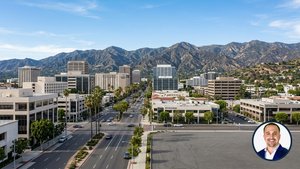





How to Choose a Realtor for Hillside and Earthquake-Zone Homes in Los Angeles
Alquist-Priolo fault zones (50-foot fault setbacks), SHMA liquefaction zones, LADBS soils reports, and LAFD fire-access rules create a legal and technical layer that most generalist agents never trained for. A hillside specialist knows all 7 criteria that separate them from a generalist. Here is how to find the right one.
For a Los Angeles hillside home, you need a realtor who knows the Alquist-Priolo Earthquake Fault Zone rules (50-foot fault setback, mandatory NHD disclosure) and the SHMA Seismic Hazard Zone requirements, two separate legal systems that most generalist agents conflate. The key criteria: verified hillside transaction volume in the last 24 months, LADBS-credentialed geotechnical contacts, and a pre-offer insurance check for Very High Fire Hazard Severity Zone properties, where earthquake retrofits can run $7,000 to $60,000. Call Justin Borges at (213) 262-5092 to walk through what a hillside-specialist evaluation looks like for a specific property.
See Current Hillside Listings in Los Angeles
Browse homes with canyon, ridge, and hillside locations across the LA metro area on LA Metro Home Finder's live IDX search.
Search Hillside Homes (213) 262-5092What Is the Two-Layer Seismic Zone System in Los Angeles?
When buyers ask about "earthquake zones" in Los Angeles, most get one answer: the Alquist-Priolo zone. That is only half the picture, and in many cases, not even the most consequential half. California operates two separate, legally distinct seismic-hazard mapping programs, each with its own maps, its own construction restrictions, and its own line on the Natural Hazards Disclosure Statement.
A generalist agent who conflates these two systems cannot reliably advise you on offer strategy, due-diligence timeline, or post-purchase risk. Understanding the distinction is the single most important test of whether a potential realtor has done the specialized reading that hillside transactions require.
Layer 1: Alquist-Priolo Earthquake Fault Zones (APEFZ)
The Alquist-Priolo Earthquake Fault Zone Act (Public Resources Code Sections 2621 through 2625) was enacted in 1972 after the 1971 Sylmar earthquake. It targets one specific risk: surface fault rupture. The California Geological Survey (CGS) maps Alquist-Priolo Earthquake Fault Zones around active fault traces. No new single-family dwelling may be constructed across an active fault trace. A 50-foot setback from the mapped fault is the standard applied by LADBS, according to the California Geological Survey.
Properties inside an APEFZ require mandatory seller disclosure under California Civil Code Section 1103. Critically, being inside an APEFZ does not necessarily prevent purchase or financing: it triggers a disclosure, a potential setback review, and a buyer's election to investigate further. The APEFZ maps are available through CGS's online mapping portal and are site-specific, not neighborhood-wide.
Layer 2: SHMA Seismic Hazard Zones (Zones of Required Investigation)
The Seismic Hazard Mapping Act of 1990 (Public Resources Code Sections 2690 through 2699.6) was passed after the 1989 Loma Prieta earthquake exposed a different class of seismic risk: not fault rupture, but what happens to the ground during strong shaking. CGS maps Zones of Required Investigation (ZRI) for three distinct hazards: liquefaction (water-saturated soils that behave like quicksand during shaking), earthquake-induced landslides, and amplified ground shaking, as defined under the Seismic Hazard Mapping Act (Public Resources Code §2696).
SHMA zones require a site investigation (a geotechnical report) before local governments can issue building permits for projects within a ZRI. For buyers, this means a property in a SHMA zone carries a separate disclosure on the NHD Statement and a separate set of lender and insurer concerns. A hillside parcel can fall in a SHMA landslide zone without being in any Alquist-Priolo fault zone, and vice versa. Both can apply simultaneously.
Search Hillside Homes in Silver Lake and Los Feliz
Silver Lake and Los Feliz hillsides carry both APEFZ and SHMA exposure. Browse current listings with a specialist's lens.
Silver Lake Listings Los Feliz ListingsHow Do Alquist-Priolo and SHMA Zones Compare in Los Angeles?
Both zones are mapped by the California Geological Survey and are disclosed on the Natural Hazards Disclosure Statement, but they address entirely different risks and carry different legal requirements for Los Angeles property transactions.
Alquist-Priolo Earthquake Fault Zones (APEFZ)
- Risk addressed: Surface fault rupture
- Legal authority: Public Resources Code §2621-2625
- Map publisher: CA Geological Survey (CGS)
- Key restriction: No new SFR construction across active fault trace; 50-ft setback
- NHD disclosure: Yes (Box 1 of NHD Statement)
- Buyer due diligence: Fault trace investigation, structural review
SHMA Seismic Hazard Zones (ZRI)
- Risk addressed: Liquefaction, earthquake-induced landslide, amplified shaking
- Legal authority: Public Resources Code §2690-2699.6
- Map publisher: CA Geological Survey (CGS)
- Key restriction: Geotechnical investigation required before permits
- NHD disclosure: Yes (separate box on NHD Statement)
- Buyer due diligence: Geotechnical report; slope stability, liquefaction potential
| Factor | Alquist-Priolo Zone | SHMA Seismic Hazard Zone |
|---|---|---|
| Year enacted | 1972 (post-Sylmar earthquake) | 1990 (post-Loma Prieta earthquake) |
| Primary hazard | Fault rupture at surface | Liquefaction / landslide / shaking amplification |
| Prevents residential purchase? | No; triggers disclosure + setback review | No; triggers geotechnical investigation requirement |
| Common in hillside LA? | Yes (Hollywood Hills, Silver Lake, Mt. Washington) | Yes (canyon areas, fill slopes, alluvial fans) |
| Can both apply to same parcel? | Yes: compounded risk and compounded disclosure | |
What NHD Disclosures Apply to Hillside Properties in Los Angeles?
California Civil Code Sections 1102 and 1103.2 require sellers to deliver a Natural Hazards Disclosure Statement (NHD) to buyers as part of every residential transaction. The NHD Statement covers six categories of hazard zones. For a hillside property in Los Angeles, multiple categories may apply to a single parcel simultaneously. (C.A.R. / Civil Code §1103.2)
| NHD Zone Category | Governing Authority | Hillside Risk Level | Notes |
|---|---|---|---|
| Alquist-Priolo Earthquake Fault Zone | Public Resources Code §2621-2625 | High | 50-ft setback; no new SFR across fault trace |
| Seismic Hazard Zone (SHMA) | Public Resources Code §2690-2699.6 | High | Liquefaction, landslide, shaking zones (separate from AP) |
| Very High Fire Hazard Severity Zone (VHFHSZ) | CAL FIRE / PRC §4202 | High | Post-Palisades fire (Jan 2025) scrutiny intensified; insurance implications |
| State Fire Responsibility Area (SRA) | CA Board of Forestry | Moderate | Annual fire prevention fee; overlaps VHFHSZ in canyon areas |
| FEMA Flood Zone | FEMA / FIRM maps | Varies | Canyon creek paths and hillside drainage; may require flood insurance |
| Dam Inundation Zone | CA DWR / OES | Varies | Applicable near reservoir communities (Chatsworth, Sylmar, Pacoima areas) |
A specialist agent reads the seller's completed NHD Statement against the actual CGS, CAL FIRE, and FEMA maps to verify accuracy. Sellers sometimes check boxes incorrectly, either understating or overstating exposure. An unchecked SHMA box on a parcel that falls within a mapped ZRI is a material disclosure deficiency: it does not make the hazard disappear, but it may create future liability questions. Your agent should catch it before you close.
Search Homes in Mount Washington and Eagle Rock
Mount Washington and Eagle Rock hillsides carry significant SHMA and APEFZ exposure. Browse current listings.
Mount Washington / Glassell Park Eagle Rock ListingsHow Do Geotechnical and Soils Reports Help Hillside Buyers in Los Angeles?
The Los Angeles Department of Building and Safety (LADBS) requires a geotechnical investigation report (prepared by a licensed soils engineer and engineering geologist) for all new construction and major additions on hillside properties. Buildings over 500 square feet on hillside parcels require a preliminary geology and soils report at least 10 days before permit issuance. Grading exceeding 1,000 cubic yards triggers the same requirement. (County of Los Angeles / LAMC Division 70 / Sec. 91.7006)
For buyers, the geotechnical report serves a different purpose than it does for a building department: it is a negotiating document. A soils report commissioned during the inspection period can reveal drainage issues, slope movement, expansive soils, or fill material conditions that are invisible to a visual inspection. Each finding is a potential price reduction, a repair credit, or a reason to walk away.
What a Geotechnical Report Evaluates
| Evaluation Area | What It Measures | Buyer Impact |
|---|---|---|
| Slope stability | Factor of safety against sliding; seismic slope-stability analysis | Foundation reinforcement cost; insurance eligibility |
| Soil bearing capacity | Load-carrying ability under the foundation | Foundation type and cost if additions or ADU planned |
| Liquefaction potential | Whether water-saturated soils could liquefy in an earthquake | SHMA ZRI confirmation; lender requirements |
| Expansive soils | Clay content that swells when wet and shrinks when dry | Foundation cracking risk; moisture management costs |
| Fill conditions | Whether site is on engineered fill, unengineered fill, or native soil | Settlement risk; permit history investigation needed |
| Drainage | Surface and subsurface water paths; erosion potential | Retaining wall and drainage system adequacy |
A hillside-experienced agent knows which geotechnical firms hold LADBS credentials and routinely inspect hillside parcels in Los Angeles. They also know how to read the executive summary findings and translate them into offer strategy, not just pass the report to you and wait for the inspection contingency deadline.
Selling a Hillside Home? Know What It Is Worth Before You List
Hillside and seismic-zone properties command premium values when properly marketed to informed buyers. Get a market analysis from a specialist.
Get Your Home's ValueHow Does Earthquake Retrofit Status Affect Your Offer in Los Angeles?
Los Angeles has operated a mandatory soft-story retrofit program since 2015 under Ordinance 183893 (amended by Ordinance 184160). The program targets pre-1980 wood-frame buildings of two to four stories with a soft or open first story (think: garage parking on the ground floor below dwelling units). These structures performed poorly in the 1994 Northridge earthquake, and the ordinance set phased compliance deadlines. (County of Los Angeles / LA Ordinance 183893)
For buyers of multifamily properties and some hillside single-family homes, retrofit status is a material financial disclosure that shapes offer price, lender approval, and ongoing ownership costs.
| Retrofit Status | Typical Cost Impact | Buyer Action |
|---|---|---|
| Standard Brace + Bolt (cripple wall): completed | $5,000-$10,000 (sunk cost to seller) | Verify LADBS permit; positive price-per-square-foot signal |
| Hillside retrofit: completed (caissons, moment frames) | $7,000-$60,000 (sunk cost to seller) | Review engineering documents; confirm scope matches current structure |
| Soft-story retrofit: completed | $15,000-$80,000 per unit (sunk cost) | Confirm LADBS compliance certificate; significant positive to lenders |
| Mandatory retrofit: NOT yet completed | Buyer inherits obligation; cost range above applies | Negotiate price reduction or seller credit; confirm lender position |
| EBB grant eligible: not yet applied | Up to $3,000 grant available (pre-1980, qualifying ZIP) | Verify eligibility; incorporate into due-diligence plan post-close |
A specialist agent knows how to pull LADBS permit records to confirm retrofit status for any specific parcel before you write an offer. An uncompleted mandatory retrofit on a soft-story building is a known cost that belongs in your negotiation, not a surprise at escrow closing.
Browse Hillside Homes in the Hollywood Hills
Hollywood Hills listings span Laurel Canyon, Beachwood Canyon, and Outpost Estates, each with distinct seismic and access profiles.
Hollywood Hills Listings (213) 262-5092 | Call a Hillside SpecialistWhat Are the Hillside Fire-Access Rules After the 2025 Palisades Fire in Los Angeles?
The January 2025 Palisades fire reshaped how buyers, agents, and insurers evaluate hillside properties in Los Angeles. The fire accelerated scrutiny of Very High Fire Hazard Severity Zones (VHFHSZ) and hillside fire-access compliance. These factors were on the disclosure form before January 2025 but are now at the top of every buyer's due-diligence checklist.
LA Municipal Code Section 57.503 governs fire apparatus access roads for hillside properties. Key standards include: dead-end roads serving parcels under one acre are capped at 800 feet in length; road width must meet LAFD minimums for apparatus access; and turnaround areas must be provided at the end of dead-end roads. (County of Los Angeles / LAMC Sec. 57.503)
The most operationally significant threshold for buyers: properties on roads where LAFD response time exceeds seven minutes face additional restrictions on new construction and permitting. For existing homes, a seven-minute-plus response time does not void the property, but it affects future improvement permits and is a material consideration for resale.
| Fire Access Factor | Standard (LAFC / LAMC Sec. 57.503) | Buyer Due-Diligence Action |
|---|---|---|
| Dead-end road length | Max 800 ft for parcels under 1 acre | Measure road on parcel map; flag if over limit |
| Road width | Minimum 20 ft paved (LAFD apparatus access) | Verify paved width; substandard streets may limit permits |
| Turnaround | Required at dead-end; cul-de-sac or hammerhead | Confirm turnaround present and LAFD compliant |
| LAFD response time | 7-minute threshold triggers additional restrictions | Request LAFD isochrone data for parcel; note for improvement plans |
| Very High Fire Hazard Severity Zone | Disclosed on NHD Statement; triggers defensible space and building standards | Verify current CAL FIRE map designation; review insurance pre-offer |
| Vegetation management | 100-foot defensible space required in SRA / VHFHSZ | Assess current compliance; factor into maintenance cost |
A hillside-experienced agent walks a property with fire-access compliance as part of their initial showing analysis, not as an afterthought during the inspection period. Knowing before you write an offer that a road is substandard or that a property carries VHFHSZ designation allows you to structure contingencies, pre-screen insurers, and negotiate from an informed position.
Search Topanga and Pacific Palisades Hillside Properties
Topanga and Palisades hillsides require careful fire-code and VHFHSZ due diligence. Browse current listings on LAMH.
Topanga Listings Pacific Palisades ListingsWhat Insurance Do Hillside Buyers in Los Angeles Need?
Hillside properties in Los Angeles often require coverage from three separate insurance products, not one. A generalist agent who does not know this cannot help you identify an uninsurable property before you are deep in escrow.
1. Standard Homeowners Insurance
Covers fire (some policies), theft, liability, and non-earthquake structural damage. Many standard carriers have exited VHFHSZ territories post-Palisades fire. Check insurer availability before offer submission, not during escrow.
2. Earthquake Insurance
The California Earthquake Authority (CEA) offers policies for LA homes averaging $1,250 to $3,000+ per year. (CA DOI / CEA, 2026) Rates run approximately $3.54 per $1,000 of coverage for a standard LA home. Retrofit status directly affects earthquake insurance premiums; a completed EBB retrofit typically qualifies for a premium discount.
3. FAIR Plan or Surplus Lines Fire Coverage
In VHFHSZ areas where standard carriers have pulled out, the California FAIR Plan provides basic fire coverage as the insurer of last resort. (CA DOI / FAIR Plan) Surplus lines markets fill broader gaps. An uninsurable property at standard market rates will not clear lender underwriting. Verify before you offer.
A specialist agent asks sellers for proof of current insurance coverage as part of the preliminary due-diligence conversation. For hillside properties in VHFHSZ territories, the agent should also be able to name two or three surplus lines brokers who write in that ZIP code, because if the seller's current insurer is the only option and that insurer will not renew, you have a post-close problem.
What Are the 7 Criteria for Evaluating a Hillside Realtor in Los Angeles?
The criteria below are drawn from the due-diligence requirements specific to hillside and seismic-zone transactions in Los Angeles. They are not a ranking of individual agents; they are an education in what hillside transactions require so you can evaluate any agent you are considering.
What 7 Questions Should You Ask a Hillside Realtor Before You Sign?
Before hiring any realtor to help you buy a hillside home in Los Angeles, use these seven interview questions to test whether they have real California hillside-transaction experience or are learning on your deal.
Hillside Realtor Interview Checklist
- How many hillside or seismic-zone homes have you closed in the last 24 months, and in which communities? What to listen for: Named communities and a number. Watch out for "many" or "a lot" without specifics, or communities that are not actually hillside terrain.
- Can you explain the difference between an Alquist-Priolo Earthquake Fault Zone and a SHMA Seismic Hazard Zone? What to listen for: Fault rupture (AP) versus liquefaction/landslide (SHMA), separate maps, separate NHD boxes. Watch out for: treating them as synonyms or mentioning only AP.
- Which geotechnical inspectors do you use for hillside properties, and do they hold LADBS credentials? What to listen for: Named firms, LADBS credential confirmation. Watch out for: "We use whoever the inspection service recommends" suggests no hillside-specific relationship.
- How do you verify fire-access road compliance for a specific parcel? What to listen for: Reference to LAMC Sec. 57.503 or LAFD road standards; dead-end length and road width checks. Watch out for: "We look at it during the inspection period" is too late for offer strategy.
- Have you negotiated an offer involving a mandatory soft-story retrofit obligation that had not yet been completed? What to listen for: A specific story with an outcome (price reduction, seller credit, escrow holdback). Watch out for: A yes with no details; the experience should be concrete.
- What is your process for verifying earthquake and fire insurance availability before an offer is submitted? What to listen for: Pre-offer insurer check; awareness of FAIR Plan and surplus lines; mention of VHFHSZ designation as the trigger. Watch out for: "That is a question for your insurance agent"; a hillside specialist takes the lead on surfacing the issue.
- How do you handle a Natural Hazards Disclosure where multiple zones apply to the same parcel? What to listen for: Cross-checking the seller's NHD against CGS and CAL FIRE maps; description of how errors or omissions are handled. Watch out for: "We pass the NHD to the buyer and let them review it" transfers risk to you, not guidance from the agent.
Search Benedict Canyon and Laurel Canyon Listings
Benedict Canyon and Laurel Canyon are among the most complex hillside corridors in LA from a seismic and fire-access perspective.
Benedict Canyon / Bel-Air Laurel Canyon / West Hollywood HillsWhich Los Angeles Neighborhoods Are Most Affected by Hillside and Earthquake-Zone Rules?
The Los Angeles communities below carry significant exposure to Alquist-Priolo fault zones, SHMA Seismic Hazard Zones, or Very High Fire Hazard Severity Zones, or some combination of all three. This is not an exhaustive list; CGS and CAL FIRE maps are parcel-specific and change with each update cycle. It is a starting point for directing your search to California neighborhoods where hillside specialist knowledge is not optional.
| Neighborhood / Community | Primary Seismic Exposure | VHFHSZ / Fire Risk | Notes |
|---|---|---|---|
| Hollywood Hills (90068, 90046) | APEFZ + SHMA landslide | High | Multiple fault traces; Laurel Canyon and Beachwood are distinct micro-zones |
| Silver Lake / Echo Park hills (90026) | APEFZ proximity; SHMA zones | Moderate | Steep hillsides; many older unreinforced structures |
| Los Feliz / Griffith Park edge (90027) | SHMA landslide zones | Moderate | Hillside edges above Vermont Ave; Griffith Park fire history |
| Mount Washington / Glassell Park (90065) | SHMA landslide zones | Moderate | Steep lots; narrow hillside roads; active SHMA mapping |
| Eagle Rock (90041) | SHMA zones near steep grades | Lower | Partially flat; hillside parcels on north and south edges have greater exposure |
| Benedict Canyon / Bel-Air (90210) | APEFZ in canyon; SHMA | High | 1961 Bel-Air fire history; VHFHSZ designation; narrow canyon roads |
| Pacific Palisades (90272) | SHMA zones | High | Epicenter of January 2025 fire; heightened insurer scrutiny ongoing |
| Topanga (90290) | APEFZ proximity; SHMA | High | SRA designation; limited road access; FAIR Plan territory for many homes |
| Verdugo Hills / Sunland-Tujunga (91042) | SHMA landslide zones | High | VHFHSZ and SRA; near 2009 and 2017 fire corridors |
Search Hillside Listings in the San Rafael Hills and Northeast LA
El Sereno, San Rafael Hills, and the northeast LA hillsides offer hillside character homes at relative value compared to the westside canyons.
El Sereno / San Rafael Hills (213) 262-5092Should You Use a Generalist Agent or a Hillside Specialist in Los Angeles?
For most standard Los Angeles transactions, a generalist agent can handle the work. For hillside and seismic-zone properties in California, the gap in specialized knowledge translates directly into missed due-diligence steps and avoidable costs.
| Situation | Generalist Agent | Hillside Specialist |
|---|---|---|
| Seismic zone identification | Mentions AP zone from NHD; may not know SHMA maps exist separately | Pulls CGS map before offer; identifies both AP and SHMA zones by parcel; explains both disclosures |
| Geotechnical due diligence | Refers buyer to "a home inspector" | Recommends LADBS-credentialed soils engineer; times report for maximum negotiating use |
| NHD review | Passes NHD to buyer; advises reading it | Cross-checks seller's NHD against CGS and CAL FIRE maps; flags discrepancies |
| Retrofit status check | Notes if seller disclosed retrofit | Pulls LADBS records before offer; calculates cost if mandatory retrofit incomplete |
| Fire-access road review | Notes if road looks narrow during showing | Measures road against LAFC Sec. 57.503 standards; checks LAFD isochrone data |
| Insurance pre-check | "Your insurance agent will handle that" | Asks seller for current carrier; verifies availability in VHFHSZ; names FAIR Plan and surplus alternatives |
| Offer strategy on a compromised property | Lists findings; defers to buyer on price | Quantifies each finding's cost impact; structures contingency releases and price offset in offer terms |
Free LA Home Buyer Workshop
Learn the full hillside due-diligence process (seismic zones, soils reports, fire-code checks, insurance) in a free live session with an experienced LA buyer's agent.
Reserve Your SeatWhat Are the 6 Costly Mistakes Los Angeles Hillside Buyers Make Without a Specialist?
Mistake 1: Treating the NHD as Complete Disclosure
Sellers sometimes check NHD boxes incorrectly. An unchecked SHMA box on a parcel inside a ZRI is a material omission. Only cross-checking against CGS maps catches it before close.
Mistake 2: Ordering a Soils Report Too Late
A geotechnical report ordered at day 10 of a 17-day inspection period leaves no time to negotiate findings. Specialist agents order soils reports at day 1 of the inspection contingency.
Mistake 3: Ignoring Retrofit Status on Multifamily Properties
A mandatory soft-story retrofit obligation that has not been completed is a liability you inherit. The cost is $15,000 to $80,000 per unit: not a line item to discover at closing.
Mistake 4: Checking Insurance After Escrow Opens
In VHFHSZ territories, some standard carriers will not write new policies. Finding out the property is uninsurable at standard market rates during escrow costs you deposit and time. Check pre-offer.
Mistake 5: Assuming a Narrow Hillside Road Is a Character Feature, Not a Code Issue
A road under LAFD's 20-foot paved width minimum is a fire-access compliance deficiency. It does not void a sale, but it may limit future improvements and affect insurer underwriting.
Mistake 6: Not Asking About the Two-Layer Seismic System
If your agent mentions only the Alquist-Priolo zone and does not bring up SHMA Seismic Hazard Zones independently, you now know more than they do. That is the single clearest flag to keep interviewing.
What Is Your Hillside Home Worth Right Now?
Hillside and canyon homes in Los Angeles require specialist valuation. Seismic zone status, retrofit history, fire designation, and access conditions all affect market value in ways a standard automated estimate cannot capture.
Get a Specialist Market AnalysisSearch All Hillside and Canyon Listings in Los Angeles
Browse every active hillside and canyon listing across the LA metro on LA Metro Home Finder's live IDX search.
Search All LA Hillside Homes (213) 262-5092Frequently Asked Questions
Hillside Buyer Quick-Reference Cheat Sheet
Key standards and numbers for Los Angeles hillside home purchases: every figure your agent should know before writing an offer.
| Item | Key Standard / Number | Source |
|---|---|---|
| AP zone fault setback | 50 feet minimum from active fault trace; no new SFR across fault | CGS / Alquist-Priolo Act |
| SHMA hazards covered | Liquefaction, earthquake-induced landslide, amplified shaking | Public Resources Code §2696 |
| Soils report trigger (LADBS) | New construction or additions >500 sq ft on hillside parcels | LAMC Sec. 91.7006 |
| Standard Brace + Bolt retrofit cost | $5,000-$10,000 | EBB Program, 2026 |
| Hillside retrofit cost range | $7,000-$60,000 (structure-dependent) | EBB Program, 2026 |
| EBB grant maximum | Up to $3,000 (pre-1980, raised foundation, qualifying ZIP) | EBB Program, 2026 |
| LAFD dead-end road limit | 800 feet max for parcels under 1 acre | LAFC / LAMC Sec. 57.503 |
| LAFD response-time threshold | 7 minutes (triggers additional restrictions) | LAFC / LAMC Sec. 57.503 |
| Earthquake insurance cost (LA) | $1,250-$3,000+ per year (~$3.54 per $1,000 coverage) | CEA / Insurify, 2026 |
| NHD maximum simultaneous disclosures | 6 hazard zones (APEFZ, SHMA, VHFHSZ, SRA, Flood, Dam) | Civil Code §1103.2 |
| Soft-story retrofit cost range | $15,000-$80,000 per unit | LADBS / LA Ord. 183893 |
| Buyer-broker agreement requirement | Required before touring (post-NAR settlement, Aug 2024) | CAR / NAR settlement |

Ready to Start Your Hillside Home Search?
Browse active listings across LA's hillside and canyon communities, or reach out directly to discuss the seismic and fire-code profile of a specific property you are considering.
Search Hillside Listings (213) 262-5092