




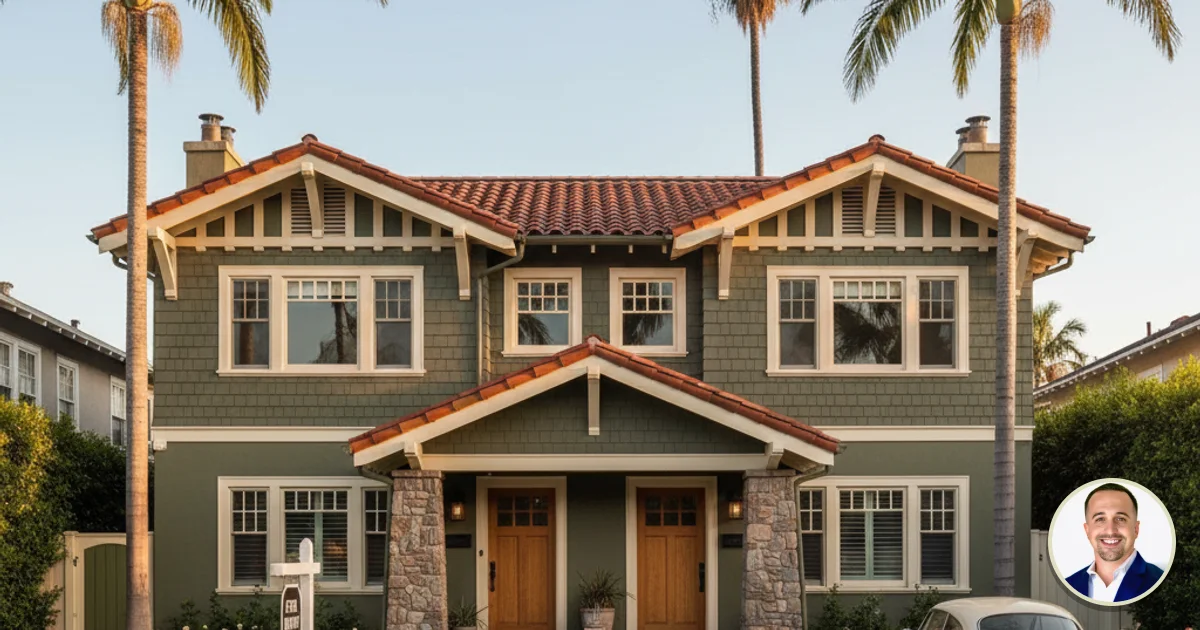
How to Choose a Realtor to Sell an LA Apartment Building
Choose a realtor who builds NOI-based valuations from your rent roll, not comparable home sales. LA multifamily buildings trade at a 5.0% average cap rate and $355,000 per unit (Matthews Real Estate, Q1 2026). Your agent must also calculate Measure ULA, disclose RSO status accurately, and reach the 1031 buyer pool. Call Justin at (213) 262-5092 to walk through your options.
In This Guide
- Why Multifamily Sales Are Different
- How Buyers Price Your Building
- RSO and Rent Control Disclosure
- Rent Roll and Estoppel Prep
- Measure ULA Net Proceeds Math
- Your Buyer Pool: 1031 Buyers and Syndicates
- What to Look for in a Multifamily Selling Agent
- Interview Questions to Ask
- LA Submarket Pricing Snapshot
- Pre-Listing Seller Checklist
- Decision Matrix
- The Offering Memorandum
- Financing: 1-4 Unit vs. 5+ Unit
- Multifamily Seller Glossary
- Cheat Sheet
- Frequently Asked Questions
Why Selling a Multifamily or Apartment Building Is Not Like Selling a House
Selling a single-family home in Los Angeles is largely a comparable-sales exercise. Buyers hire lenders, tour homes, and write offers based on what neighbors sold for last quarter. Selling a 6-unit apartment building in Koreatown or a 12-unit in Van Nuys is a completely different transaction. Buyers are not comparing living rooms; they are underwriting income streams. Every number on your rent roll, every tenant's lease term, and every deferred capital expense directly affects what a buyer will pay and whether their lender will fund the deal.
That gap between how sellers think about their buildings and how buyers price them is where most LA multifamily transactions either succeed or fall apart. A seller who inherited a 1960s fourplex in Lincoln Heights may have owned it for decades and think of it in terms of land value and sentiment. A 1031 buyer on a 45-day identification deadline is running cap rate math and rejecting anything that doesn't pencil at their target yield. A good multifamily selling agent translates fluently between those two worlds.
Selling a 2-to-20 unit building in Los Angeles requires an agent who understands the specific criteria that separate a qualified multifamily listing agent from a residential generalist. If you are considering selling, use the questions in this guide before you sign a listing agreement.
Coverage: 2-to-20 unit residential income properties in Los Angeles County, including duplexes, triplexes, fourplexes (covered by residential financing), and small apartment buildings (5+ units, commercial financing). Tax and legal items are educational only; consult a licensed CPA and real estate attorney before acting.
Thinking About Selling Your LA Apartment Building?
Get a cap-rate-based valuation and a Measure ULA net proceeds estimate before you list.
How Buyers Price Your Building: Cap Rate and GRM Explained
When an investor evaluates a Los Angeles apartment building, they start with one of two valuation frameworks: gross rent multiplier (GRM) or capitalization rate (cap rate). Both are income-based. Both are sensitive to rent levels that you, as the seller, directly control through how you manage the asset before listing.
Gross Rent Multiplier (GRM)
GRM is calculated by dividing the sale price by the annual gross rents the building produces. A building generating $120,000 per year in rents that trades at $1.44 million has a GRM of 12. The Westside of Los Angeles currently trades at GRMs between 11.0 and 14.5 (Favia Investment Group, 2026). South LA and the Valley trade at lower GRMs, meaning buyers expect more rent per dollar of purchase price. GRM is fast to calculate and commonly used for quick screening; it ignores operating expenses.
Capitalization Rate (Cap Rate)
Cap rate equals net operating income (NOI) divided by sale price. NOI is gross rents minus vacancy, management fees, insurance, taxes, maintenance, and utilities the owner pays. The LA metro average cap rate in Q1 2026 was 5.0%, with pricing at $355,000 per unit (Matthews Real Estate Investment Services, Q1 2026). Westside cap rates are compressed to 3.5 to 4.5 percent; South LA and the Valley can reach 5 to 6 percent or above, reflecting higher relative yields.
When your in-place rents are significantly below market because of long-tenured RSO tenants, buyers price your building at its current income, not what market rents could theoretically produce. That below-market rent gap compresses both cap rate and GRM. A skilled selling agent will help you decide whether to address that gap before listing or price transparently with it disclosed.
How LA Buyers Are Pricing by Submarket in 2026
Source: Matthews Real Estate Investment Services Q1 2026; Favia Investment Group 2026. Cap rates represent stabilized mid-tier assets; value-add deals trade wider.
Your listing agent needs to understand where your building sits in this spectrum and why. An agent who prices your Koreatown fourplex as if it were a South LA duplex will undervalue it. An agent who ignores below-market rents when pricing will watch deals fall apart in due diligence when buyers discover the real income picture.
What Does RSO Mean for LA Apartment Sellers?
Approximately 650,000 rental units in the City of Los Angeles are covered by the Rent Stabilization Ordinance (RSO), administered by the LA Housing Department (LAHD, housing.lacity.gov, 2026). Buildings constructed before October 1, 1978 in the City of LA are generally covered. If you own one of these buildings, your RSO status is material to every buyer, and your listing agent's ability to explain the regulatory framework accurately is non-negotiable.
The July 2026 RSO Formula Change
Los Angeles Mayor Karen Bass signed a revised RSO in January 2026. Starting July 1, 2026, the annual allowable increase transitions to 90 percent of CPI for "All Items," with a floor of 1 percent and a cap of 4 percent. This replaced the prior structure of 3 to 8 percent based on utility costs. The new cap is lower than the prior ceiling, which means long-term rent gap recovery for properties with below-market tenants is slower than it was under the old system (LAHD / City of LA Ordinance / AAGLA, 2026).
RSO vs. AB 1482 vs. Uncontrolled
| Framework | Coverage | Annual Increase Limit | Just-Cause Eviction |
|---|---|---|---|
| LA City RSO | Pre-Oct 1978 buildings, City of LA; ~650K units | 90% CPI, 1%-4% cap (effective Jul 1, 2026) | Yes; tenants cannot be removed by sale alone |
| AB 1482 (State TPA) | Multifamily 15+ years old, statewide, not covered by local RC | 5% + local CPI, max 10%; LA-area Aug 2026: 8.7% | Yes; just cause required for no-fault terminations |
| Uncontrolled | Post-1978 SFR, new construction, owner-occupied duplexes (AB 1482); some SFRs | No statutory cap; market rate | No (unless local ordinance) |
| LA County RSTPO | Unincorporated LA County; covers some post-1978 properties | Separate formula; check DCBA for current rate | Yes; county ordinance applies |
Sellers of RSO-covered buildings must disclose RSO status to buyers. LAHD registration must be current and annual fees paid. Buyers' lenders conducting due diligence will pull the LAHD record. Non-registration or fee delinquency can delay or kill a sale in escrow. A competent seller's agent will verify your LAHD status before you accept an offer.
The agent you hire should be able to run a ZIMAS lookup on your property, interpret the RSO status, calculate the current rent ceiling for each unit, and explain the income trajectory to buyers under the new July 2026 formula. This is not a skill a residential generalist develops by accident.
For a deeper look at which LA buildings are covered, see Is My LA Rental Exempt from Rent Control in 2026?
FREE Weekly Workshop: First-Time Buyer Blueprint
Learn exactly how to buy a home in LA: prices, process, and pitfalls. Live every week, totally free.
Reserve Your Free SeatHow Do You Prepare a Rent Roll and Estoppels for Sale in Los Angeles?
The rent roll is the first document any serious multifamily buyer requests, typically within 24 to 48 hours of receiving an accepted offer. It is a line-by-line summary of each unit: current monthly rent, security deposit held, lease type (month-to-month vs. fixed term), move-in date, and any concessions or deferred rent arrangements. If your rent roll is disorganized, has unexplained gaps, or shows rents significantly below market without annotation, buyers will either walk away or demand a significant price reduction.
Preparing a Clean Rent Roll Before Listing
Sellers who prepare and review a clean, annotated rent roll before going to market have a measurable advantage: fewer buyer due-diligence requests, shorter escrow periods, and less price negotiation at close. A good seller's agent will help you build this document, flag any discrepancies (units with no lease on file, deposits not matching current law under AB 12, informal rent arrangements with long-term tenants), and prepare an explanatory cover sheet for the buyer's underwriter.
Estoppel Certificates: Why They Matter
An estoppel certificate is a document signed by each tenant confirming their current rent amount, security deposit held, lease commencement and expiration dates, whether the landlord has performed all obligations, and any claims or disputes the tenant is aware of. Tenants are legally required to sign estoppels within a reasonable time period if the lease or a court order requires it; in practice, getting estoppels signed before listing is a proactive seller strategy that protects you in escrow.
Start the estoppel process 30 to 60 days before listing. Some tenants will delay or ask questions; some will surface issues (disputed deposits, verbal agreements, repair requests) that are better handled before a buyer discovers them in due diligence. Buyers who receive clean, signed estoppels at the start of due diligence close faster and request fewer credits at close.
Soft-Story Retrofit Status
Pre-1980 wood-frame apartment buildings of 2 stories or more in Los Angeles were subject to a mandatory seismic retrofit order from the Los Angeles Department of Building and Safety (LADBS). The compliance deadline expired December 2022. Buildings not yet retrofitted trade at a discount; buyers will use non-compliance as use to negotiate price reductions that typically exceed the actual cost of the work ($30,000 to $80,000 per unit depending on building configuration). A knowledgeable seller's agent will pull your LADBS compliance status before you list and advise whether completing the retrofit before marketing increases your net proceeds.
Need Help Preparing Your Rent Roll for Sale?
Get guidance on rent roll presentation, estoppel prep, and what buyers will ask for in due diligence.
PACE Liens
Property Assessed Clean Energy (PACE) liens are assessments attached to the property itself, not the owner. If a prior owner or you financed solar panels or energy upgrades through a PACE program, that lien transfers to the buyer at close. Buyers and their lenders frequently have concerns about PACE liens; undisclosed liens discovered in escrow cause deal collapses. Pull your preliminary title report before listing and surface any PACE obligations early.
See also: Realtor for Investment Property in Los Angeles for related due diligence frameworks.
How Much Does Measure ULA Cost LA Apartment Sellers?
Measure ULA is a City of Los Angeles transfer tax enacted by voters and upheld despite legal challenges. It applies to properties in the City of Los Angeles (not unincorporated county areas) that sell above specified thresholds. Effective July 1, 2026, the updated thresholds are: properties selling at $5,400,000 or above but below $10,900,000 are subject to a 4 percent transfer tax; properties selling at $10,900,000 or above face a 5.5 percent tax. This tax is paid by the seller (City of Los Angeles Office of Finance, 2026).
Many LA apartment owners first learn about their Measure ULA liability after accepting an offer. A $6 million sale in the City of LA triggers $240,000 in ULA tax. A $12 million sale triggers $660,000. Calculate this before you list, not after you are in escrow.
Measure ULA Net Proceeds Scenarios
| Sale Price | ULA Tax Rate | ULA Tax Amount | Estimated Net Proceeds Impact | Notes |
|---|---|---|---|---|
| $4,000,000 | None | $0 | No ULA impact | Below $5.4M threshold (Jul 2026) |
| $5,500,000 | 4% | $220,000 | Reduces net before agent fees and mortgage payoff | Just above threshold; significant hit |
| $7,500,000 | 4% | $300,000 | Reduces net materially | Mid-tier 8-12 unit LA building |
| $12,000,000 | 5.5% | $660,000 | Major seller cost; affects 1031 replacement math | Above $10.9M threshold |
Source: City of Los Angeles Office of Finance / AAGLA, July 2026 thresholds. These are estimates for illustration; consult a CPA for your specific tax situation.
Measure ULA and Your 1031 Exchange
If you plan to do a 1031 exchange out of your LA apartment building, Measure ULA reduces your net proceeds, which affects the minimum value of replacement property required to fully defer capital gains. Your 1031 qualified intermediary (QI) will need your net proceeds after all closing costs, including ULA, to calculate the replacement property threshold. Get this number from your CPA before you list. For a full 1031 exchange framework, see 1031 Exchange in Los Angeles .
What Is My Apartment Building Worth in 2026?
Get a cap-rate-based valuation that accounts for your actual rent roll, RSO exposure, and Measure ULA. Not a Zestimate.
Get My Free ValuationPricing Just Below the ULA Threshold
In practice, the Measure ULA threshold creates a pricing floor effect: sellers with buildings that might appraise at $5.4 to $5.7 million often price at or just below $5.4 million to avoid the tax entirely and attract a broader buyer pool. A UCLA study found that ULA reduced property transactions by 30 to 50 percent in the impacted price tier. Your agent needs to understand this dynamic and help you model whether pricing below the threshold results in a better net outcome than pricing above it and absorbing the ULA hit.
Who Buys LA Apartment Buildings: 1031 Buyers, Syndicates, and House-Hackers?
The buyer pool for a Los Angeles apartment building is meaningfully different from the buyer pool for a single-family home, and the difference varies significantly by building size. Knowing who your likely buyers are shapes how your listing agent should market your property, what financing contingencies to accept, and how to respond to offers.
1031 Exchange Buyers: The Most Motivated Buyer Type
The largest and most motivated buyer cohort for 5 to 20 unit LA buildings is investors executing a 1031 exchange under Internal Revenue Code Section 1031 (IRS Rev. Proc. 2002-22). These buyers have already sold another investment property and are on hard deadlines: 45 days to identify a replacement property, 180 days to close. Missing either deadline triggers a full capital gains tax event on their prior sale, which creates genuine urgency to perform.
Because their alternative is a large immediate tax bill, 1031 buyers often pay at or slightly above the market price for a building that meets their underwriting criteria. An agent who maintains relationships with 1031 buyers, qualified intermediaries (QIs), and the CRE brokers who represent them can source these buyers before going to market, sometimes delivering an off-market transaction that avoids broker co-op fees entirely.
Syndicates and 1031 buyers often prefer off-market deals because they avoid the competitive auction environment and can underwrite in peace. Individual owner-occupant buyers (house-hackers) almost always pay more on-market through a traditional IDX listing because they are competing with emotion, not just spreadsheets. Your agent needs a strategy for both channels simultaneously.
Want to Know Who Is Actively Buying in Your Submarket?
Get a buyer pool analysis for your specific building size, location, and price tier before listing.
What to Look for in a Realtor to Sell Your LA Apartment Building
The following criteria are not a ranking of individual agents. They are the substantive skills and knowledge areas that a seller of a Los Angeles multifamily property should evaluate in any agent before signing a listing agreement. Ask each candidate to demonstrate, not just claim, these capabilities.
Demonstrable LA Multifamily Transaction History
Ask for a list of 2-to-20 unit buildings they have listed and closed in Los Angeles in the last 24 months, with addresses you can verify on public record. Residential volume does not substitute. If the agent cannot produce at least 3 to 5 recent multifamily closings, they are learning on your asset.
Cap Rate and GRM Modeling Capability
Ask the agent to walk you through a cap rate and GRM analysis on your building using your current rent roll. If they cannot produce a written NOI summary and explain how buyers in your price tier are underwriting comparable assets, they are not equipped to price your building accurately.
RSO and AB 1482 Literacy
The agent should be able to pull your LAHD RSO registration, read the current rent ceiling for each unit, and explain the July 2026 formula change to a prospective buyer without reading from a brochure. Mishandling RSO disclosures creates liability for both you and the agent after close.
Measure ULA Calculation and Net Proceeds Analysis
Before you sign a listing agreement, your agent should present a net sheet that includes Measure ULA, standard closing costs, commission, mortgage payoff, and capital gains tax estimate (from your CPA). If they hand you a gross sale price without walking through these deductions, you will be surprised at close.
1031 Buyer Network and Off-Market Reach
Ask the agent to name three qualified intermediaries (QIs) they work with regularly and how they plan to reach 1031 buyers for your building. An agent with genuine CRE investor relationships can generate pre-market interest before the MLS listing goes live, which often results in better terms and shorter escrow periods.
Estoppel and Rent Roll Process
Ask whether the agent has a standard estoppel certificate template, how they facilitate the tenant signing process, and what they do when a tenant disputes a rent amount or raises a habitability concern during estoppel collection. Agents who have done this before have a protocol; agents who have not will improvise and create liability.
Soft-Story and LADBS Compliance Knowledge
For pre-1980 wood-frame buildings, the agent should be able to pull your LADBS compliance order status, estimate the impact of non-compliance on buyer financing, and advise on whether completing the retrofit before listing would improve your net outcome.
For related context on choosing a realtor for investment properties broadly, see How to Choose a Realtor in Los Angeles .
What Questions Should You Ask a Multifamily Listing Agent in Los Angeles?
Each question below is designed to separate agents who understand LA multifamily transactions from those applying residential selling skills to a fundamentally different asset class. A strong answer demonstrates actual experience; a weak answer reveals that the agent is generalizing.
7 Questions to Ask Before You Sign a Listing Agreement
Where Are LA Multifamily Buildings Trading in 2026?
Multifamily pricing in Los Angeles is not uniform. A 6-unit building in Palms trades at a fundamentally different cap rate than an identical building in Van Nuys, even if the rent rolls are similar. Understanding your submarket is essential to pricing strategy and to screening which buyer pool your listing will attract.
| Submarket | Cap Rate Range | GRM Range | Avg Price/Unit | Primary Buyer Type |
|---|---|---|---|---|
| Westside (Santa Monica, West LA, Culver City, Palms) | 3.5%-4.5% | 13.0-14.5x | $450K-$600K+ | Syndicates, all-cash private investors, 1031 buyers |
| Koreatown / Hollywood / East Hollywood | 4.0%-5.0% | 11.5-13.5x | $380K-$520K | 1031 buyers, syndicates, value-add investors |
| Silver Lake / Echo Park / Atwater / NELA | 4.5%-5.5% | 10.5-12.5x | $340K-$480K | House-hackers (2-4 unit), 1031 buyers, individual investors |
| San Fernando Valley (Burbank, North Hollywood, Reseda) | 4.5%-5.5% | 10.0-12.0x | $310K-$420K | Individual investors, 1031 buyers, some house-hackers |
| South LA / Inglewood / Watts | 5.0%-6.5% | 9.0-11.0x | $250K-$360K | Value-add investors, syndicates seeking yield |
| East LA / Lincoln Heights / Boyle Heights | 4.5%-5.5% | 10.0-12.0x | $290K-$400K | 1031 buyers, house-hackers, first-time investors |
Source: Matthews Real Estate Investment Services Q1 2026; Favia Investment Group 2026; CoStar / CRMLS multifamily reports 2026. Ranges represent stabilized mid-tier assets. Value-add deals trade wider. Individual transaction outcomes vary based on rent roll quality, condition, and Measure ULA exposure.
Transaction volume across the LA metro totaled $7.9 billion over the trailing 12 months through Q1 2026, down modestly year-over-year as elevated rates, flat rent growth, and Measure ULA continue to moderate deal flow (Matthews Real Estate Investment Services, Q1 2026). That moderation is concentrated in the $5 million and above tier where ULA has the most impact on seller net proceeds and buyer return requirements.
See What LA Multifamily Buildings Are Listed For Right Now
Compare current asking prices and cap rates across LA submarkets before you decide on your listing price.
What Should LA Apartment Sellers Prepare Before Signing a Listing Agreement?
Los Angeles multifamily sellers who complete this checklist before going to market experience shorter due diligence periods, fewer buyer requests for price credits, and faster closes. Start at least 60 to 90 days before your target listing date for buildings with 6 or more units.
| Item | Who Prepares It | Why It Matters | Timeline |
|---|---|---|---|
| Annotated rent roll | Seller + listing agent | First document any buyer requests; discrepancies kill deals | 60-90 days out |
| Signed estoppel certificates | Seller solicits; tenants sign | Confirms rent, deposits, no side agreements; protects seller at close | 45-60 days out |
| LAHD RSO registration confirmation | Listing agent pulls LAHD record | Non-registration is a deal-killer for financed buyers | 60 days out |
| LADBS soft-story compliance status | Listing agent pulls LADBS record | Non-compliance = buyer price use; decide whether to remediate | 60 days out |
| Preliminary title report | Escrow / title company | Surfaces PACE liens, mechanic's liens, easements before listing | 45-60 days out |
| Measure ULA net proceeds estimate | Listing agent + seller's CPA | Know your real number before you set a minimum acceptable price | 60 days out |
| Capital gains and 1031 analysis | Seller's CPA or tax advisor | Sets the minimum net proceeds required; drives pricing floor | 60-90 days out |
| 12-month operating expense summary | Seller | Used to calculate actual NOI; buyers and their lenders will ask for it | 45 days out |
| Photos of all units (interior + exterior) | Listing agent or photographer | Well-documented condition reduces inspection negotiation; required for OM | 30 days out |
| Lease copies for all units | Seller | Buyers will request; missing leases signal disorganized ownership | 45 days out |
Ready to Find Out What Your Building Is Worth?
A cap-rate-based valuation with a full Measure ULA net proceeds analysis. Free, no obligation.
Get My Free Building ValuationWhich Type of Los Angeles Multifamily Seller Are You?
Your situation determines which factors to prioritize when choosing your Los Angeles listing agent and structuring your sale. Use these scenarios as a starting point.
Should You Use a Multifamily Specialist or a Residential Agent in Los Angeles?
Many residential agents in Los Angeles are licensed to list income properties. The question is whether they are equipped to handle the specific demands of an apartment building transaction. The table below maps the concrete skill differences that show up in actual deal outcomes.
| Skill Area | Multifamily Specialist | Residential Generalist |
|---|---|---|
| Pricing methodology | Builds NOI from rent roll; applies submarket cap rate; models GRM against recent comps; explains buyer underwriting logic | Uses comparable home sales and price per square foot; may not account for income dynamics or rent-gap effect on value |
| RSO and AB 1482 | Pulls LAHD registration; calculates per-unit rent ceiling; explains July 2026 formula change; prepares buyer disclosure proactively | May list RSO as a bullet in disclosures without modeling its income impact or explaining it to buyers clearly |
| Measure ULA | Calculates ULA at current thresholds before listing; builds net proceeds model; advises on threshold pricing strategy | May mention ULA exists but leaves calculation to escrow, resulting in seller surprise at close |
| Estoppel certificates | Has standard estoppel template; starts process 30-60 days before listing; handles tenant disputes proactively | Treats estoppels as a due-diligence-period issue; may not have a template or process for disputed amounts |
| 1031 buyer network | Has relationships with QIs, CRE brokers, and syndicates; can source pre-market interest from 1031 buyers on hard deadlines | Lists on MLS and Zillow; relies on buyer's agent to surface investor interest; limited off-market reach |
| Financing awareness | Understands 5+ unit commercial financing (DSCR loans, commercial mortgages); knows which buyers can close and which cannot | Familiar with residential financing; may not understand commercial lending requirements or DSCR underwriting |
| Soft-story and LADBS | Pulls LADBS compliance status independently; models retrofit cost impact on pricing; discloses proactively in offering memorandum | May rely on buyer's inspector to discover compliance issues; treats it as a contingency rather than a pricing input |
| Offering memorandum (OM) | Prepares a professional OM with rent roll, income/expense summary, NOI, and submarket analysis that speaks to investor buyers | May use a residential seller disclosure package that does not address investor underwriting criteria |
The difference between a multifamily specialist and a generalist is not typically visible during the listing period. It becomes visible at due diligence and in escrow: undisclosed rent-control complications, buyer requests for large credits due to estoppel disputes, lender concerns about RSO registration gaps, and Measure ULA surprises that change the seller's net. By that point, you have already accepted an offer and your negotiating use is limited.
What Mistakes Do LA Apartment Building Sellers Make Before Listing?
All six mistakes below are preventable. Each one consistently appears in Los Angeles multifamily transactions that close at below-market prices, take longer than necessary in escrow, or fall apart after ratifying an offer, and each is directly tied to the quality of your listing agent.
Avoid These Mistakes Before You List
A pre-listing consultation covers cap rate pricing, Measure ULA math, estoppel timeline, and rent roll review. No obligation.
How Do You Coordinate a 1031 Exchange When Selling Your LA Building?
If you plan to execute a 1031 exchange yourself after selling your LA apartment building, the coordination demands become significantly more complex. You are simultaneously managing the sale of your relinquished property and the acquisition of replacement property, both on hard legal deadlines. Your listing agent's role extends well beyond getting you an accepted offer.
The 45-Day and 180-Day Rules
Under IRC Section 1031 (IRS Rev. Proc. 2002-22), the 45-day identification period begins on the closing date of your relinquished property. You must formally identify your replacement property or properties in writing to your qualified intermediary (QI) within 45 days. No exceptions, no extensions, no rounding up. The 180-day close deadline runs concurrently from the same closing date. If your replacement property purchase does not close within 180 days, the exchange fails and the deferred capital gains become immediately taxable.
How Your Listing Agent Affects Your 1031 Timeline
Your agent controls the listing date and the anticipated closing date. If you need a specific close date to coordinate with the acquisition of your replacement property, your agent must structure the listing, counter-offer timelines, and escrow period with that constraint in mind. Agents who do not understand 1031 mechanics will commit to close dates that conflict with your QI's requirements without realizing the tax consequence.
| 1031 Timeline Milestone | Who Controls It | Your Agent's Role |
|---|---|---|
| Day 0: Relinquished property closes | Escrow / title | Confirms QI receives proceeds directly from escrow; no constructive receipt by seller |
| Days 1-45: Identify replacement property | Seller + QI | Agent should have replacement candidates identified or networked before Day 0; helps seller evaluate replacement options against 1031 math |
| Days 46-180: Close on replacement property | Seller + replacement agent | If your listing agent has CRE network reach, they may source replacement properties simultaneously with managing your sale; coordinates timing to avoid 180-day deadline pressure |
| CA FTB 593 withholding | Escrow / title | If you are a non-CA resident, 3.33% of gross sales price is withheld at close (CA Franchise Tax Board Form 593, 2026); agent should flag this to your CPA in advance |
For a full guide to 1031 exchange mechanics in Los Angeles, including replacement property identification strategies and common pitfalls, see 1031 Exchange in Los Angeles: Complete Guide . For the buyer-side perspective on multifamily due diligence, see What to Look for in a Multifamily Realtor in LA .
Your QI must receive the proceeds from your relinquished property sale directly from escrow. The seller cannot touch the funds without disqualifying the exchange. Select your QI before closing, not after. Your listing agent should be able to recommend two or three QIs they have worked with on prior multifamily 1031 transactions; this is a concrete test of their experience in the investor ecosystem.
Planning a 1031 Exchange Out of Your LA Building?
A net proceeds analysis that accounts for Measure ULA, capital gains, and your QI's replacement property threshold. Free consultation.
Get My Free ValuationOff-Market vs. On-Market: Which Is Better for Your LA Apartment Building?
The off-market vs. on-market question for Los Angeles apartment buildings is not settled by ideology. It depends on your building size, price tier, buyer pool, tenant sensitivity, and timeline. A good multifamily selling agent presents both options with honest trade-off analysis, not a reflexive preference for one channel.
Off-Market Advantages
- No tenant disruption from public listing or open-house activity
- Preferred by 1031 buyers and syndicates who want to underwrite without competition
- Can avoid Measure ULA optics in a market already sensitive to high transaction costs
- Faster close when pre-qualified buyer is already identified
- Less exposure to lowball offers from buyers who do not understand the asset
- Protects privacy for estate sales, partnership dissolutions, or sensitive ownership situations
Off-Market Disadvantages
- Smaller buyer pool means less price competition and potentially lower final price
- Relies entirely on your agent's network; a thin network produces thin off-market results
- No public market validation of your pricing; harder to defend to partners or beneficiaries
- Some buyer types (house-hackers, first-time investors) are almost exclusively on-market buyers
- Fiduciary concern if selling a probate, trust, or partnership asset that requires market exposure
The Dual-Channel Strategy
For 5-to-20 unit buildings in the $2 million to $5.4 million range, the most effective approach is typically a structured pre-market period of 2 to 4 weeks targeting 1031 buyers and syndicates through direct agent-to-agent outreach, followed by an MLS listing if pre-market interest does not produce a satisfactory offer. This captures the motivated 1031 buyer pool while retaining the option to maximize price through public competition. Your listing agent must have the network to execute the pre-market phase; if they do not, the pre-market period is theater that simply delays your MLS listing.
For 2-to-4 unit buildings where owner-occupant buyers represent a significant portion of the pool, an MLS listing is almost always the right primary channel. House-hackers use Zillow and their buyer's agent, not off-market deal flow, to find properties. Bypassing MLS for a duplex eliminates the buyer segment most likely to pay the highest price.
What Should a Professional LA Multifamily Listing Include?
When a residential agent lists a 3-bedroom home, they produce a disclosure package and a MLS sheet. When a qualified Los Angeles multifamily selling agent lists an 8-unit apartment building, they produce an offering memorandum (OM). The OM is the marketing document that speaks directly to investor buyers. It replaces sentiment-based residential copy with the financial data an investor needs to underwrite the purchase without requesting documents piecemeal. The quality of the OM your agent prepares is often the clearest signal of whether they are equipped for a multifamily transaction.
What an OM Must Include
| OM Section | What It Contains | Why Investors Care |
|---|---|---|
| Executive Summary | Building address, unit count, year built, asking price, cap rate, GRM, asking price per unit | Allows investors to screen in 30 seconds; if the cap rate is wrong, the deal is dead before page 2 |
| Current Rent Roll | Unit-by-unit rent schedule with current rent, market rent, lease type, move-in date, deposit held | The primary pricing input; buyers compare in-place rents to market rents to estimate value-add potential |
| Income and Expense Statement | Gross scheduled income, vacancy allowance, effective gross income, operating expenses by category, NOI | Drives cap rate calculation; buyers and their lenders will reconstruct this independently |
| NOI Calculation | Net operating income in dollars; shown at current rents and at projected market rents | The single number that determines what the building is worth to an income investor |
| Regulatory Summary | RSO status, LAHD registration, AB 1482 coverage, soft-story compliance, PACE liens, zoning | Buyers need this to underwrite legal and compliance risk; a missing or wrong regulatory summary is a red flag |
| Measure ULA Disclosure | Whether property is in City of LA, applicable threshold, tax amount at asking price | Institutional and 1031 buyers model ULA into their return calculations; surprises derail negotiations |
| Submarket Comparable Analysis | Recent sales of comparable buildings with cap rates, sale prices per unit, and GRMs | Justifies the asking price by reference to verifiable market data rather than seller opinion |
| Property Photos and Condition Notes | Exterior, common areas, representative unit interiors; age of roof, HVAC, plumbing | Buyers price deferred maintenance before they visit; professional photos reduce speculation |
A residential-style listing description that describes the building as "charming" with "great bones" and "tremendous upside potential" signals to investors that the seller's agent does not understand their audience. Investors are not buying bones or charm; they are buying income. An agent who cannot produce a complete OM with an accurate NOI is not equipped to market your apartment building to the buyers who will pay the most for it.
Distributing the OM to the Right Buyers
An OM distributed only through MLS and Zillow will reach buyer's agents who represent residential buyers. The 1031 exchange buyers and syndicates who are the most likely purchasers of a 5-to-20 unit building do not primarily source deals from MLS. They source deals through:
- Direct agent-to-agent outreach from the listing agent's CRE investor network
- Qualified intermediary referrals to their 1031 buyer databases
- Commercial real estate listservs, CoStar listings, and investor platforms like LoopNet and Crexi
- Direct outreach to syndicates and family offices known to be active in the submarket and price tier
This is why the listing agent's investor network is not a bonus feature; it is a core part of the marketing function. An agent without that network produces an OM and sends it nowhere a motivated investor will find it.
How Does Buyer Financing Change at 5 Units in Los Angeles?
The financing threshold at 5 units is one of the most consequential facts in Los Angeles multifamily sales, and many residential agents either do not know it or do not internalize its implications for the buyer pool. For sellers, understanding how your building will be financed by buyers determines which buyers can close, what due diligence looks like, and what contingencies you should accept in offers.
1-to-4 Units: Residential Financing Applies
Buyers of 2-to-4 unit buildings can access residential financing programs, including FHA (3.5% down with owner-occupancy), Fannie Mae and Freddie Mac conventional loans, and VA loans. This means the buyer pool includes owner-occupants (house-hackers), first-time investors, and experienced investors who prefer the lower down payment thresholds and 30-year fixed terms available in the residential market. The appraisal process is residential (comparable sales methodology supplemented by income approach) and lender due diligence follows residential underwriting timelines, typically 21 to 30 days in standard escrow.
5+ Units: Commercial Financing Required
Buildings with 5 or more units do not qualify for FHA or conventional residential financing. Buyers must use commercial real estate loans, which include portfolio lender commercial mortgages, DSCR (debt service coverage ratio) loans, bridge financing, and SBA loans for owner-user commercial properties. Down payments are typically 25 to 35 percent. Rates are priced off SOFR or the 5-year Treasury rather than the 30-year benchmark. Underwriting timelines are longer (30 to 45 days or more), appraisals use income capitalization as the primary method, and lender documentation requirements are more intensive.
| Factor | 2-to-4 Units (Residential) | 5+ Units (Commercial) |
|---|---|---|
| Eligible loan programs | FHA, Fannie Mae, Freddie Mac, VA, USDA | Commercial mortgage, DSCR loan, bridge loan, portfolio lender |
| Typical down payment | 3.5% (FHA owner-occupant) to 20-25% (conventional investor) | 25% to 35% of purchase price |
| Appraisal methodology | Comparable sales primary; income approach secondary | Income capitalization primary; comparable sales secondary |
| Underwriting timeline | 21 to 30 days (standard escrow) | 30 to 60 days; varies by lender type |
| DSCR requirement | Not applicable (residential qualifying ratios used) | Typically 1.20 to 1.30 minimum DSCR (NOI/annual debt service) |
| Buyer pool | Owner-occupants, first-time investors, residential investors | Experienced investors, 1031 buyers, syndicates, all-cash private buyers |
| RSO/income impact on financing | Income used to offset buyer's qualifying ratios; less direct | Below-market rents directly compress DSCR; can affect lender underwriting of purchase |
DSCR: Why It Affects Your Listing Strategy
The debt service coverage ratio (DSCR) is the metric commercial lenders use to determine whether the building's income is sufficient to service the loan. A DSCR of 1.20 means the building generates 20 percent more NOI than the annual loan payment. Below-market rents compressed by years of RSO ceilings can push a building's DSCR below lender minimums at certain loan amounts, which restricts which buyers can get financing and at what use level. A good multifamily selling agent anticipates this and helps you understand your building's financeable price range before you list, so you do not accept an offer from a buyer whose financing will not close at the agreed price.
A residential agent who does not understand DSCR, commercial underwriting timelines, or portfolio lender requirements will accept offers from buyers who cannot close, agree to escrow timelines that do not allow adequate commercial due diligence, and fail to recognize when a buyer's financing contingency signals a structurally weak deal. For 5+ unit buildings, your agent's familiarity with the commercial lending environment is not optional.
Not Sure Whether Your Building Falls in Residential or Commercial Financing Territory?
A quick consultation will clarify your buyer pool, financing options, and how unit count affects your marketing strategy and timeline.
What Terms Do Los Angeles Apartment Sellers Encounter at Sale?
LA apartment building transactions involve regulatory, financial, and legal terminology that sellers encounter repeatedly in conversations with their agent, in offers, and in escrow. This glossary covers the terms most relevant to sellers of 2-to-20 unit properties in Los Angeles.
| Term | Plain-Language Definition | Where It Shows Up in Your Sale |
|---|---|---|
| Cap Rate (Capitalization Rate) | Net operating income divided by sale price; expressed as a percentage. A 5.0% cap rate on a building with $100,000 NOI implies a $2 million value. | Primary pricing metric used by buyers; determines your asking price range when working with a qualified multifamily agent |
| GRM (Gross Rent Multiplier) | Sale price divided by annual gross rents; a fast screening metric. A 12x GRM on $120,000 annual rents implies a $1.44 million price. | Used alongside cap rate for initial price benchmarking; Westside GRMs typically 11-14.5x (Favia Investment Group, 2026) |
| NOI (Net Operating Income) | Gross rents minus vacancy allowance, minus operating expenses (management, insurance, taxes, maintenance, utilities). Does not include debt service. | The number used to derive cap rate; buyers and their lenders reconstruct it independently during due diligence |
| RSO (Rent Stabilization Ordinance) | City of LA rent control ordinance covering pre-October 1978 buildings; approximately 650,000 units (LAHD, 2026). Limits annual rent increases and requires just cause for eviction. | Must be disclosed to buyers; affects rent trajectory and buyer income projections; LAHD registration must be current before listing |
| AB 1482 (Tenant Protection Act) | California state law covering residential rental buildings 15+ years old not subject to local rent control. Caps increases at 5% + local CPI (LA-area cap August 2026: 8.7%). | Applies to post-1978 multifamily not covered by RSO or other local ordinance; relevant to disclosure and buyer income modeling |
| Measure ULA | City of Los Angeles transfer tax on real estate sales above threshold prices. Effective July 2026: 4% on $5.4M+ sales, 5.5% on $10.9M+ sales. Paid by seller. | Material deduction from seller net proceeds; must be calculated before listing to set an accurate minimum acceptable price |
| Estoppel Certificate | Document signed by each tenant confirming current rent, security deposit, lease term, and any known claims against the landlord. | Standard due diligence document; sellers who prepare estoppels before listing shorten escrow and reduce post-ratification credits |
| Rent Roll | Unit-by-unit summary of current monthly rents, deposit balances, lease types, and move-in dates for all occupied units. | First document requested by serious buyers; quality and organization of the rent roll signals seller competence to investor buyers |
| DSCR (Debt Service Coverage Ratio) | NOI divided by annual debt service (mortgage payments). Commercial lenders require minimum DSCR of approximately 1.20 to 1.30 for 5+ unit buildings. | Below-market rents can compress DSCR below lender minimums, restricting the buyer pool for 5+ unit buildings with long-tenured tenants |
| Qualified Intermediary (QI) | Third-party professional who holds 1031 exchange proceeds from the sale of relinquished property and disburses them to purchase replacement property. Required for a valid 1031 exchange. | If buyer is doing a 1031 exchange, QI must receive proceeds directly from escrow. If seller is doing a 1031, QI must be selected and in place before closing. |
| Soft-Story Retrofit | Seismic strengthening of pre-1980 wood-frame apartment buildings with open ground-floor garage or commercial space. LADBS compliance deadline expired December 2022. | Non-compliant buildings receive buyer price credits; sellers who know their status before listing can price accurately or complete the work first |
| PACE Lien | Property Assessed Clean Energy lien; attached to the property for energy improvement financing, not the owner. Transfers to buyer at close. | Must be disclosed early; undisclosed PACE liens discovered in escrow cause deal collapses; pull preliminary title report before listing |
| Offering Memorandum (OM) | Formal marketing document for an income-producing property; includes rent roll, income/expense statement, NOI, submarket analysis, regulatory summary, and photos. | Replaces residential MLS description for investor buyer marketing; quality of OM signals agent's multifamily competence |
| Just-Cause Eviction | Requirement under RSO and AB 1482 that a landlord have a legally specified reason before terminating a tenancy. A sale of the building alone does not constitute just cause in most cases under City of LA RSO. | Buyers inheriting RSO tenants cannot remove them without just cause; affects post-sale tenant management and value-add renovation plans |
| LAHD (LA Housing Department) | City of Los Angeles agency that administers the RSO, maintains the rent registry, enforces REAP (Rent Escrow Account Program), and tracks RSO unit registration and fee payment. | LAHD registration status verified by buyers' lenders; delinquent fees or unregistered units delay or kill financed purchases |
For deeper reference on rent control frameworks applicable to your building, see Is My LA Rental Exempt from Rent Control in 2026? For cap rate calculation methodology, see How to Calculate Cap Rates and ROI in Los Angeles .
Know Your Building's Value Before You List
A cap-rate-based valuation with Measure ULA math, rent roll analysis, and buyer pool strategy. No Zestimate. Free consultation.
Get My Free ValuationLA Multifamily Seller Cheat Sheet: Quick Reference
| Topic | What to Know | Source |
|---|---|---|
| LA Metro avg cap rate | 5.0% Q1 2026; $355K/unit avg price | Matthews Real Estate, Q1 2026 |
| RSO covered units | ~650,000 in City of LA; pre-Oct 1978 buildings | LAHD, housing.lacity.gov, 2026 |
| RSO 2026 increase cap | 90% CPI, 1%-4% floor/ceiling (effective Jul 1, 2026) | LAHD / City of LA Ordinance |
| AB 1482 max increase (LA area) | 8.7% effective Aug 1, 2026 (5% + LA CPI) | CA HCD / BLS CPI calculation |
| Measure ULA threshold (Jul 2026) | $5.4M+: 4% tax; $10.9M+: 5.5% tax; seller pays | City of LA Office of Finance |
| 1031 deadlines | 45 days ID replacement; 180 days to close | IRS IRC Section 1031 / Rev. Proc. 2002-22 |
| CA FTB withholding (non-CA sellers) | 3.33% withheld from proceeds at escrow | CA Franchise Tax Board Form 593 |
| Estoppel timeline | Start 30-60 days before listing | Standard seller best practice |
| Soft-story deadline | LADBS compliance deadline expired Dec 2022; non-compliant buildings carry buyer use | LADBS, City of LA |
| FHA on 2-4 units | 3.5% down if buyer owner-occupies one unit; expands buyer pool for duplexes through fourplexes | FHA / HUD, 2026 |
| Buyer pool for 5+ units | 1031 exchangers, syndicates, all-cash private investors; off-market reach required | Market practice; CoStar buyer data |
| Measure ULA buyer pool impact | UCLA study: ULA reduced transactions 30-50% in impacted price tier | UCLA study cited in Matthews, 2025-2026 |
Frequently Asked Questions
How is an LA apartment building priced differently from a single-family home?
Apartment buildings are priced using income-based metrics: capitalization rate (net operating income divided by sale price) and gross rent multiplier (sale price divided by annual gross rents). The LA metro average cap rate was 5.0% in Q1 2026 (Matthews Real Estate Investment Services). Single-family homes are priced using comparable sales. The implication for sellers is that every dollar of NOI your building generates, or fails to generate, directly affects its market value. A residential agent who does not build income models will misvalue your building.
Do I have to disclose RSO status when selling my LA apartment building?
Yes. Sellers of RSO-covered buildings in the City of Los Angeles must disclose RSO status to buyers. LAHD registration must be current and annual fees paid. Buyers' lenders will verify LAHD records during underwriting. Non-registration or fee delinquency is a common escrow delay cause. Starting July 1, 2026, the RSO formula changed to 90% of CPI with a 1% to 4% cap, replacing the prior 3% to 8% structure (LAHD, City of LA Ordinance, 2026).
What is Measure ULA and how much will I pay as a seller?
Measure ULA is a City of Los Angeles transfer tax on high-value real estate sales, paid by the seller. Effective July 2026 thresholds: properties selling at $5,400,000 or above but below $10,900,000 are taxed at 4%; properties selling at $10,900,000 or above are taxed at 5.5% (City of Los Angeles Office of Finance, 2026). A $6 million sale in the City of LA carries a $240,000 ULA tax. This does not apply to unincorporated county areas. Calculate your ULA liability before setting your minimum acceptable price.
What is a 1031 exchange and why are those buyers important for my building?
A 1031 exchange (IRC Section 1031) allows an investor who has sold one investment property to defer capital gains taxes by purchasing a like-kind replacement property within set deadlines: 45 days to identify and 180 days to close (IRS Rev. Proc. 2002-22). These buyers are highly motivated because missing a deadline triggers a full immediate tax bill on their prior sale. For 5 to 20 unit LA buildings, 1031 exchangers represent the most active buyer cohort and often pay at or above market value. An agent with 1031 buyer network access can significantly expand your buyer pool beyond what an MLS listing alone reaches.
What is an estoppel certificate and do I need one to sell?
An estoppel certificate is a document signed by each tenant confirming their current rent amount, security deposit, lease term, and any known disputes or claims. While not always legally mandated at closing in California, estoppels are standard practice in multifamily due diligence and are typically required by sophisticated buyers and their lenders. Sellers who provide clean, signed estoppels at the start of due diligence experience shorter escrow periods and fewer price credits demanded at close. Begin the estoppel process 30 to 60 days before listing.
Does my building qualify for a 1031 exchange when I sell?
Investment property held for productive use in trade or business generally qualifies for a 1031 exchange under IRC Section 1031. Your own primary residence and property held primarily for sale (inventory) do not qualify. A building you have rented to tenants and reported as rental income on your tax returns typically qualifies. Consult a CPA or 1031 qualified intermediary before listing to confirm your specific situation, calculate your tax basis, and coordinate the exchange timeline with your escrow and closing date (IRS IRC Section 1031; CA FTB Form 593 for withholding).
Can a residential agent sell my 4-unit apartment building in LA?
A California real estate salesperson license (CA DRE) authorizes an agent to represent buyers and sellers of both residential and income-producing properties. There is no separate license required for 1 to 4 unit income property. However, legal authority to transact is different from the practical knowledge needed to price on cap rate, model Measure ULA net proceeds, prepare a rent roll and estoppels, and reach the 1031 buyer pool. The question is not whether a residential agent can legally list your fourplex; it is whether they have the multifamily transaction experience to serve your interests competently.
What is the soft-story retrofit requirement and does it affect my sale?
The Los Angeles Department of Building and Safety (LADBS) issued mandatory seismic retrofit orders for pre-1980 wood-frame apartment buildings of 2 or more stories. The compliance deadline expired December 2022. Non-compliant buildings sell at a discount because buyers use the retrofit cost as use for price reductions; the cost ranges from $30,000 to $80,000 or more per unit depending on building configuration. Pull your LADBS compliance order status before listing and discuss with your agent whether completing the retrofit before marketing would improve your net proceeds.
How does the buyer pool change for buildings over 4 units?
Buildings with 5 or more units cross from residential financing (Fannie Mae, FHA) to commercial financing (commercial mortgages, DSCR loans, SBA for owner-user). This shifts the buyer pool away from owner-occupants toward purely investment buyers: 1031 exchangers, syndicates, and institutional-style private investors. The number of buyers who can finance a 5-unit building is smaller than the pool for a fourplex, which means your agent's off-market and investor network reach becomes proportionally more important as your unit count increases.
What questions should I ask before hiring a realtor to sell my LA multifamily?
Ask each candidate to show you their list of 2-to-20 unit buildings they have listed and closed in Los Angeles in the last 24 months. Ask them to build a cap rate model from your rent roll on the spot. Ask how they plan to reach 1031 buyers. Ask them to calculate your Measure ULA liability and present a net proceeds estimate. Ask what their estoppel certificate process is and how they handle tenant disputes during due diligence. Agents who have done this work before answer these questions from experience; those who have not will generalize or defer to you.
Ready to Sell Your LA Apartment Building?
Get a cap-rate-based valuation, a Measure ULA net proceeds analysis, and a buyer pool strategy tailored to your building's size and submarket. No obligation.