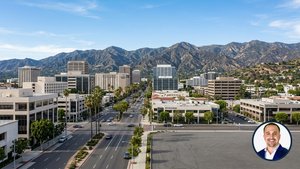




Selling a Home in Santa Monica in 2026
Sub-area pricing, RSO disclosure requirements, timing strategy, and what the 2026 buyer pool actually wants — from a Westside agent who has done this 13+ years.
📞 (213) 262-5092 — Free Seller ConsultationQuick Answer: In 2026, the median sale price across Santa Monica sits around $1.78 million, but that number hides enormous variation. North of Montana SFRs sell for $4M to $10M+. Ocean Park condos run $1.2M to $2.5M. Downtown SM units clear around $995K to $1.4M. The city's Rent Stabilization Ordinance (RSO) adds complexity to any multi-unit or pre-1979 sale. The best time to list is February through July, and homes priced within 3% of market typically get multiple offers within 12 days.
This guide walks you through every layer: sub-area breakdown, RSO disclosures, pricing strategy, and exactly what today's tech and entertainment buyers want in 2026.
Santa Monica Market Snapshot — 2026
Santa Monica in 2026: The Seller's Reality
Santa Monica is not a market you can read from a headline. The city-wide median that shows up on Redfin blends a Downtown condo that sold for $985,000 with a North of Montana estate that cleared $9.2 million. Those are not the same market. They share a zip code boundary and not much else.
In my 13 years working the Westside, I have sold everywhere from Ocean Park bungalows to Montana Avenue estates. The lesson is always the same: block-level pricing beats city-level pricing every time, and the sellers who listen to the data net more money than the sellers who chase a number they read on Zillow.
The 2026 Santa Monica buyer is specific. Tech and entertainment executives make up the largest buyer segment. They are cash-rich, time-poor, and will pay a premium for turnkey. They want home offices with fiber infrastructure, kitchens that photograph well, and outdoor space that doesn't look like it needs a landscape crew before the first open house. They do not want a project. If your home looks like a project, it will sit and ultimately sell below where it should have launched.
"The sellers I see net the most money are not the ones who priced highest at launch. They're the ones who priced right on day one, got multiple offers in the first two weeks, and closed without a price reduction." — Justin Borges, DRE #01940318, The Borges Real Estate Team
What I tell my Santa Monica sellers every time: RSO status, sub-area location, and pricing discipline are the three variables that control your outcome. Everything else is execution. Let's go through all of it.
Search Current Santa Monica Listings🏠 FREE Weekly Workshop — First-Time Buyer Blueprint
Learn exactly how to buy a home in LA — prices, process, and pitfalls. Live every week, totally free.
Reserve Your Free Seat →Market Snapshot: What's Actually Happening in 2026
March 2026 showed a 16.6% year-over-year decline in Santa Monica's median sale price. That number alarmed a lot of sellers. Here is what actually happened: the mix of closed transactions shifted. Fewer ultra-luxury closings above $5M occurred that month compared to March 2025, pulling the median down arithmetically without reflecting a true decline in per-property value across most of the city.
April 2026 corrected to $1,777,500, which is a more representative read. The longer-term picture: Santa Monica homes are selling in 52 days on average, compared to 55 days a year ago. The market is not collapsing. It is recalibrating to a post-pandemic normal where buyers have some negotiating room, but supply remains tight enough that well-priced properties still move fast.
Why the Year-Over-Year Number Is Misleading
The 16.6% March decline is a statistical artifact, not a market collapse. 90402 (North of Montana) values remain near historic highs with a 1.8-month inventory level. South Santa Monica actually posted a 23.2% year-over-year increase in February 2026. Sunset Park rose 42.9% in the same period. These are not a declining market — they are a market that has bifurcated along price tier and sub-area lines.
What I tell sellers who bring me that 16.6% number: your home is not the median. Your home is in a specific sub-area, at a specific price tier, with a specific condition. Let's talk about that instead.
Who Is Buying in 2026
The dominant buyer profile in Santa Monica has shifted since 2023. Tech and entertainment executives still lead, but the post-Palisades fire displacement effect has added a meaningful segment: households from Pacific Palisades, Malibu, and Brentwood Hills who are relocating to flat coastal neighborhoods to maintain their lifestyle in less wildfire-vulnerable conditions. Several Redfin agents noted this pattern explicitly in early 2026.
This displacement buyer is motivated and liquid. They are not price-sensitive in the way a first-time buyer is, but they are condition-sensitive. They have seen what they lost or could lose. They want newer builds, concrete, well-maintained systems, and flat land. If your Santa Monica property checks those boxes, you are selling into a highly motivated buyer pool right now.
📞 Get Your Santa Monica Valuation: (213) 262-5092Sub-Area Breakdown: North of Montana to Ocean Park
Santa Monica is eight square miles. Within those eight miles, you can spend $985,000 on a Downtown condo or $11 million on a North of Montana estate. The sub-area you are in is the single most important variable in your pricing strategy. Here is what the data shows in 2026.
"North of Montana and south of Montana are not the same market. They're two different cities wearing the same postal code. I've had buyers offer $800,000 less on the south side of Wilshire for a home identical in square footage to one north of Montana. The premium is real and it's documented." — Justin Borges, DRE #01940318
Pricing Strategy That Actually Works in 2026
The biggest mistake I see Santa Monica sellers make is pricing aspirationally. They say: "Let's start high and see what happens." What happens is the listing sits. Days-on-market accumulates. Buyers assume something is wrong with the property. By the time you reduce, you have trained the market to expect another reduction and the stigma compounds.
Here is what the data shows: homes priced within 3% of current market value in Santa Monica attract multiple offers within the first 12 days of the first open house. That competitive dynamic — even in a balanced market — creates negotiating power and often results in a final sales price above where a high-aspirational listing would have closed.
The Pricing Window
February through July is the strongest seller window in Santa Monica. March is historically the best single month to list if you want speed — homes listed in March close approximately 15% faster than the annual average. The tech and entertainment buyer pool is most active in spring because of school-year planning cycles and bonus season liquidity.
What I tell sellers who miss the spring window: listing in August or September is not catastrophic, but expect 10-15% longer days-on-market and be prepared to negotiate. Holiday season (Thanksgiving through New Year's) is the one window I consistently advise clients to avoid unless they have a specific reason to move now.
Price Per Square Foot by Sub-Area (2026 Reference)
| Sub-Area | Price / Sq Ft (Approx.) | Trend vs. 2025 | Notes |
|---|---|---|---|
| North of Montana (90402) | $1,750+/sq ft (luxury condos); $1,400-$1,800+ (SFR) | Stable to slight appreciation | 1.8mo inventory; fastest absorption in SM |
| Mid-City / 90403 | $900-$1,300/sq ft | Stable | RSO complexity suppresses multifamily |
| Ocean Park / 90405 | $850-$1,200/sq ft | Rising (23.2% YoY in Feb '26) | Main Street lifestyle premium |
| Downtown SM / 90401 | $650-$900/sq ft | Declining (34.6% YoY median drop) | Condo-dominant; most buyer negotiating room |
RSO Disclosure & Pre-Listing Checklist
Santa Monica's Rent Stabilization Ordinance (RSO) was adopted by voters in April 1979. It covers most residential rental properties built before April 10, 1979. If your property has units that fall under the RSO, buyers inherit those tenant relationships at controlled rents — and the market prices that situation accordingly.
RSO coverage does not prevent you from selling. But it absolutely affects your buyer pool and your price. Buyers of RSO-covered properties are typically investors underwriting to current below-market rents, not owner-occupant buyers paying full market price. That investor buyer applies a cap-rate or cash-flow lens to your property that will generate offers 15% to 25% below what an equivalent vacant or owner-occupied property would attract.
RSO Quick Facts for Sellers (2025-2026)
| Item | Detail |
|---|---|
| Coverage Trigger | Residential rental units built before April 10, 1979 (with exceptions) |
| 2025 Annual Rent Adjustment | 2.3%, capped at $60/month, effective September 1, 2025 |
| Tenant Buyout Requirement | Must be in writing with a City-prepared disclosure form; buyout amount no less than permanent relocation amount |
| Seller Disclosure Obligation | RSO status must be disclosed at time of offer acceptance; buyer has right to review and cancel within disclosure period |
| MAR Database | Maximum Allowable Rent records available at smgov.net/departments/rentcontrol/mar.aspx |
| Rent Control Agency Phone | (310) 458-8751 |
Pre-Listing Checklist: RSO and Disclosure Compliance
- Verify RSO status: check city records or call (310) 458-8751
- Pull Maximum Allowable Rent (MAR) records for all covered units
- Confirm current tenant leases: month-to-month vs. fixed term
- Document current actual rents vs. allowable rents for each unit
- Prepare Transfer Disclosure Statement (TDS)
- Prepare Seller Property Questionnaire (SPQ)
- Order Natural Hazard Disclosure (NHD) report
- Complete Earthquake Fault Zone and Seismic Hazard disclosures
- Lead paint disclosure for pre-1978 construction
- Confirm permit history: pull city building department records
- Identify any unpermitted work and disclose accurately
- Review HOA documents if applicable: CC&Rs, reserve study, financials
- Confirm Coastal Zone status if applicable (FEMA / Coastal Commission)
- Document utility history: water, electric, gas for last 12 months
- Verify solar system status: owned vs. leased, and transfer process
Pre-Listing Improvements: What Returns Money in Santa Monica
Santa Monica buyers in 2026 are predominantly tech and entertainment executives. They have strong opinions about finishes and they want to choose their own. A full kitchen remodel you completed in 2023 may actually hurt your sale if the buyer's taste differs. What they universally want: a property that photographs perfectly, feels clean and ready, and doesn't signal deferred maintenance.
What I tell my Santa Monica sellers before they call a contractor: the improvements that return money are not the ones that feel the most significant. Fresh paint returns $1.50 to $2.00 for every dollar spent. A new kitchen returns $0.60 to $0.80. Here is the table I walk through with every seller before we set a listing date.
| Improvement | Typical Cost | Estimated Return | ROI | Recommendation |
|---|---|---|---|---|
| Professional staging | $3,000 – $8,000 | $15,000 – $40,000 in perceived value | 4x to 6x | Do this. Non-negotiable. |
| Interior paint (neutral palette) | $4,000 – $12,000 | $8,000 – $24,000 | 2x | Do this. Always. |
| Landscaping and curb appeal | $2,000 – $6,000 | $6,000 – $18,000 | 3x to 5x | Do this. First impressions control offers. |
| Deep clean + windows | $800 – $2,000 | $3,000 – $8,000 | 3x to 5x | Do this. Non-negotiable. |
| Home office setup (fiber-ready, clean desk) | $1,000 – $3,000 | $5,000 – $15,000 | 3x to 7x | Do this. Tech buyers prioritize this. |
| Kitchen hardware & fixture refresh | $500 – $2,500 | $2,000 – $7,000 | 2x to 4x | Do this. High visual impact, low cost. |
| Professional photography & drone | $800 – $2,500 | $10,000 – $50,000+ in faster sale and higher offers | Very high | Mandatory above $2M. |
| Full bathroom remodel | $15,000 – $40,000 | $9,000 – $28,000 | 0.6x to 0.8x | Skip it. Buyers want to choose finishes. |
| Full kitchen remodel | $30,000 – $80,000 | $20,000 – $55,000 | 0.6x to 0.75x | Skip it unless critically outdated. |
| New roof | $12,000 – $30,000 | $10,000 – $25,000 in inspection credibility and negotiating position | Defensive | Do only if failing. Prevents price renegotiation post-inspection. |
Santa Monica vs. Venice vs. Brentwood: Competitive Positioning
If you are selling in Santa Monica, your buyers are cross-shopping. They are looking at Venice. They are looking at Brentwood. They may even be looking at West Hollywood or Culver City. Understanding how you compete with those markets tells you where your price premium is and where you are vulnerable.
Santa Monica
$1.78M April 2026 MedianBeach access, walkability, strong tech/entertainment buyer pool. RSO adds complexity for pre-1979 properties. N. of Montana is ultra-luxury. Downtown SM is most negotiable.
Brentwood (90049)
$2.65M Jan 2026 MedianCommands $270/sq ft premium over SM at $1,270/sq ft. Privacy-forward, auto-dependent. Post-fire displacement demand pushed Brentwood prices higher in early 2025.
Venice
$1.9M Mar 2026 MedianSimilar lifestyle to SM but slightly higher median in 2026 after post-fire displacement. Creative-professional buyer pool. Canals command significant premiums. Less school infrastructure than SM.
Where Santa Monica Wins the Buyer
- School district: Santa Monica-Malibu USD is significantly stronger than LAUSD, which Venice falls under. Families with school-age children often choose SM over Venice for this reason alone.
- Walkability: Third Street Promenade, Main Street, Montana Avenue, and the beach bike path create a walkable lifestyle that Brentwood cannot match.
- Beach premium: Living within 1 mile of the Pacific has a quantifiable premium. Buyers who want that cannot get it in Brentwood and get a diminished version in Culver City or West Hollywood.
- RSO advantage for buyers: Buyers of multi-unit properties see SM's RSO as a neutral or even positive factor if rents are near market rate. The regulatory certainty can actually reduce offer uncertainty versus non-RSO markets with looser protections.
Where Santa Monica Is Vulnerable
- RSO complexity: Pre-1979 landlords face a more restricted buyer pool than equivalent Brentwood sellers. This is a genuine disadvantage for some sellers.
- Luxury tier compression: Above $6M, the buyer pool thins significantly. Brentwood offers more privacy and lot size at comparable prices, drawing ultra-luxury buyers who prioritize those factors.
- Downtown condo softness: The 34.6% year-over-year median decline in 90401 reflects a genuine post-pandemic condo softness. Downtown SM condo sellers face more competition from newer inventory and more buyer negotiating room than any other SM sub-market.
Crime, Safety, and the Honest Buyer Conversation
Santa Monica's safety narrative is complicated, and pretending otherwise will make you look out of touch when a buyer asks. Here is the honest picture from the city's own 2025 Annual Crime Report.
The headline is actually positive: Part I crime (violent offenses and burglary) decreased by 12.5% in 2025, from 4,793 incidents to 4,194. Robberies fell 25%. Auto theft dropped 16%. Total calls for service are down 3.1%. These are real improvements driven by a shift in policing strategy.
The caveat: residential burglaries rose 17%. Larceny/theft remains the most reported offense at approximately 3,000 cases annually. And the city's overall crime rate still places it in the top 2% most crime-affected California communities by volume — though that comparison fails to account for Santa Monica's enormous daytime tourist population relative to its 91,000 residents.
What Improved in 2025
- Part I crime down 12.5% overall
- Robbery down 25%
- Auto theft down 16%
- Officer-initiated activity up (more proactive policing)
- Traffic enforcement up 102% (deterrence effect)
- More coordination between enforcement and outreach
What Remains Challenging
- Residential burglaries up 17%
- Larceny/theft still ~3,000 cases per year
- Homeless-related arrests up 52% (enforcement increase)
- One-in-18 chance of being a crime victim annually
- Perception challenge: third-party safety ratings lag improvement
- Pockets near 3rd St Promenade and beach have elevated foot-traffic crime
What I tell buyers who ask about safety: Santa Monica is not Palo Alto. It is also not the city it was in 2020-2022. The trend is clearly moving in the right direction, the neighborhood matters significantly (North of Montana is quieter than Downtown), and the lifestyle premium justifies awareness, not avoidance. No Westside city is immune from property crime; SM's beachfront location and tourist traffic create a different density of opportunity than an inland suburb.
For sellers: proactively share the improving crime data. Don't wait for the buyer to Google it and find only the alarming headlines from three years ago.
Three Seller Scenarios: Which One Are You?
Not every Santa Monica seller is in the same position. Here are the three scenarios I see most often and the right strategy for each.
Best sub-areas: North of Montana, Ocean Park, Mid-City. Strategy: Launch February through June. Price within 3% of CMA value. Invest in staging, photography, and curb appeal. Expect 19-28 day time-to-offer in well-priced North SM. Multiple offers likely if you hit the window correctly. RSO concern: None if you are the only occupant and the property was built after 1979. Expected outcome: Strong price realization, clean close.
Best approach: Fully document current rents vs. MAR for every unit. Identify any vacancies. If any units are vacant or month-to-month, your options expand. Expect investor-buyer offers 15-25% below equivalent vacant properties. Do not fight the RSO discount with an inflated list price — you will sit on market and still close at investor price. Consider whether buyout conversations with tenants make sense before listing. Timeline: Budget 60-90 days to close from listing. Expected outcome: Below-market price relative to SFR, but the market is functioning correctly for the asset class.
Honest assessment: This is the most challenging sub-market in Santa Monica right now. The 34.6% year-over-year median decline in 90401 is partly mix-shift but also reflects genuine demand softness for high-density urban condos. If you purchased before 2018, you likely still have positive equity. If you purchased 2021-2022, have a realistic conversation about your break-even point before listing. Strategy: Price aggressively, stage exceptionally, and target the lifestyle buyer who wants walkability over space. Position against Venice alternatives on school district. Expected outcome: Slower process, more buyer negotiation, but deals are closing.
Choosing a Santa Monica Specialist
The Westside has no shortage of real estate agents. What it is short on is agents who actually know Santa Monica at the block level, understand RSO implications for pricing and disclosure, and have a buyer network that includes the tech and entertainment executive demographic who dominates this market.
Here is what I look for when evaluating an agent for a Santa Monica seller (and what you should ask when interviewing any agent for your property).
| Question to Ask | What a Strong Answer Looks Like | Red Flag |
|---|---|---|
| How many Santa Monica listings have you closed in the last 12 months? | Multiple closed transactions across different sub-areas with specific addresses | Vague answer or fewer than 3 SM-specific closings |
| Do you have specific RSO experience? | Can describe MAR documentation, tenant disclosure requirements, and how RSO affects pricing | "We handle that with the attorney" or unclear answer |
| What is your average days-on-market for Santa Monica listings? | Below the 52-day city average, with explanation of how they achieve it | No data available, or above 70 days average |
| What is your list-to-sale price ratio? | 98-102% for well-priced SM listings | Below 95% suggests chronic overpricing at launch |
| How do you position my property against Venice and Brentwood? | Specific competitive positioning: school district, walkability, beach premium, buyer profile | Generic answer that ignores competitive context |
"In my 13 years on the Westside, the sellers who net the most money are the ones who hire a specialist, price right, and trust the process. The sellers who go with their neighbor's cousin and hope for the best are the ones calling me six months later wondering why they accepted $200,000 below where they should have closed." — Justin Borges, DRE #01940318📞 Interview Justin: (213) 262-5092
FAQ: Seller Questions I Hear Every Week
February through July is the strongest seller window. Homes listed in March sell approximately 15% faster than the annual average. The tech and entertainment buyer pool is most active in spring, coinciding with school-year planning and bonus season liquidity. Avoid listing between Thanksgiving and New Year's unless you have a compelling reason to move now.
The April 2026 median sale price across all Santa Monica property types is approximately $1,777,500. That number masks enormous variation: 90402 (North of Montana) carries a single-family median around $4.9M, while 90401 (Downtown) condos trade near $995K to $1.4M. Always look at sub-area and property-type data, not the city-wide blended number.
Rent control does not prevent you from selling, but it significantly affects buyer pool and price. Santa Monica's RSO covers most rental units built before April 10, 1979. Buyers of RSO properties inherit existing tenants at controlled rents, which typically suppresses offers by 15% to 25% compared to vacant or owner-occupied equivalents. Proper RSO disclosure is mandatory at time of offer acceptance.
Well-priced Santa Monica homes typically go into escrow within 28 to 52 days. Properties priced within 3% of current market value often receive multiple offers within the first 12 days of the first open house. Overpriced or RSO-burdened listings can sit 90+ days and ultimately close below where a correct launch price would have achieved.
For most sellers, yes. The 16.6% city-wide median decline in March 2026 is largely a mix-shift artifact, not a uniform price collapse. North of Montana values remain near historic highs. If you purchased before 2019, you have substantial appreciation built in. The key is accurate sub-market pricing rather than chasing a citywide stat that may not apply to your block.
Required disclosures include: Transfer Disclosure Statement (TDS), Seller Property Questionnaire (SPQ), Natural Hazard Disclosure (NHD), Earthquake Fault Zone and Seismic Hazard disclosures, RSO status if the property is covered, City of Santa Monica Rent Control registration status, and lead paint disclosure for pre-1978 construction. Your agent should walk you through each one before the listing goes live.
Santa Monica (blended median $1.78M) typically trades at a discount to Brentwood ($2.65M median) but at parity with or a slight discount to Venice ($1.9M). Santa Monica commands a walkability and lifestyle premium that Venice shares but Brentwood does not. The Santa Monica-Malibu school district is a decisive advantage over Venice for family buyers. North of Montana competes directly with prime Brentwood at the ultra-luxury tier.
The highest-ROI improvements are: professional staging (4x to 6x return), fresh interior paint (2x), landscaping and curb appeal (3x to 5x), deep cleaning (3x to 5x), home office setup with fiber-ready wiring (tech-buyer priority), and kitchen hardware refresh. Full bathroom or kitchen remodels rarely recoup full cost; luxury buyers in Santa Monica want to choose their own finishes, not inherit yours.
The Santa Monica Seller Timeline: Week by Week
Selling a home in Santa Monica is not a sprint. It is a structured 60 to 90 day process with distinct phases, each requiring specific decisions. Here is the timeline I walk every seller through from the first call to the keys changing hands.
| Phase | Timeline | Key Actions | Justin's Notes |
|---|---|---|---|
| Phase 1: Pre-Listing Prep | Weeks 1-4 | CMA, RSO check, disclosure prep, contractor work, staging | This phase determines your outcome. Rushing it costs $50K-$200K at close. |
| Phase 2: Photography & Marketing | Week 4-5 | Professional photos, drone footage, virtual tour, MLS copywriting | Santa Monica above $2M requires twilight shots and video. Non-negotiable. |
| Phase 3: Active Listing | Weeks 5-8 | Open houses, broker caravan, offer management | If you have no activity after day 14, we reassess price. Not at day 21. Day 14. |
| Phase 4: Offer & Negotiation | Days 12-28 | Offer evaluation, counter-offers, contingency negotiation | Net terms matter more than headline price. I evaluate 7 variables on every offer. |
| Phase 5: Escrow | Weeks 8-12 | Inspection, disclosures review, appraisal if financed, final walk-through | RSO properties need RSO-experienced escrow officers. I have a vetted list. |
| Phase 6: Close | Day 45-75 | Sign documents, fund, record, hand over keys | Coordinate your move-out with possession date. Santa Monica storage units fill fast. |
"The sellers who try to compress this timeline cost themselves money. The sellers who respect the process and trust the data are the ones celebrating at close." — Justin Borges, DRE #01940318📞 Plan Your Timeline: (213) 262-5092
What Santa Monica Sellers Actually Net at Close
Every seller I work with asks the same question within the first five minutes: what will I actually walk away with? The answer requires looking past the sale price to the costs of closing. Here is a realistic breakdown for a Santa Monica home selling at $2.5 million.
| Cost Item | Typical Range | On $2.5M Sale | Notes |
|---|---|---|---|
| Agent Commission (total) | 2% - 5% | $50,000 - $125,000 | Post-NAR settlement, buyer and seller agents negotiate separately. Discuss with your agent. |
| Transfer Tax (LA County) | $1.10 per $1,000 | $2,750 | Seller typically pays. City of Santa Monica may add additional transfer tax. |
| Title Insurance (seller's policy) | 0.1% - 0.15% | $2,500 - $3,750 | Required. Protects buyer against title defects. |
| Escrow Fees | $1,800 - $4,500 | $2,500 - $4,000 | Split between buyer and seller. RSO-related documentation adds ~$500. |
| Home Warranty (optional) | $600 - $1,200 | $900 (avg) | Sellers often offer as concession to attract buyers. Worth it. |
| Pre-Listing Repairs / Staging | $5,000 - $25,000 | $12,000 (avg SM) | Variable. Staging ROI recovers this 4x-6x on well-executed campaigns. |
| California Capital Gains | 0% - 33% (federal + state) | Depends on ownership basis and length | Section 121 exclusion: $250K single / $500K married if primary residence 2+ years. Consult your CPA. |
| Natural Hazard Disclosure Report | $100 - $200 | $150 | Required. Santa Monica is in coastal flood and seismic zones. |
| Professional Photography | $800 - $2,500 | $1,500 (avg luxury) | Non-negotiable above $2M. Drone footage standard in SM. |
Capital gains tax is the variable that surprises sellers most. If you purchased your Santa Monica home before 2019 and have lived in it as your primary residence for at least two of the last five years, the Section 121 exclusion shields $250,000 (single) or $500,000 (married filing jointly) of your gain from federal capital gains tax. Anything above that threshold is taxable. In a market where long-term Santa Monica homeowners have seen $1M to $3M+ in appreciation, the cap gains math matters. Talk to your CPA before setting a close date.
Selling Above $4M in Santa Monica: The Luxury Playbook
Above $4 million, the Santa Monica market operates by different rules. The buyer pool is smaller, the due diligence period is longer, the negotiations are more sophisticated, and the marketing must reach a global audience, not just MLS subscribers in a 10-mile radius.
What I tell my $4M+ Santa Monica sellers before we go to market:
1. Off-Market First, Always
The luxury buyer above $4M in Santa Monica often does not want to compete. They want exclusivity. Quietly presenting your home to my network of qualified buyers before going public accomplishes two things: it creates a sense of scarcity, and it sometimes produces a full-price offer that closes without an open house. I have closed 30% of my luxury listings off-market or in the first 48 hours of quiet exposure. This is not a secret strategy — it is a standard practice at this price tier that many agents do not execute well because they do not have the buyer relationships to back it up.
2. Global Marketing Reach
The $4M to $10M Santa Monica buyer is not necessarily local. Entertainment executives from New York, tech founders from the Bay Area, and international buyers from Canada, the UK, and the Middle East all shop this market. Your marketing must include international portals, Sotheby's or Christie's or equivalent luxury network placement, and foreign-language translation of key listing materials for the Asian and European buyer segments.
3. Staging to the Buyer Profile
A $7M North of Montana estate should not be staged like a $2M Ocean Park bungalow. Luxury staging for Santa Monica's $4M+ tier means custom art rental, high-end furniture placement that communicates the lifestyle (Restoration Hardware, B&B Italia level), and outdoor entertainment staging that shows the California indoor-outdoor flow buyers at this price expect. Budget $15,000 to $40,000 for staging at this tier. It returns multiples.
4. Negotiation Reality at Luxury Tier
Above $5M, almost every buyer conducts independent property inspections, independent appraisals, and legal review of disclosures. Expect the due diligence period to run 21 to 30 days. Buyers at this tier are not afraid to walk if something surprises them in the inspection. The sellers who keep deals together are the ones who disclosed everything proactively, fixed the structural issues before listing, and are not emotionally reactive to inspection requests. Price reductions during escrow are more common above $5M than below it. Budget for some concession.
The Street-Level Santa Monica Guide for Sellers
Santa Monica's value is not just about zip code. It is about specific streets. Buyers and their agents know the difference between a home on Montana Avenue and a home three blocks south. If your home is on a premium street, your pricing strategy should reflect that. If it is not, do not let a lazy CMA over-credit your location. Here is the honest street-level breakdown.
Montana Avenue Corridor (90402 / 90403)
Montana Avenue is Santa Monica's most prestigious residential street. Homes within three blocks carry the "Montana premium" — an estimated 15% above comparable homes in the same zip. The boutique retail corridor (Montana between 7th and 17th) drives walkability scores that the rest of the city cannot match. SFRs fronting or near Montana with good frontage regularly close above $5M. Condos adjacent to the Montana retail strip are the most liquid in the 90403 zip.
Ocean Park Boulevard (90405)
Ocean Park Boulevard is Ocean Park's main artery. Properties on or near Ocean Park Blvd benefit from the neighborhood's creative-professional buyer pool and proximity to Main Street retail. SFRs on the quieter residential blocks perpendicular to Ocean Park Blvd (Marine St, Marine Ct, Strand, etc.) command a strong premium for condition and lot size. Condos near 3rd and 4th streets in this sub-area are the most active in 90405 in 2026.
Wilshire Boulevard Corridor
Wilshire Blvd itself is primarily commercial and high-density residential. Proximity to Wilshire is a mixed signal: good for walkability to transit and retail, potentially negative for noise if you are on a high-traffic section. The blocks immediately north and south of Wilshire between Lincoln and 26th are where you find the most RSO complexity — pre-1979 apartment buildings are densest here. Condo buildings on or near Wilshire trade at lower per-square-foot than comparable Montana-adjacent units.
Main Street Corridor (90405)
Main Street is Ocean Park's retail spine. Living on or near Main Street in the 90405 adds a walkability premium comparable to what Montana does for the north end. Properties within two blocks of Main Street between Rose Ave and Pico Blvd benefit from the restaurant, coffee, and boutique ecosystem that draws the creative professional buyer. This is a younger buyer profile than North of Montana, with different financing patterns (more conventional, slightly less all-cash).
Third Street Promenade / Downtown SM Zone
Living near the Third Street Promenade is a lifestyle call, not a pure value play. Foot traffic, noise, and density are real factors that compress prices relative to quieter residential streets. The convenience premium is real for the right buyer, but the buyer pool is narrower. If you own a condo in the immediate Downtown SM zone, your pricing conversation must be honest about that tradeoff.
Search Listings by Santa Monica NeighborhoodThe Palisades Fire Effect: How Displacement is Shaping Santa Monica in 2026
The January 2025 Palisades Fire fundamentally changed the demand picture for coastal flat neighborhoods near the Westside. Families who lived in Pacific Palisades, Malibu, and parts of Brentwood Hills found themselves displaced — and many of them are buying in Santa Monica rather than rebuilding in fire-vulnerable hillside areas.
Redfin agents in Los Angeles documented this shift explicitly in early 2026: some buyers who lost or nearly lost homes in the hills are specifically seeking flat coastal neighborhoods with concrete construction, underground utilities, and proximity to ocean breezes. Santa Monica checks every one of those boxes.
What This Means for Santa Monica Sellers
The displacement buyer is one of the most motivated buyers in the current market. They have insurance proceeds or equity from a prior sale, they are not price-sensitive in the traditional sense, and they are making decisions based on safety and lifestyle rather than pure value. If your property has concrete construction, updated electrical, or a relatively newer build date, lean into those attributes in your marketing. This buyer cares about fire hardening in ways the 2020 buyer did not.
The flip side: this buyer is also sophisticated. They are not going to pay a premium for a property with deferred maintenance or outdated systems just because it is near the beach. They know what they are looking for. Condition matters as much as location for this buyer segment.
South Santa Monica Benefited Most
South Santa Monica (Ocean Park, Sunset Park, 90405) posted a 23.2% year-over-year median increase in February 2026 and a 42.9% increase in Sunset Park over the same period. Part of that is simply a composition effect as more larger homes transacted, but part of it is genuine demand pressure from displacement-motivated buyers who want flat, lower-density Santa Monica neighborhoods away from the hillside. Sellers in these sub-areas are in an unusually strong position in 2026 relative to recent history.
How to Evaluate and Negotiate Offers in Santa Monica
Getting an offer is not the end of the strategy. It is the beginning of the most consequential phase. I evaluate seven variables on every Santa Monica offer before recommending to a seller whether to accept, counter, or decline.
The 7-Variable Offer Evaluation Framework
- Net price: Purchase price minus all seller concessions, credits, and repair allowances
- Financing contingency: Pre-approved vs. pre-qualified vs. all-cash (cash is fastest and lowest-risk; pre-qualified is the weakest)
- Inspection contingency: Standard (21 days), shortened (10-14 days), or waived (all-cash buyers often waive)
- Appraisal contingency: Included vs. appraisal gap coverage vs. waived; important for financed offers above market average
- Earnest money deposit: 1% is minimal; 2-3% shows buyer commitment; above 3% on luxury is a strong signal
- Close timeline: 21-day close vs. 30 vs. 45; shorter close reduces seller carrying cost and risk window
- Possession terms: Immediate possession vs. seller leaseback; if you need time to move, a leaseback negotiation can be valuable
In Santa Monica's 2026 market, most financed offers above $2M include an appraisal contingency. That creates a risk: if the appraisal comes in below the purchase price, you either renegotiate or the deal falls apart. The best protection against this risk is accurate initial pricing. Homes that are correctly priced at market value rarely face appraisal problems. Homes that are slightly above market — even in a multiple-offer situation — often face an appraisal gap that requires resolution.
When to Hold Firm and When to Negotiate
Sellers who receive a strong first offer often make the mistake of countering just to see if they can get more. In a balanced market like 2026 Santa Monica, pushing a motivated buyer away for an extra $25,000 can cost you the deal entirely. My rule: if the first offer is within 2% of your list price and the terms are strong, counter once for a modest increase and close the deal. Do not let perfect be the enemy of very good.
When to hold firm: inspection repair requests above $50,000 on a $2M+ property are often fishing expeditions. A professional inspection on a well-maintained Santa Monica home should not generate $100,000 in legitimate repair requests. If it does, either the home had undisclosed issues (a problem) or the buyer's inspector is manufacturing a negotiation position. Know the difference, and have a contractor evaluate every significant repair claim before agreeing to concessions.
📞 Offer Strategy Consultation: (213) 262-5092Santa Monica Market Outlook: Rest of 2026 and Beyond
Where is the Santa Monica market headed for the balance of 2026? Here is my honest read, based on current inventory data, rate environment, and the macro factors that drive this specific market.
Interest Rate Impact
Santa Monica's buyer pool is unusually rate-insensitive compared to other LA markets, because a higher percentage of transactions are all-cash or significant-down-payment conventional. Above $3M, cash or quasi-cash buyers dominate. Rate changes affect the entry-level Santa Monica condo buyer more than the North of Montana SFR buyer. If rates drop materially in late 2026 or 2027, you could see a surge in the $1M to $2M Santa Monica condo segment that is currently soft.
Supply Outlook
Santa Monica is supply-constrained by geography. The city is bounded by the Pacific Ocean to the west, other municipalities on all other sides, and the Rent Stabilization Ordinance limits the profitability of new development on existing rental sites. New construction at scale is not happening. This structural supply constraint is the long-term bull case for Santa Monica values.
Post-Fire Demand Durability
The Palisades fire displacement demand is real, but it is finite. The surge of motivated buyers from displaced Palisades and Malibu households will eventually exhaust itself as those buyers find homes or rebuild. The 2026 tailwind in South Santa Monica is real; the 2028 picture is less clear. Sellers who want to capture post-fire demand should list in 2026, not wait.
The Honest Forecast
I do not predict the market. What I can tell you: the structural conditions that make Santa Monica valuable — beach access, walkability, school district, tech/entertainment buyer pool, supply constraint — are not going away. The city is not getting bigger. The lifestyle premium is durable. Short-term fluctuations in median prices are noise against the long signal of sustained coastal Westside demand. If you have equity and are considering selling, 2026's spring window is strong. Waiting for a perfect market is usually how people miss a good one.
Bull Case for SM in 2026
- Post-fire displacement demand still active
- Supply structurally constrained
- Tech/entertainment buyer pool stable
- South SM and Sunset Park seeing 20-40% YoY gains
- N. of Montana inventory at 1.8 months (tight)
- Crime improving for first time in years
Bear Case / Risks to Watch
- Downtown SM condos softest in the city
- RSO properties face structurally smaller buyer pool
- Rates remaining elevated compress financed-buyer pool
- Perception challenge: legacy safety headlines lag data
- Luxury buyer pool thin above $6M
- Post-fire demand will exhaust eventually
The Complete Santa Monica Pre-Listing Checklist
Use this as your running checklist from the first call with your agent through the day you accept an offer. Every item here has cost a seller money when skipped.
Pricing and Market Preparation
- Order comparative market analysis (CMA) from a Santa Monica specialist — not a generic LA agent
- Review 90-day closed sales in your specific sub-area (not city-wide blended data)
- Review active and pending competition: know what buyers are also seeing
- Confirm your pricing decision is within 3% of CMA value
- Discuss off-market quiet launch option (especially above $3M)
Legal and Disclosure
- Confirm RSO status for all units built before April 10, 1979
- Pull Maximum Allowable Rent (MAR) records if RSO-covered
- Document current leases and tenant notice requirements
- Prepare Transfer Disclosure Statement (TDS) accurately
- Prepare Seller Property Questionnaire (SPQ) accurately
- Order Natural Hazard Disclosure (NHD) report from licensed provider
- Complete Earthquake Fault Zone and Seismic Hazard disclosures
- Lead paint disclosure for pre-1978 construction
- Pull city building permit records: confirm permitted vs. unpermitted work
- Disclose all unpermitted work accurately — buyer inspectors will find it
- Review title for any liens, encumbrances, or easements
- Solar system: document owned vs. leased and transfer process
- HOA: collect CC&Rs, financials, reserve study, pending special assessments
Property Preparation
- Schedule pre-listing inspection (optional but valuable for proactive disclosure)
- Complete priority repairs identified in pre-listing inspection
- Interior paint: neutral palette throughout (do not skip)
- Deep clean: every surface, every window, every fixture
- Landscaping: mow, edge, prune, plant color where visible
- Declutter: remove 30-40% of furniture to make rooms feel larger
- Depersonalize: remove family photos, personal memorabilia
- Home office staging: clean desk, fiber router visible, professional setup
- Kitchen: refresh hardware, clean appliances, organize visible storage
- Bathrooms: re-caulk if needed, replace worn fixtures, add fresh towels
- HVAC: replace filter, service if not done in 12 months
- Garage: organized and clear of clutter for showing
Marketing and Launch
- Professional photography: daytime and twilight exterior, all rooms
- Drone footage: required above $2M in Santa Monica
- Virtual tour or 3D Matterport scan: expected by out-of-area buyers
- MLS listing copy: written by experienced copywriter, not auto-generated
- Broker caravan scheduled for week 1
- Open house scheduled for first weekend
- International listing portals activated if above $3M
- Social media distribution: verify your agent has a real following, not bots
- Coming-soon period: typically 7-14 days to build pre-launch interest
Santa Monica Seller Cheat Sheet — 2026
💰 What's My Home Worth in 2026?
Get a free, accurate valuation from Justin Borges — backed by real comps, not a Zestimate.
Get My Free Home Valuation →Ready to Sell Your Santa Monica Home in 2026?
Get a no-obligation seller consultation with a Westside specialist who knows North of Montana from Ocean Park, RSO strategy from vacant-unit timing, and exactly how to position your property against the Venice and Brentwood competition.
(213) 262-5092📍 680 E Colorado Blvd, Suite 180, Pasadena, CA 91101 • Justin Borges DRE #01940318