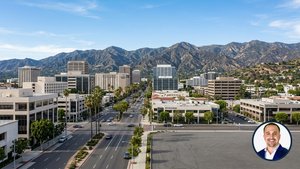




Sacramento Real Estate Market 2026: Complete Guide
Sacramento's market in 2026 is neither the frenzy of 2021 nor the correction everyone feared in 2023. It is something more nuanced: a bifurcated market where walkable city neighborhoods and affordable outer suburbs are moving at very different speeds. Here is what the data shows — and what it means for buyers, sellers, and investors right now.
What This Guide Covers
- 2026 Market Overview: Where Sacramento Stands
- City vs Suburbs: The Bifurcation Explained
- Neighborhood Price Snapshot
- Interest Rates and Affordability in 2026
- Inventory Trends: Why Supply Is Still the Story
- Local Laws & Disclosures Every Buyer Must Know
- What 2026 Means for Sacramento Buyers
- What 2026 Means for Sacramento Sellers
- Sacramento Investor Landscape: Multifamily & Rentals
- The 12-Month Outlook
- Frequently Asked Questions
I have been watching the Sacramento market closely for years, and 2026 feels like the year Sacramento finally finished resetting after the pandemic-era disruption. Prices stabilized. Inventory crept up slightly from historic lows but remains well below pre-2020 levels. Buyers are pickier but still competing on good properties. Sellers who price correctly are still selling within two weeks. This is not a buyer's market. It is not the seller's market of 2021 either. It is a balanced-to-slightly-seller-favored market with meaningful neighborhood variation.
The biggest story I am seeing on the ground is the divergence between the urban core and the outer suburbs. That divergence has real implications for which buyers should be looking where, and which sellers should be listing when. Add in the local regulatory landscape — Sacramento Measure Q just-cause eviction rules, Mello-Roos assessments in Folsom and Elk Grove, FEMA flood zone requirements in Natomas, and CalHFA programs expanding buyer access — and you have a market that rewards preparation. This guide covers all of it.
2026 Market Overview: Where Sacramento Stands
The Sacramento metropolitan area entered 2026 with housing supply still historically tight. The building boom that many predicted after rate increases would cool demand has not materialized at a scale sufficient to close the supply gap. New construction activity is up from 2023–2024 lows but is concentrated in the outer suburbs — Elk Grove, Folsom, Lincoln, and Rancho Cordova — not in the urban neighborhoods where demand is strongest.
Median home prices in the city of Sacramento held in the mid-$400s through Q1 2026 after modest appreciation in 2024–2025. The Sacramento MSA as a whole shows a median closer to $460,000. Both figures represent remarkable appreciation from pre-2020 medians in the $280,000–$320,000 range, though the pace of that appreciation has normalized significantly from the 20%+ annual gains of 2021.
For context: a buyer who purchased a median Sacramento home in 2019 at $310,000 has seen that property appreciate to approximately $460,000–$485,000 — a gain of roughly $150,000–$175,000, or about 50%–55% over five years. That existing equity position is one reason move-up buyer activity remains relatively constrained: those sellers have strong equity but face buying into the same high-rate environment they are trying to exit.
| Metric | City of Sacramento | Sacramento MSA | Outer Suburbs |
|---|---|---|---|
| Median Sale Price (Q1 2026) | ~$485,000 | ~$460,000 | $350,000–$420,000 |
| Year-over-Year Change | +4.2% | +3.8% | +2.5%–4.0% |
| Median Days on Market | 22–28 days | 28–35 days | 30–45 days |
| Sale-to-List Price Ratio | 99%–102% | 98%–100% | 97%–99% |
| Months of Supply | 1.8–2.1 | 2.0–2.5 | 2.5–3.5 |
| Active Listings vs 2023 | +8% | +11% | +18% |
The active listings increase year-over-year is real, but do not misread it as a market loosening. Starting from historic lows, an 11% increase in supply for the MSA still leaves the market firmly in seller-favored territory. The needle has not moved enough to shift negotiating dynamics substantially, except in the outer suburbs where new construction competes directly with resale inventory.
Want current comp data for a specific Sacramento neighborhood? I pull live MLS data — actual sold prices, not automated estimates.
Call (916) 587-6670City vs Suburbs: The Bifurcation Explained
The single most important Sacramento market observation for 2026 is the divergence between in-city neighborhoods and the outer suburbs. This divergence is not new, but it has sharpened.
The urban core — East Sacramento, Midtown, Land Park, Curtis Park, Oak Park, and Tahoe Park — is experiencing stronger demand, lower days on market, and higher sale-to-list ratios than the suburbs. This is partly demographic (millennials and remote workers who prioritize walkability and urban amenities) and partly supply-side (virtually no new single-family construction in these neighborhoods).
The outer suburbs — Elk Grove south of I-80, Natomas north of the airport, Rancho Cordova, Citrus Heights, and the exurbs toward Lincoln and Rocklin — have more inventory, more new construction competition, and more rate sensitivity. Buyers in these areas have more negotiating power. Sellers have more competition from new construction.
Why Bay Area and LA Transplants Are Driving This Split
A structural driver behind the urban-suburban divide is the buyer profile itself. Bay Area and LA transplants — particularly remote tech workers — have been the Sacramento market's most aggressive buyers since 2020. These buyers overwhelmingly target the urban core and established suburbs like Folsom. They are accustomed to urban density and walkability, they are not bargain-hunting (they are buying down from Bay Area prices), and they can afford to compete on well-located properties.
By contrast, the value-driven buyers — first-timers stretching for affordability, Central Valley buyers moving up, and Sacramento-area residents doing lateral moves — gravitate toward the suburbs, where price points remain sub-$430,000 and new construction provides more options. That buyer pool is more rate-sensitive and more likely to be using FHA or CalHFA programs.
The SMUD vs PG&E Line: A Practical Buyer Consideration
One underappreciated factor in Sacramento's city-versus-suburb comparison is utility cost. The City of Sacramento and most of the urban core are served by SMUD (Sacramento Municipal Utility District), a publicly-owned utility that consistently charges 30%–40% less for electricity than PG&E, which serves portions of the outer suburbs and unincorporated county areas. For a household spending $180–$220/month on electricity under PG&E, switching to SMUD service means roughly $60–$80/month in savings — or $720–$960/year. For buyers comparing a city home to a suburb home at similar prices, the SMUD advantage is a real recurring cost differential worth factoring into affordability math.
Neighborhood Price Snapshot
A few neighborhoods deserve deeper attention for buyers in 2026:
Davis commands a significant premium over the rest of the Sacramento region, driven by UC Davis employment, a walkable downtown, and some of the highest-rated schools in California. Davis is also subject to unique land use considerations — the city borders agricultural land protected by Williamson Act contracts, which means the urban boundary is tightly constrained and new supply growth is intentionally limited. That constraint is structural to Davis's premium and is unlikely to change.
Rancho Cordova is the best value play within a reasonable commute of downtown Sacramento. Prices in the high $300s to mid-$400s are achievable, and the light rail connection to downtown makes it viable for workers who need city access. The tradeoff is older housing stock in many neighborhoods and a more industrial land use context compared to the residential suburbs.
Lincoln serves two distinct buyer segments: active adult buyers (55+) targeting the Sun City Lincoln Hills community, and younger families seeking new construction at lower-than-Roseville prices. Drive time to Sacramento is 45–50 minutes in normal traffic, which is a real constraint. For remote workers or retirees, that tradeoff is often worth it.
Interest Rates and Affordability in 2026
The Federal Reserve's rate trajectory going into 2026 has kept 30-year fixed mortgage rates in the 6.5%–7.2% range for most Sacramento buyers. This is the defining affordability constraint in the market. At 7%, a $485,000 home with 20% down ($97,000) carries a principal and interest payment of roughly $2,580/month. Add property taxes (approximately $5,300/year for a $485K home at Sacramento's 1.1% effective rate) and homeowners insurance ($1,800/year), and total housing costs approach $3,130/month.
For comparison, the same home in 2021 at a 3% rate would have cost $1,630/month in P&I. The monthly payment difference from rate compression to 2021 levels would be roughly $950/month. This rate differential explains much of the demand suppression the market has experienced since 2022, and it also explains why the market has not fallen further: sellers with 2021 and earlier vintages have very low rates and very little incentive to sell.
Down Payment Assistance Programs Available in Sacramento
The affordability gap is real, but it is not insurmountable for buyers who do their homework on assistance programs. Three programs are currently most impactful for Sacramento buyers:
| Program | Benefit | Key Requirement | Notes |
|---|---|---|---|
| CalHFA Dream For All | Up to 20% of purchase price (shared appreciation) | First-time buyer, income limits apply | Lottery-based; check current availability |
| CalHFA MyHome Assistance | Up to 3.5% of purchase price for down payment | First-time buyer, CalHFA first mortgage required | Silent second, deferred payments |
| SHRA (Sacramento Housing & Redevelopment Agency) | Down payment grants for city of Sacramento properties | Income-qualified, city limits only | Can layer with CalHFA programs |
The CalHFA Dream For All program is the headline option. It provides up to 20% of a home's purchase price, which is enough to cover a full down payment on most Sacramento-area properties. The catch: the state receives that same percentage of your home's appreciation when you eventually sell or refinance. For buyers who are buying in a market with 3%–5% annual appreciation and plan to hold for 7–10+ years, this is a favorable tradeoff versus renting. For buyers planning to sell in 3–4 years, the math is tighter.
Dream For All has historically run out of funding quickly after each allocation. Call me at (916) 587-6670 to discuss current program status and whether your situation qualifies before the window closes.
Mortgage Rate Buydown Strategy
One negotiation strategy that has become standard in the Sacramento market: asking sellers for a temporary or permanent rate buydown concession. In the outer suburbs and with new construction builders, it is common to negotiate 1–2 discount points as seller-paid closing credits. At current pricing, 1 discount point on a $450,000 loan costs approximately $4,500 and reduces the rate by roughly 0.25%. On a 30-year loan, that saves approximately $85/month — meaningful when every hundred dollars matters for qualification purposes.
Considering Sacramento from the Bay Area or LA? I help transplant buyers understand the real affordability math — programs, taxes, and total monthly cost.
Call (916) 587-6670Inventory Trends: Why Supply Is Still the Story
Supply is the most important variable in the Sacramento market right now. We are still well below the 4–6 months of supply that defines a balanced market. With 2.0–2.5 months of supply for the MSA as a whole, Sacramento remains a seller-favored market despite higher rates and affordability pressure.
The inventory situation is structural, not cyclical. Three forces are keeping supply tight, and none of them are likely to resolve quickly:
Force 1: The Rate Lock-In Effect
Owners who bought or refinanced between 2019–2022 have mortgages at 2.5%–4.0%. Selling means giving up that rate and taking on a new loan at 6.5%–7.0%. For many Sacramento homeowners, the math of moving is simply punishing, so they stay put. A Sacramento homeowner with a $380,000 mortgage at 3.0% pays $1,602/month in P&I. The same loan balance at 6.8% costs $2,486/month — an $884/month increase. Unless they are buying down significantly in price or moving to cash, the rate lock-in effect makes staying put rational.
Force 2: Construction Lag
Permitting and construction timelines mean that today's demand is being met by the projects that broke ground 18–24 months ago. The construction activity that markets need in 2026 would have needed to start in 2024, and the 2022–2023 rate shock froze new project starts significantly. Builder sentiment is improving in 2026, but the pipeline of new units that will actually close this year was locked in before the market's current conditions were visible.
Force 3: Rental Market Lock-In and Measure Q
Sacramento's rental market has been strong enough that many small landlords are holding their properties rather than selling. But it is not just the rental income keeping them in place: Sacramento's Measure Q just-cause eviction ordinance makes the process of selling an occupied rental more complex. A landlord who wants to sell must either navigate the just-cause eviction process (which requires a specified reason, adequate notice, and in some cases relocation assistance) or sell with the tenants in place, which typically results in a 10%–20% discount versus a vacant sale. Many landlords are choosing to wait until natural vacancies occur rather than sell into that discount.
Local Laws & Disclosures Every Sacramento Buyer Must Know
Sacramento-area real estate has several local regulatory and disclosure considerations that go beyond the standard California purchase process. Miss any of these and you may face unexpected costs, restrictions, or complications after closing.
Mello-Roos CFD Districts (Folsom, Roseville, Elk Grove, Lincoln)
Community Facilities Districts (CFDs) — commonly called Mello-Roos districts — are special tax zones created to fund the public infrastructure (roads, schools, fire stations, parks) in newer developments. They are especially prevalent in the Sacramento suburbs that built heavily in the 1990s and 2000s. A Mello-Roos assessment is separate from your base property tax and is listed on your property tax bill as a special assessment line item.
What buyers need to know: the amount varies significantly by parcel and district. In some Folsom and Roseville neighborhoods, Mello-Roos adds $2,000–$5,000 per year on top of the standard 1% property tax rate. Before making an offer on any suburban Sacramento property, request the Mello-Roos disclosure and calculate the full annual tax burden — not just the base rate. A $550,000 Folsom home with a $3,500 annual Mello-Roos assessment has an effective property tax rate of approximately 1.6%, not 1.1%.
Natomas Levee and Flood Zone Disclosures
Natomas — the area north of downtown Sacramento and the airport — is one of the most affordable newer-construction neighborhoods in the city. It also sits behind levees. FEMA's flood maps for Natomas have been updated as the USACE (Army Corps of Engineers) Natomas Levee Improvement Project progresses, and some parcels have been re-mapped out of the high-risk 100-year flood zone. However, other properties remain in Zone AE or Zone X-shaded, which affects both federal flood insurance requirements and lender underwriting.
Before making an offer on any Natomas property: (1) look up the current FEMA FIRM map panel for the specific parcel; (2) get a flood insurance quote to understand the annual premium — quotes range from $800/year for lower-risk re-mapped parcels to $4,000+/year for parcels still in Zone AE; (3) confirm whether the property is in a flood zone that triggers mandatory flood insurance purchase under your lender's guidelines.
Williamson Act Agricultural Easements (Davis Area)
Davis and the surrounding Yolo County farmland are subject to the California Williamson Act, which allows agricultural landowners to place their land under long-term contracts with the county that restrict development use in exchange for reduced property tax assessments. If you are buying a rural parcel, semi-rural property, or agricultural land near Davis, check whether it is under a Williamson Act contract. These contracts run a minimum of 10 years and automatically renew unless the owner files a non-renewal notice — meaning you could buy a property with development intentions and find those intentions constrained for 9+ years. A title report and county parcel search will show active Williamson Act contracts.
Sacramento Measure Q — Just-Cause Eviction
Passed by Sacramento voters, Measure Q requires landlords to have a valid just-cause reason before terminating a residential tenancy. The enumerated just-cause reasons include non-payment of rent, breach of lease terms, nuisance, owner or owner-family move-in, and withdrawal from the rental market. The ordinance applies to most rental units in the city of Sacramento (with some exceptions for single-family homes, condos, and units permitted after a specific date — confirm current applicability with a local attorney).
For investors buying Sacramento rental properties: just-cause protections affect your ability to turn over tenants, renovate, or reposition properties. Budget for potential relocation assistance costs and longer vacancy timelines when acquiring occupied rentals.
Sacramento's regulatory landscape has real cost implications. I walk every buyer through the disclosures that matter before they make an offer.
Call (916) 587-6670What 2026 Means for Sacramento Buyers
Step-by-Step: How to Buy in the Current Sacramento Market
- Get fully pre-approved (not just pre-qualified). In the urban core, accepted offers are expected to come with underwritten pre-approvals, not just soft pre-quals. A fully underwritten approval tells the seller you have already passed credit, income, and asset review — the only variable left is the appraisal.
- Map your down payment assistance options. If you are a first-time buyer, check current CalHFA Dream For All availability and the SHRA program for city properties before you start touring. These programs can materially change your buying power, but they have income limits and funding caps.
- Understand the property's full tax burden before you fall in love. Ask your agent to pull the full property tax bill, including all special assessments and Mello-Roos CFD charges. In suburban Sacramento, the gap between base tax and total tax can be $2,000–$5,000/year.
- Build your offer strategy around days-on-market. Properties at 0–7 days on market in the urban core need competitive offers — expect to come in at list or slightly above with minimal contingencies. Properties at 30+ days on market have seller fatigue; that is where you can negotiate on price, repairs, and closing cost credits.
- For Natomas: get the flood insurance quote before you make an offer. The quote takes 24–48 hours and can change your affordability math significantly. Do not wait until you are in escrow to discover you owe $3,500/year in flood insurance.
- Evaluate new construction vs resale honestly. In Elk Grove, Roseville, and Lincoln, builders are offering incentive packages (rate buydowns, closing cost credits, upgrades) that can make new construction genuinely competitive with similarly priced resale. The tradeoff: longer close timelines, limited negotiating on features, and Mello-Roos assessments that may be higher than older resale in the same area.
Opportunities for Buyers
- Outer suburbs offer negotiating room that urban core does not
- Seller concessions (closing cost credits, rate buydowns) more common than 2021
- Longer DOM properties often represent real deals for prepared buyers
- Assumable FHA/VA loans from 2020–2022 vintages exist — worth searching for
- New construction in Elk Grove / Rancho Cordova often includes incentive packages
- CalHFA Dream For All and SHRA down payment programs expand accessible price points
- SMUD utility costs are 30–40% lower than PG&E for city properties
Challenges for Buyers
- Urban core properties still see multiple offers on well-priced listings
- Rate sensitivity means each 0.5% rate move changes qualifying income significantly
- Limited starter-home inventory under $380,000 within city limits
- Mello-Roos assessments add $1,500–$5,000/year in suburbs
- FHA loan limits cap at $763,600 for Sacramento County (adequate for most price points)
- Flood insurance requirement in Natomas / Pocket can add $2,000–$4,000/year
- CalHFA Dream For All is lottery-based and may not be funded when you are ready to buy
One opportunity that is genuinely underutilized in 2026: assumable mortgages. When a buyer takes over an existing FHA or VA loan, they assume the original interest rate. In this market, that could mean acquiring a $350,000–$400,000 mortgage at 2.75%–3.5% instead of 6.8–7.0%. The monthly savings can be $900–$1,200. The challenge is finding these listings — they are not always marketed as assumable — and navigating the qualification process. I actively search for assumable options for clients who qualify. Call (916) 587-6670 if you want me to run a targeted search.
What 2026 Means for Sacramento Sellers
Pricing Strategy Is Everything in This Market
The 2026 Sacramento market rewards sellers who price correctly from day one and punishes those who test the market. The data is clear: properties that sell within the first 10 days of listing close at 99%–102% of list price. Properties that sit beyond 30 days drop to 96%–98% of original list price on average, and that discount often exceeds the value of holding out for a higher price. In a market where buyers are well-informed and have online access to recent comps, overpricing does not attract higher offers — it attracts suspicion and low offers.
Seller Advantages
- Supply remains tight enough to support full-price offers on well-priced homes
- Urban core properties move quickly with proper preparation
- Appreciation since 2019 means most sellers have significant equity
- Buyer demand from Bay Area and LA relocators continues
- Spring 2026 season showing strong showings-to-offer conversion
- Seller-paid rate buydown allows you to attract more buyers without cutting price
Seller Risks
- Overpricing in the suburbs leads to long market times and price reductions
- Buyers are more inspection-conscious — deferred maintenance is negotiated hard
- Rate buydown requests from buyers now standard in many offers
- New construction competes directly in Elk Grove / Natomas price ranges
- Appraisal gap risk lower than 2021 but still present in competitive situations
- Measure Q complicates selling occupied rentals — budget for vacancy timing
Pre-Listing Preparation That Moves the Needle
In Sacramento's current market, preparation is the highest-ROI activity a seller can do before listing. Based on what I am seeing in transactions, these three investments consistently produce above-asking offers:
- Pre-listing inspection and targeted repairs. Buyers are conducting thorough inspections and negotiating hard on deferred maintenance. Getting ahead of the most common repair items — roof, HVAC, water heater age, electrical panel — removes buyer leverage and signals a well-maintained property. Budget $1,500–$4,000 for targeted repairs and recoup it in a cleaner offer.
- Professional staging for vacant properties. Staging consistently reduces days on market. In Sacramento's urban neighborhoods, buyers are evaluating lifestyle — they want to see themselves living in the space. A vacant house with no furniture sells slower and for less. Professional staging costs $1,500–$3,000 for most Sacramento homes and typically returns $5,000–$15,000 in reduced price concessions.
- Offer a 2-1 rate buydown. A 2-1 temporary rate buydown paid by the seller costs approximately $6,000–$8,000 on a $450,000 sale. It reduces the buyer's payment by roughly $400/month in year one and $200/month in year two. This makes your home affordable to a significantly wider buyer pool without cutting your asking price — and buyers perceive it as a gift, not a concession.
Ready to talk about what your Sacramento property is worth in today's market? Call me at (916) 587-6670 for a no-obligation market analysis.
Want Real Numbers for Your Sacramento Search?
I pull current comps for any Sacramento neighborhood, price range, or property type. No automated estimates — actual sold data.
Sacramento Investor Landscape: Multifamily & Rentals
Sacramento remains one of California's most viable markets for small-to-mid investors — specifically in the 2–4 unit multifamily space. The combination of strong rental demand, a large UC Davis and state government workforce, and prices below Bay Area levels makes the Sacramento investor thesis compelling for out-of-state and California-based investors alike.
What the Numbers Look Like for Investors in 2026
A 2-unit (duplex) in a city of Sacramento neighborhood like Oak Park, Tahoe Park, or Alhambra Triangle will typically price between $550,000 and $750,000 in 2026. Gross rents on a market-rate 2-unit run approximately $2,200–$2,800/month per unit, meaning $4,400–$5,600/month total. At a 6.8% rate on an investment property loan (typically 50–75 bps above owner-occupied), the debt service on a $600,000 purchase with 25% down ($150,000) is approximately $2,935/month P&I. After taxes, insurance, and management, cash flow is tight to marginally positive — but not the strong cash flow play that Sacramento offered pre-2021.
ADU Conversions: The Sacramento Value-Add Play
Sacramento's ADU (accessory dwelling unit) ordinance — following the state's AB 68, AB 881, and AB 3182 framework — makes garage conversions, basement units, and backyard cottages viable in most residential zones. A well-executed ADU addition that creates a rentable 600–800 sq ft unit can add $150,000–$250,000 in appraised value and $1,400–$2,000/month in gross rental income. For buyers purchasing single-family homes with ADU conversion potential, the all-in cost-to-value math is often better than buying an existing duplex at current cap rates.
Measure Q's Effect on Investment Property Underwriting
Investors acquiring occupied rentals in the city of Sacramento must underwrite Measure Q's just-cause eviction protections into their acquisition model. If you are buying a duplex with a tenant in one unit at below-market rent, and your plan is to vacate and reposition, understand that you will need either a valid just-cause reason or a voluntary buyout negotiation. Relocation assistance requirements under Measure Q can run $3,000–$10,000 per tenancy for lower-income tenants. This is not a deal-killer — but it is a real cost that should be modeled before making an offer.
Looking to run numbers on a specific Sacramento multifamily opportunity? Call me at (916) 587-6670 or search current Sacramento investment listings.
The 12-Month Outlook
My expectation for Sacramento real estate through the remainder of 2026 and into early 2027: modest appreciation in the 2%–4% range for the MSA, with urban core neighborhoods continuing to outperform the suburbs. Supply will not increase enough to flip the market to buyer-favored unless rates drop significantly, which would simultaneously boost demand and largely offset any supply increase.
The scenarios to watch: if 30-year rates drop below 6%, expect a meaningful demand surge that would push urban core prices 5%–8% higher quickly, as rate-locked sellers finally move and the buyer pool expands. If rates stay at 6.8%–7.2%, expect the current equilibrium to persist — limited inventory, moderate demand, modest appreciation.
Bay Area migration will continue to be a tailwind for Sacramento pricing. As long as the Bay Area median remains at $1.1M–$1.3M and Sacramento's median stays at $460K–$500K, there is a structural arbitrage that draws buyers north on Highway 80. That differential — even accounting for Sacramento's lower wages in most sectors — will support demand in the upper half of Sacramento's price range regardless of rate conditions.
Market Signals to Watch in the Second Half of 2026
| Signal | What It Would Mean | Probability |
|---|---|---|
| 30-yr rates drop to 5.5%–6.0% | Strong demand surge; urban core +5%–8%; buyer competition returns sharply | Moderate — depends on Fed path |
| Rates hold at 6.8%–7.2% | Current equilibrium persists; slow +2%–3% appreciation; suburbs stay buyer-friendly | Most likely near-term scenario |
| Rates rise above 7.5% | Demand suppression; days on market extend; price growth stalls to 0%–1% | Lower probability |
| Sacramento state government layoffs | Localized softness in government-workforce neighborhoods (Downtown, Arden-Arcade) | Monitoring — watch state budget cycles |
| New construction surge (Elk Grove / Lincoln) | Suburban price compression; resale sellers face increased competition | Modest probability in 12-month window |
Frequently Asked Questions
Ready to Navigate the Sacramento Market?
Whether you are buying, selling, or just thinking about it — a 15-minute call will give you clarity on where you stand, what your budget buys, and how to position your offer or listing for success.