



California probate buyer preparation
Can I Prepare for a Probate Overbid Virtually?
Yes. A virtual consultation can prepare you for a California probate overbid by turning one property into a documented readiness plan tied to the opening-bid framework (Probate Code § 10311): verified sale facts, financing status, inspection and access gaps, a personal walk-away framework, court-specific questions, and assigned next steps. It cannot authorize you to appear or bid remotely, settle legal issues, or guarantee that your bid will be accepted.
Sources: California Civil Code section 1670.50 and DRE regulations 2906.1 to 2906.3 (California DRE, 2026); the two-buyer experience is Justin Borges's first-party confirmation from October 8, 2026.
Have an address, sale notice, or hearing date? Start with the property, not a generic probate script.
A decision meeting
What Should a Virtual Probate-Overbid Consultation Accomplish?
The meeting should convert a loosely understood opportunity into four categories: verified facts, unresolved risks, buyer decisions, and questions owned by another professional. You may start with only an address and a hearing date. You should finish knowing which sale documents exist, whether the accepted sale and confirmation status have been verified, what you know about physical condition, whether the funding plan fits the property, and what must be confirmed with the court, lender, escrow holder, title professional, inspector, or attorney.
That distinction matters because probate buyers often receive information from several directions. A listing description may summarize the sale, a court notice may identify an event, and a lender may discuss preliminary capacity. None of those items answers every question. The consultation should label the source and date for each material fact so that an assumption does not quietly become the basis for a bid.
A useful virtual meeting also creates a price framework without pretending to select the right price for you. Comparable sales, visible condition, inspection access, repair uncertainty, insurance questions, financing constraints, title information, holding costs, and your own tolerance for uncertainty all belong in the analysis. You choose the maximum amount you are willing and able to pay.
The practical anchor is a six-part readiness map for one identified property, not a promise about the hearing or outcome.
Send the address and the non-sensitive documents you already have.
Start the intake by textPrepare the file
What Should You Send Before the Virtual Consultation?
Start with the property address. Add the hearing or sale notice, information you received about the accepted sale, the listing materials, inspection or access history, financing or proof-of-funds status, and your three largest concerns. An incomplete file can still support a useful first meeting, as long as missing information is identified rather than treated as settled.
| Input | Decision it supports | If it is missing |
|---|---|---|
| Property address | Location, ownership research, comparable sales, court and condition context | Do not prepare around a vague description |
| Hearing or sale notice | Case, department, event, date, and published instructions | Identify the official source that can verify them |
| Accepted-sale information | Context for the confirmation event and statutory opening-bid analysis | Ask the authorized listing side what can be shared |
| Inspection and access history | Physical-condition knowledge and repair uncertainty | Carry the unknown into your risk and price analysis |
| Funding status | Whether cash, loan, timing, and property condition fit together | Ask the lender or funding source before relying on capacity |
| Your walk-away inputs | Budget, reserves, holding costs, repair tolerance, and opportunity cost | Write the limits you can define before the call |
Use a confirmed secure delivery method before transmitting account statements, identification, or other sensitive financial records. A text message is useful for the address and scheduling, not as a default vault for private documents.
The minimum productive intake is one property address plus every non-sensitive notice, term, access fact, and funding fact you can lawfully share.
Need the larger sale framework before the meeting?
Read the Los Angeles court-confirmation guideLos Angeles application
How Does Los Angeles Court Procedure Change the Preparation?
Los Angeles Superior Court provides LACourtConnect remote video and audio technology for Probate matters (Los Angeles Superior Court, checked October 2026). That is useful infrastructure, but it is not blanket permission for a prospective buyer to appear, speak, submit funds, or bid remotely. The assigned department, governing law, notice requirements, and judicial instructions still control the method of participation.
This makes a Los Angeles consultation more specific than a statewide checklist. The plan should identify the Los Angeles case, Probate department, hearing date, current remote-appearance instructions, accepted-sale information, contact route for procedural questions, and any sale-specific bidder requirements. If the property is in Highland Park, Pasadena, the San Fernando Valley, or another LA-area submarket, the comparable-sale review should also reflect that micro-market and the property's condition. A countywide average or automated estimate cannot do that work.
California Rule of Court 3.672 creates a statewide framework for remote civil proceedings and says that it does not override a statute, rule, or case law requiring a particular appearance method. For some evidentiary proceedings, the rule uses advance-notice periods measured in court days. A buyer should not reverse-engineer a deadline from a blog post. Confirm the current procedure for the actual hearing and participant role (California Courts, rule 3.672).
The concrete Los Angeles anchor is the Los Angeles Superior Court Probate Division and its current LACourtConnect instructions for the assigned department.
Review the bidding framework before you turn research into a ceiling.
Read the California overbid guideBuild a disciplined ceiling
How Do You Turn the Virtual Review Into a Bid-Readiness Plan?
Begin by separating the statutory opening-bid question from your personal maximum. California Probate Code section 10311 describes the minimum amount for the first qualifying increased offer at confirmation. The calculation depends on the accepted sale price and must be applied to the actual case. That statutory starting point does not tell you what later increments may be called, whether you qualify to bid, or what price makes economic sense for you (California Probate Code, section 10311).
Your personal ceiling should be built from evidence and uncertainty. Start with property-specific comparable sales. Adjust your reasoning for condition, access, deferred maintenance, insurance availability, financing fit, occupancy, title questions, and the cost of holding or improving the property. Then decide how much unresolved risk you are willing to carry. A ceiling that depends on gaining access later should say so plainly.
Funding readiness needs the same discipline. A preapproval is not proof that the lender has accepted this property's condition, appraisal risk, transaction timing, or court-sale terms. Cash buyers also need a documented plan for available funds, required form of payment, reserves, and the consequences of committing too much liquidity. The consultation can organize those questions, while the lender, escrow holder, court, and buyer must provide their own answers.
| Question | Virtual work product | Decision threshold |
|---|---|---|
| Is the event verified? | Case, department, date, notice, and accepted-sale source | No reliance until the official event is confirmed |
| Is the property understood? | Comparable evidence, access record, reports, photos, and open condition items | Unknowns remain explicit in the ceiling |
| Is funding usable? | Lender or funds checklist tied to this property and transaction | No bid based only on generic capacity |
| Is the opening bid calculated? | Case-specific section 10311 worksheet | Verify against current sale information |
| Is the walk-away point set? | Maximum price plus repairs, reserves, and risk assumptions | Stop when the personal ceiling is exceeded |
The concrete threshold is your written walk-away amount, kept separate from the Probate Code section 10311 opening-bid calculation.
Want a list of probate properties that need court confirmation?
Want a list of probate properties that need court confirmation? Text “Probate list, please” to (213) 262-5092.Review the probate buyer-support process before deciding whether a property-specific consultation fits your needs.
Review Probate Buyer SupportKnow what remains unresolved
What Cannot Be Decided in a Virtual Consultation?
A real-estate consultation cannot interpret a disputed court order, decide legal rights, resolve contested authority, represent you in litigation, or establish that the court will permit a specific person to attend, speak, sign, submit funds, or bid. Those questions may require current instructions from the assigned court and advice from a California attorney.
The meeting also cannot manufacture property access. Photographs and reports can be reviewed remotely, but they do not reveal every defect. If no inspection was completed, the risk register should say that. If title, insurance, occupancy, or financing remains uncertain, those items should stay open until the responsible professional answers them.
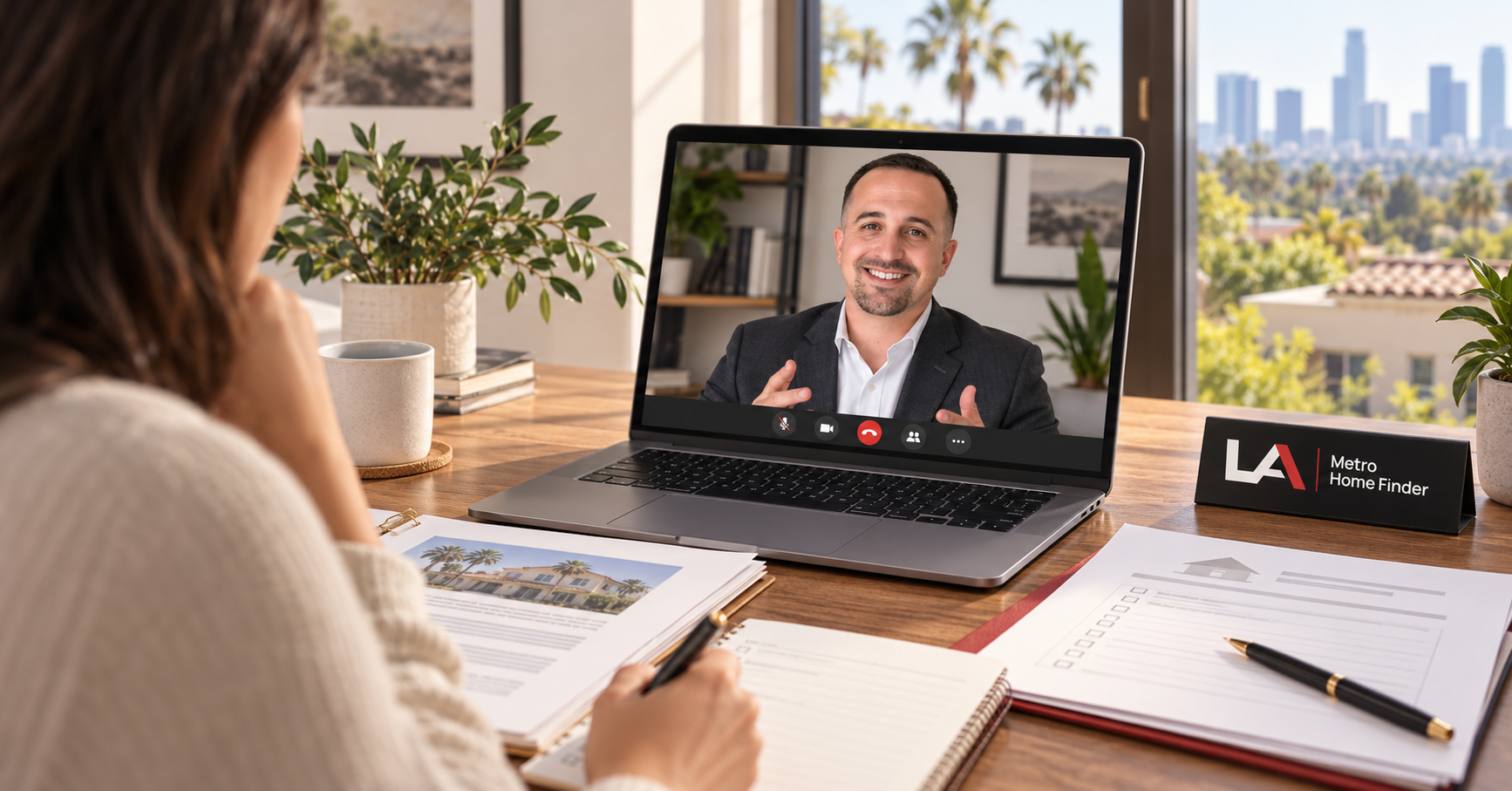
Do not confuse a video call with a remote court appearance. The first is a planning format between buyer and agent. The second is a court-controlled method of participating in a proceeding. Even where remote technology is available, your role, notice, department instructions, and the nature of the hearing control the permitted participation method.
The concrete boundary is binary: a court or legal question has a current named source and responsible professional, or it remains unresolved.
If financing is still open, prepare the lender conversation before the hearing.
Review probate financingPut the scope in writing
When Does a Consultation Become Buyer Representation?
An initial conversation can help you decide whether ongoing representation fits. It does not, by itself, define all services, duties, compensation, duration, and termination terms. If Justin accepts the property-specific assignment, the written buyer-broker representation agreement controls those terms.
California Civil Code section 1670.50 requires the agreement as soon as practicable and no later than execution of the buyer's offer. Current DRE regulations create a rebuttable presumption that obtaining it is practicable before a buyer's agent shows a property in person or virtually. The DRE defines a virtual showing for this rule as an agent entering the property at the buyer's direction to provide a live or recorded digital walk-through. A video consultation that reviews documents without entering the property is not automatically the same event, but the services actually provided matter (California DRE, 2026 Real Estate Law).
For covered agreements with an individual buyer, the current maximum term is three months, interpreted by DRE regulation as 90 calendar days, with exceptions described in the law for certain entity buyers. The agreement may not renew automatically. It must address compensation, services, when compensation is due, and termination. Compensation is negotiable (California DRE, regulations 2906.1 through 2906.3).
Justin may offer a single-property or limited agreement when it fits the assignment and brokerage requirements. Read the actual document. Confirm the property, services, compensation, due date, 90-day maximum where applicable, and termination language rather than relying on a verbal summary.
The concrete representation threshold is a signed agreement whose scope and timing match the actual property-specific services.
Ready to discuss whether single-property representation fits this probate opportunity?
Call (213) 262-5092Continue your preparation
Use the Probate Buyer Resource Path
The useful sequence is court-confirmation basics, statutory opening-bid preparation, property funding, and then a consultation tied to one identified property.
Common buyer questions
Frequently Asked Questions
Can a virtual consultation prepare me for a California probate overbid?
Yes. It can organize the property file, financing status, access and inspection gaps, price-limit inputs, and court-specific questions. It does not authorize courtroom participation or replace legal advice.
What should I send before the consultation?
Send the property address, hearing or sale notice, accepted-sale information you received, financing or proof-of-funds status, inspection and access history, and your questions. Confirm a secure delivery method before sending sensitive financial records.
Does a consultation mean Justin represents me?
Not by itself. If Justin accepts the assignment, a written buyer-broker representation agreement controls the services, compensation, due date, term, and termination provisions.
Can I attend a Los Angeles probate hearing remotely after a virtual consultation?
Do not assume that the consultation gives you permission to appear or bid remotely. Los Angeles probate departments use LACourtConnect, but the assigned department, governing rules, notice requirements, and judicial instructions control participation.
Will the consultation tell me my maximum bid?
It can organize comparable sales, repair and access uncertainty, financing limits, holding costs, and your risk tolerance. You choose the walk-away price, and no agent can guarantee that a price is safe or that a bid will prevail.
How do I request probate properties that may need court confirmation?
Text “Probate list, please” to (213) 262-5092. Treat any list as a starting point and verify the current court-confirmation status, accepted sale, hearing details, and bidder requirements for each property.
The final readiness test is whether your six outputs identify the facts, gaps, funding, walk-away inputs, court questions, and assigned next steps.
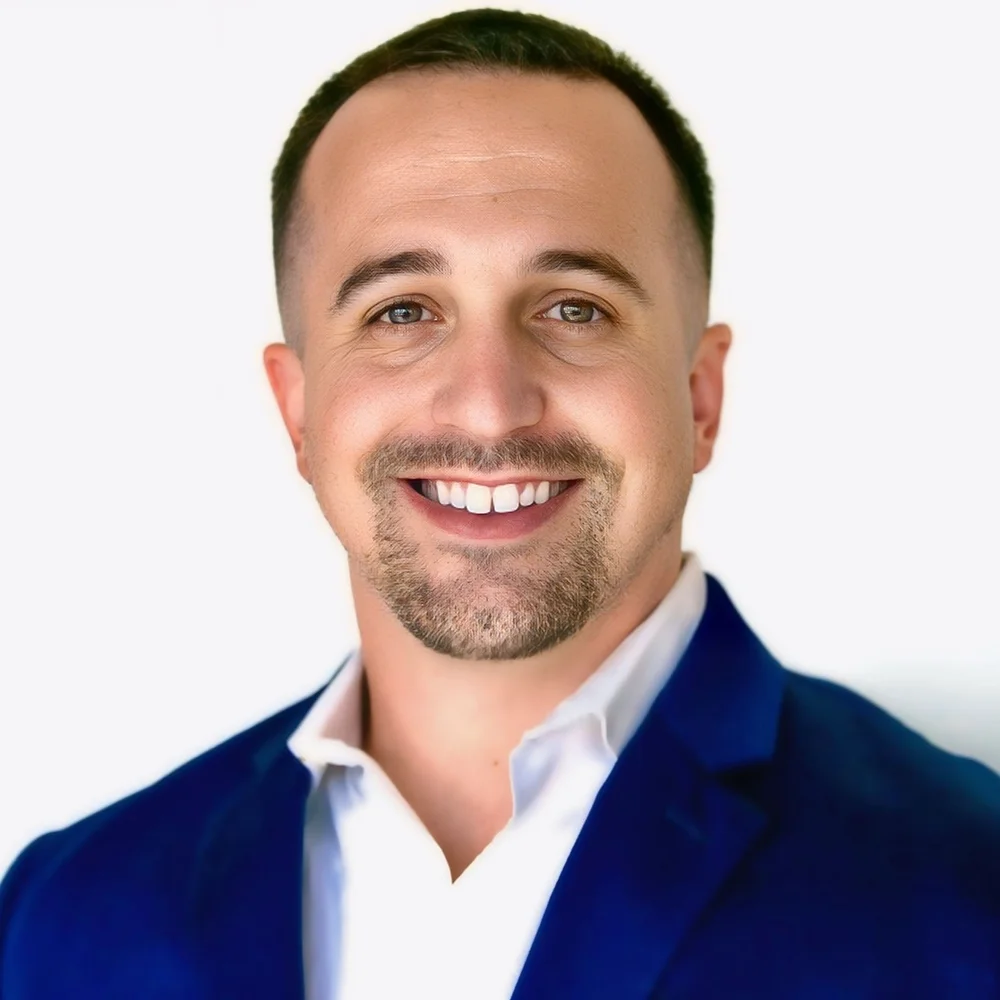
About the Author: Justin Borges
Justin Borges represented two buyers in California probate court-confirmation and overbid matters in 2026. He has held an active California DRE salesperson license since October 2013, CA DRE #01940318. He provides licensed real-estate representation, not legal advice or courtroom representation.
Official Sources
- California Probate Code section 10311, increased-offer framework for court confirmation.
- California Probate Code section 10308, confirmation hearing and court authority.
- California Rules of Court, rule 3.672, remote proceedings.
- Los Angeles Superior Court Probate Division, including current remote-appearance information.
- California DRE 2026 Real Estate Law, Civil Code section 1670.50.
- California DRE regulations 2906.1 through 2906.3, agreement term and timing rules.
- California DRE buyer-representation advisory, compensation and agreement guidance.
The evidence anchor is current California primary law plus Los Angeles Superior Court procedure, checked October 9, 2026.
Turn One Property Into a Readiness Plan
Call or text Justin to organize the property facts, missing evidence, funding status, walk-away inputs, court-specific questions, and next decision.