



Cluster 1 • Neighborhood Guides • Spoke 3
What to Know Before Buying a Home in the Monrovia Hills
Premium lots, mountain views, trail access, fire zone realities, and bear country. Monrovia resident and Realtor May Ascencio gives you the full picture before you go above the 210.
Quick Answer
Homes above the 210 Freeway in Monrovia start around $1.2 million and deliver bigger lots, genuine mountain views, and access to the city's top-rated elementaries. The trade-offs are real: you are in the Very High Fire Hazard Severity Zone (VHFHSZ), standard insurance carriers may decline or non-renew, and black bears come down from the San Gabriel Mountains regularly. None of those realities are dealbreakers for the right buyer. They are, however, things to understand before you make an offer, not after.
In This Guide
Where the Foothills Actually Start
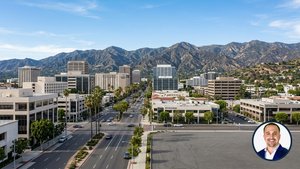
The unofficial dividing line in Monrovia is the 210 Freeway. Drop a pin anywhere north of those lanes and you are in what most buyers, agents, and locals call the Foothills, though you will also hear "the Hills," "above the 210," or simply "Hillcrest" depending on the block. The visual cue is hard to miss: the streets start winding, the lots get wider, the grades steepen, and the San Gabriel Mountains fill the windshield in a way that flat Monrovia never quite delivers.
Within the Foothills, the pockets most buyers focus on include the Hillcrest area (roughly between Hillcrest Boulevard and the canyon), the streets feeding off Norumbega Road toward the Monrovia Hillside Preserve, and the northwest residential blocks closest to Mayflower Elementary and Wild Rose Elementary. These are all single-family neighborhoods with minimal through traffic. The winding roads are not a quirk; they are a product of terrain, and for many buyers they are exactly the point. Part of what you are paying for above the 210 is that the neighborhood does not feel like a grid.
"Dollar for dollar you get noticeably more home up here. Bigger lot, better view, quieter pace. The trade-offs are real and I always walk through them, but most buyers who choose the Foothills never look back."May Ascencio // Monrovia Resident and Realtor, DRE #02109564
What You Get for the Money
Monrovia's overall median sale price sits near $993,000. Once you cross the 210 into the Foothills, the entry price point jumps to roughly $1.2 million, and many of the homes with canyon views or larger canyon-adjacent lots trade in the $1.5M–$2M range. That premium is real, and it reflects something real. Lots above the 210 are typically wider and deeper than their Old Town or Mayflower Village counterparts. In a city where the entire footprint is roughly 13 square miles, having a 10,000- or 12,000-square-foot lot with no neighbor directly behind you is genuinely scarce.
The view factor matters too. Many buyers touring Foothills homes step into a backyard for the first time and stop talking mid-sentence. The San Gabriel Mountains at that elevation are not background scenery; on clear days you see ridgelines in snow for half the year. The quieter pace is baked in by the geography: fewer cut-through drivers, less ambient noise from commercial corridors, and enough separation from the 210 that freeway hum fades within a few blocks. For buyers coming from denser Pasadena or Arcadia, the Monrovia Foothills often register as the first place in the San Gabriel Valley where they feel genuinely off the grid while still being 30 minutes from downtown Los Angeles. For a full comparison of how the Foothills stack up against Old Town pricing and lifestyle, see my guide on the best neighborhoods in Monrovia CA.
Premium Snapshot
At roughly $1.2M entry, the Foothills trade at about a 21% premium over Monrovia's city-wide median of $993K. In exchange, buyers typically receive a lot 20–40% larger, a view component that is absent at the city median, and access to the district's most sought-after elementary school zones. That spread is not unusual for view corridors in the San Gabriel Valley.
Bear Country: The Honest Take
Here is the part of every Foothills showing where I stop and tell buyers exactly what I tell my neighbors: the bears are basically locals at this point. Black bears from the San Gabriel Mountains have been coming down into Monrovia's hillside neighborhoods for decades, drawn by food sources (fruit trees, unsecured trash cans, compost bins, outdoor pet food). Sightings peak at dawn and dusk, especially in late summer and fall when bears are building calories before winter. If you have lived north of the 210 for any length of time, you have probably already had one on your driveway.
This is not a crisis. It is a coexistence, and it is manageable with a handful of simple habits. Bear-resistant trash cans are the single biggest change most new Foothills buyers make; many municipalities in the San Gabriel foothills now require them, and Monrovia residents are accustomed to storing cans in the garage until collection morning. Motion-sensor lights near the trash area and around the perimeter are standard. Fruit trees are not disqualifying, but they do require harvesting ripe fruit promptly rather than leaving windfalls on the ground. The Monrovia social media community (there is a deeply active local Facebook group where bear sightings get reported almost as a neighborhood ritual) keeps residents connected on bear activity. None of my Foothills clients have regretted buying because of bears. The ones who struggle are buyers who expected the issue would go away after a season. It will not, and that is simply part of the address.
"The bears are basically locals at this point. You learn the routine: secure the trash, pick the fruit, add a motion light. After the first month, it stops feeling like a problem and starts feeling like the neighborhood."May Ascencio // Monrovia resident, hiked Norumbega Road more times than she can count
Bear-Ready Habits for New Foothills Owners
- Use bear-resistant trash cans or store bins in the garage until collection morning
- Harvest ripe fruit from trees promptly; do not leave windfalls on the ground
- Install motion-sensor lighting around trash and composting areas
- Do not leave pet food outdoors overnight
- Secure compost bins with locking lids rated for wildlife
- Join the Monrovia community Facebook group for real-time sighting updates
For Foothills Sellers
What Is Your Monrovia Hills Home Worth Right Now?
Foothills pricing responds to view, lot size, and defensible space condition in ways that automated valuations often miss. Get a precise picture grounded in recent comparable sales above the 210.
Get My Foothills Home ValueNo obligation. May reviews every valuation personally.
Fire Zone Reality
Every home above the 210 Freeway in Monrovia falls within the Very High Fire Hazard Severity Zone (VHFHSZ) as designated by CalFire, with an updated designation map that took effect in March 2025. This is a state-level classification, not a local one, and it carries legal weight: you are required by California law to maintain 100 feet of defensible space around your home (the first 30 feet cleared to essentially bare soil and non-combustible ground cover, the next 70 feet with reduced fuel loads), with the full zone's 200-foot requirement applying where terrain allows. During the Bobcat Fire in 2020, the fire's footprint included Monrovia's foothills area, and the Insurance Commissioner issued an emergency declaration covering Monrovia ZIP codes in the aftermath. That history matters for insurance conversations.
The insurance market above the 210 has tightened meaningfully since 2020. Several standard homeowners carriers have declined to write new policies or have non-renewed existing ones in VHFHSZ-designated areas across the San Gabriel Valley. Buyers should expect the insurance due-diligence step to take more time and more effort than it would for a typical Monrovia purchase. The primary options are the California FAIR Plan (the state's insurer of last resort, which covers structure but not liability or personal property independently), admitted surplus lines carriers, and a shrinking pool of standard carriers still willing to write in the zone with defensible space attestations. I always recommend buyers get insurance quotes in hand before removing the inspection contingency, not after. An insurance surprise late in escrow is a painful and avoidable one. For buyers also weighing Craftsman or historic character homes across Monrovia, the historic home buying guide covers structural due-diligence in the same spirit.
Insurance Due-Diligence: Do This Early
Before removing your inspection contingency, have an insurance quote in hand. Contact at least three carriers or an independent broker experienced with VHFHSZ properties. Ask the listing agent directly whether the seller has received any non-renewal notices. Budget 10–14 days for this step, not 2–3.
Defensible Space: What 200 Feet Actually Means
California's defensible space rules in VHFHSZ areas require a 200-foot perimeter where terrain allows (or to the property line, whichever comes first). The code divides this into two zones:
- Zone 1 (0–30 ft): The "lean, clean, and green" zone. Remove all dead vegetation, combustible material, and anything that can carry flame directly to the structure. Non-combustible ground cover, hardscape, and well-irrigated low-growing plants are appropriate here.
- Zone 2 (30–100 ft, or up to 200 ft in VHFHSZ): Reduced fuel load. Space out trees so canopies do not touch. Remove ladder fuels (vegetation that can carry a ground fire into the tree canopy). Keep grasses mowed to under 4 inches.
When I tour Foothills listings with buyers, I walk the perimeter and we evaluate whether the current defensible space is maintained or whether this is a first-year landscaping project. Both are fine; they carry different cost and time implications, and I want buyers going in with eyes open.
School Access Advantage
The entire city of Monrovia is served by Monrovia Unified School District (MUSD), rated A by Niche, ranked #727 among Best School Districts in America, with a 96% graduation rate and 7 schools recognized on the U.S. News Best Schools list for 2025. As a MUSD parent myself (my son is enrolled), I can tell you that the district performs at a level that surprises buyers coming from Pasadena or Arcadia, where the school premium is baked into the price in a much more obvious way. In Monrovia, you get strong schools at a discount to neighboring districts.
Within the city, the northwest pockets closest to the Foothills tend to be zoned to Mayflower Elementary and Wild Rose Elementary, two of the campuses most frequently mentioned by parents I work with. The specific elementary school for any given address is worth confirming directly with MUSD (boundaries can shift), but the general pattern holds: buyers going above the 210, particularly in the Hillcrest and northwest Monrovia corridors, often have access to MUSD's most consistently sought-after elementary campuses while also paying the Foothills premium for the home itself. The schools are part of the value story, not separate from it. For a deeper dive on the district, including middle and high school performance, see my dedicated guide: Is Monrovia Unified School District Good?
MUSD by the Numbers
Niche grade: A • National ranking: #727 Best School Districts • Graduation rate: 96% • U.S. News Best Schools honorees: 7 campuses • Notable Foothills-zone elementaries: Mayflower Elementary, Wild Rose Elementary
Trail Access Lifestyle
There is a bench partway up the trail to the Monrovia Hillside Preserve via Norumbega Road where you can sit and watch the whole San Gabriel Valley light up at dusk. I have been there more times than I can count, and I have a very personal memory tied to that spot. When I tell buyers about the trail access in the Foothills, I am not reading from a brochure. I am describing the thing I do on weekends when I want to clear my head. That access is five minutes from most Foothills addresses.
Monrovia Canyon Park, which closed during and after the Bobcat Fire in 2020, has since reopened and continues to be one of the most visited day-hike destinations in the eastern San Gabriel Valley. The park's entrance is a short drive from the Foothills, and the trail system connects to the broader Angeles National Forest network for those who want longer routes. The Monrovia Hillside Preserve adds a second dedicated open-space option, with trail access off Norumbega Road and several routes through chaparral with panoramic views. For buyers who buy a Foothills home and later discover they use the trails every week, the $1.2M entry price starts to feel less like a premium and more like a cost of access to something difficult to replicate in LA County. The trail access connects naturally to the full Canyon Park buyer guide if you want to understand how proximity to the park affects pricing and lifestyle specifically.
Trail Access from Foothills Addresses
Monrovia Canyon Park: approx. 5–10 min drive from most Foothills homes. Monrovia Hillside Preserve: trailhead access from Norumbega Road, 5 min drive or walkable from upper Hillcrest blocks. Angeles National Forest connectivity via both trail systems.
Foothills vs. Old Town: Side by Side
The two neighborhoods I get asked about most often are the Foothills and Old Town Monrovia. They sit at almost opposite ends of the lifestyle spectrum within the same small city, and the right choice depends entirely on what you are actually optimizing for. Neither is universally better. They serve different buyers.
| Feature | Foothills / Above the 210 | Old Town Monrovia |
|---|---|---|
| Entry Price | $1.2M+ Premium | $850K–$1.1M Value |
| Lot Size | Larger (often 8,000–14,000 sq ft+) | Smaller (typically 5,000–7,500 sq ft) |
| Walk Score | 30–50 (car-dependent) | ~78 (very walkable) |
| Views | Mountain and valley views common | Street-level, neighborhood character |
| Fire Zone | Very High FHSZ (mandatory) | Standard or moderate risk |
| Bear Activity | Regular, managed | Rare, not a planning factor |
| Elementary Schools | Mayflower, Wild Rose zones | Varies by block (all MUSD) |
| Trail Access | 5–10 min to Canyon Park + Hillside Preserve | Metro L Line access (42 min to DTLA) |
| Weekend Atmosphere | Quiet, privacy-oriented | Friday Night Fairs, active street scene |
| Insurance | Requires research (FAIR Plan likely) | Standard market, easier to quote |
If your priority is walkability, the Metro L Line, and the energy of a small-town main street, Old Town is the better fit. If your priority is space, views, quiet, and trail access, the Foothills deliver that in ways Old Town simply cannot. My job is not to push you toward either. My job is to listen to what you describe wanting and then show you the neighborhood that actually matches it. What I can tell you is that both sides of this city share something real: there is an immense amount of love here, and a loyalty between neighbors and small businesses that you feel within the first week.
What to Look for When Touring a Foothills Home
A standard home inspection checklist covers a lot of ground, but the Foothills have several variables that buyers coming from flat Monrovia or the broader San Gabriel Valley may not think to ask about. I walk buyers through this list on every Foothills showing, because the issues that surface here are specific to the terrain, the fire zone, and the infrastructure age in this part of the city.
The buyers who feel best about Foothills purchases are the ones who went in knowing what they were buying. None of the items above are disqualifying on their own. They are planning inputs, and part of my job is helping you understand which ones represent a short-term project, which represent ongoing annual costs, and which would represent a genuine concern worth negotiating on. If you are also considering whether Monrovia Foothills is the right market for your investment goals, the Monrovia vs. Arcadia comparison gives useful context on how the two cities compare for long-term value.
Foothills Quick Reference
| You want privacy and a big lot | → | Foothills is the right Monrovia pocket |
| You want walkability to coffee and restaurants | → | Old Town is the better fit; see the Old Town guide |
| You want the best elementary school zone access | → | Northwest Foothills (Mayflower, Wild Rose zones) |
| You want to hike before work | → | Foothills: Hillside Preserve and Canyon Park are 5 min away |
| You are concerned about insurance availability | → | Start quotes before removing inspection contingency; FAIR Plan + surplus lines are the likely path |
| You want to build a custom home from the ground up | → | Foothills land lots are available; factor VHFHSZ compliance into build cost |
| You are comparing Monrovia to Arcadia | → | See the Monrovia vs. Arcadia guide |
Common Questions
Frequently Asked Questions
How much do homes cost in the Monrovia Hills or Foothills area?
Homes above the 210 Freeway in the Monrovia Foothills and Hillcrest area typically start around $1.2 million and can reach $2 million or more for larger lots with canyon or valley views. The city-wide median sits near $993,000, so the Foothills carry a meaningful premium over the Monrovia average, reflecting bigger lots, more privacy, and views that are genuinely hard to replicate elsewhere in the San Gabriel Valley neighborhoods at this price point.
Are homes in the Monrovia Hills in a fire hazard zone?
Yes. Homes above the 210 Freeway in Monrovia fall within the Very High Fire Hazard Severity Zone (VHFHSZ) as designated by CalFire. This means mandatory 200-foot defensible space, brush clearance requirements, and the reality that some standard homeowners insurers will decline coverage or non-renew existing policies. Buyers should budget time for insurance shopping and consider the FAIR Plan or admitted surplus lines carriers as their primary path forward.
Do bears actually come into the Monrovia Hills neighborhoods?
Yes, regularly. Black bears from the San Gabriel Mountains come down into Foothills neighborhoods in search of food, most often at dawn and dusk. The bears are basically locals at this point. Management is straightforward: bear-resistant trash cans (or storing cans in the garage until collection day), motion-sensor lights, and not leaving fruit or pet food outdoors. The bears are a known, manageable fact of Foothills life, not an emergency situation.
What elementary schools serve the Monrovia Foothills and Hillcrest area?
The northwest Monrovia pockets above and near the 210 are most commonly zoned to Mayflower Elementary and Wild Rose Elementary, two of the district's most sought-after campuses. All of Monrovia falls within Monrovia Unified School District, rated A by Niche, ranked #727 Best School Districts in America, with a 96% graduation rate and 7 schools recognized on the U.S. News Best Schools list. See the full MUSD buyer guide for more detail.
What should I look for when touring a home in the Monrovia Hills?
Beyond the standard inspection checklist, Foothills buyers should specifically assess: the 200-foot defensible space perimeter condition, slope stability and drainage, road width and emergency access, whether the home is on municipal water and sewer or a well and septic system, propane versus natural gas hookup, the age and material of the roof, and whether the seller has received any insurer non-renewal notices. Get insurance quotes before removing your inspection contingency, not after.
Ready to Explore the Foothills?
Let's Find the Right Home Above the 210
Monrovia found me before I found it. I have been hiking these hills, raising a family in this city, and helping buyers navigate the Foothills for years. I know the streets, the fire zones, the school zones, and the bear activity reports. Let me put that to work for you.